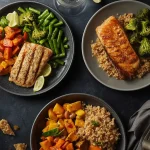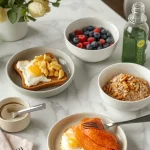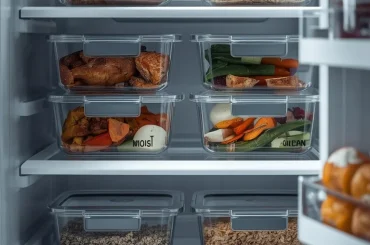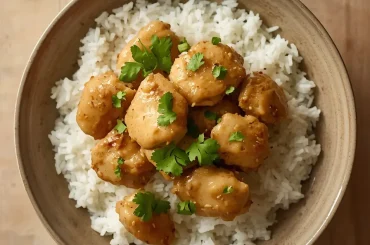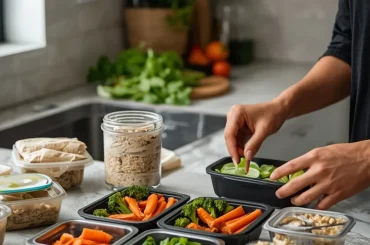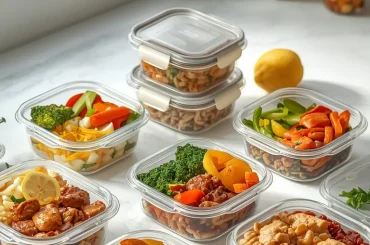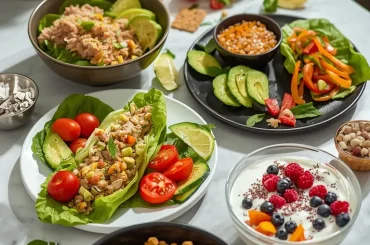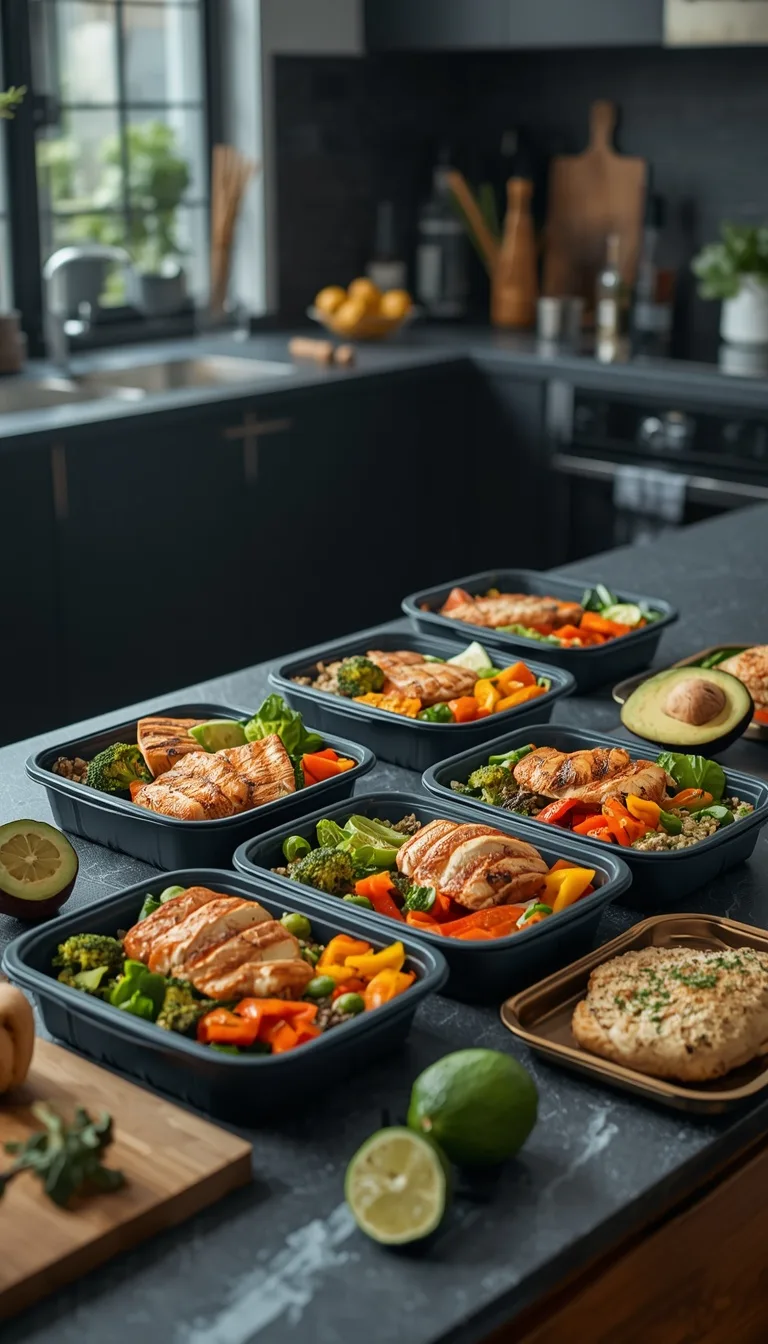
Most weeknights go the same way. You get home tired and hungry, there’s nothing ready, and the easiest option wins. Meal prep fixes this by moving the cooking to one block of time, so the rest of the week is just reheating and assembling.
Good meal prep needs more than a list of foods to batch-cook. You need to know how much to make, how long it takes, how many servings it yields, and how long it keeps. This guide (5 High-Protein Meal Prep Ideas) gives you five high-protein recipes with exact quantities, prep times, storage guidance, and approximate nutrition per serving. Together they cover breakfast, lunch, dinner, and snacks for a five-day week.
If you’re brand new to batch cooking, start with our Meal Prep for Beginners: The Complete Guide, which explains planning, shopping, containers, and storage. The recipes below build on those basics.
The 5 Recipes at a Glance
| # | Recipe | Meal | Servings | Protein per serving | Calories per serving | Active prep | Fridge life |
|---|---|---|---|---|---|---|---|
| 1 | Greek yogurt protein overnight oats | Breakfast | 5 | ~28 g | ~410 | 15 min | 4 days |
| 2 | Veggie egg muffins | Breakfast or snack | 4 (3 muffins each) | ~21 g | ~280 | 15 min + 22 min bake | 4 days |
| 3 | Lemon-yogurt chicken quinoa bowls | Lunch | 4 | ~38 g | ~500 | 20 min + 30 min bake | 3–4 days |
| 4 | Turkey and black bean chili | Dinner | 6 | ~32 g | ~360 | 15 min + 35 min simmer | 3–4 days (freezes well) |
| 5 | Protein snack boxes | Snack | 5 | ~20 g | ~300 | 20 min (mostly hands-off) | 5–7 days (eggs in shell) |
Nutrition values are rough estimates based on typical ingredients and brands. They vary with your products and portions, so check your labels or look up ingredients in USDA FoodData Central if you need accuracy.
How Much Protein Should You Plan For?
There isn’t one number that suits everyone. Your needs depend on your body size, activity level, age, and goals. Many people aim for roughly 20–40 grams at main meals and 10–20 grams at snacks, but your own target may be different. Our guide on how much protein you need a day helps you estimate a sensible range before you start prepping.
The recipes below give you a mix of protein sources: dairy, eggs, poultry, and beans. That variety matches the CDC’s advice in its guide to healthier meals and snacks, which recommends a mix of protein foods along with vegetables, fruits, and whole grains. The USDA’s MyPlate protein foods guide is another handy reference for the full range of options.
Before You Start: Equipment and Containers
You don’t need much, but a few items make batch cooking easier:
- 2 large sheet pans (for roasting chicken and vegetables)
- 1 large pot or Dutch oven (for chili)
- 1 medium saucepan with lid (for quinoa)
- 12-cup muffin tin, ideally silicone or well-greased
- 5 jars (12–16 oz each) for overnight oats
- 4–5 lunch containers with compartments or lids
- Shallow storage containers for chili and leftovers
- An instant-read food thermometer, the simplest way to confirm food is cooked safely
Recipe 1: Greek Yogurt Protein Overnight Oats
This is the lowest-effort breakfast on the list. No cooking is involved, and each jar delivers a protein-rich start to the day.
Makes: 5 jars | Active prep: 15 minutes | Chill: at least 4 hours | Per jar: ~28 g protein, ~410 calories
Ingredients (for 5 jars)
- 2½ cups (about 200 g) old-fashioned rolled oats
- 3¾ cups (about 900 g) plain nonfat Greek yogurt, which is ¾ cup per jar
- 2½ cups (600 ml) milk of choice (dairy or unsweetened soy), ½ cup per jar
- 5 tablespoons chia seeds, 1 per jar
- 2½ teaspoons vanilla extract
- 1 teaspoon cinnamon
- 2½ cups berries (fresh or frozen), ½ cup per jar
- Optional: 1–2 teaspoons honey or maple syrup per jar
Method
- Line up five jars. Add ½ cup oats, 1 tablespoon chia, and a pinch of cinnamon to each.
- Add ¾ cup Greek yogurt, ½ cup milk, and ½ teaspoon vanilla to each jar.
- Stir well, scraping the bottom so no dry oats remain. Seal the jars.
- Refrigerate at least 4 hours or overnight. Add the berries on top just before eating, or layer them in the night before.
Storage
Keep in the refrigerator for up to 4 days. Frozen berries can go on top straight from the freezer and will thaw by morning. Don’t freeze the finished jars, since the texture suffers.
Variations: Swap the berries for sliced banana and 1 tablespoon peanut butter, or add 1 tablespoon cocoa powder for a chocolate version. For more breakfast options, see our High-Protein Breakfast for Muscle Gain and 30g protein breakfast ideas.
Recipe 2: Veggie Egg Muffins
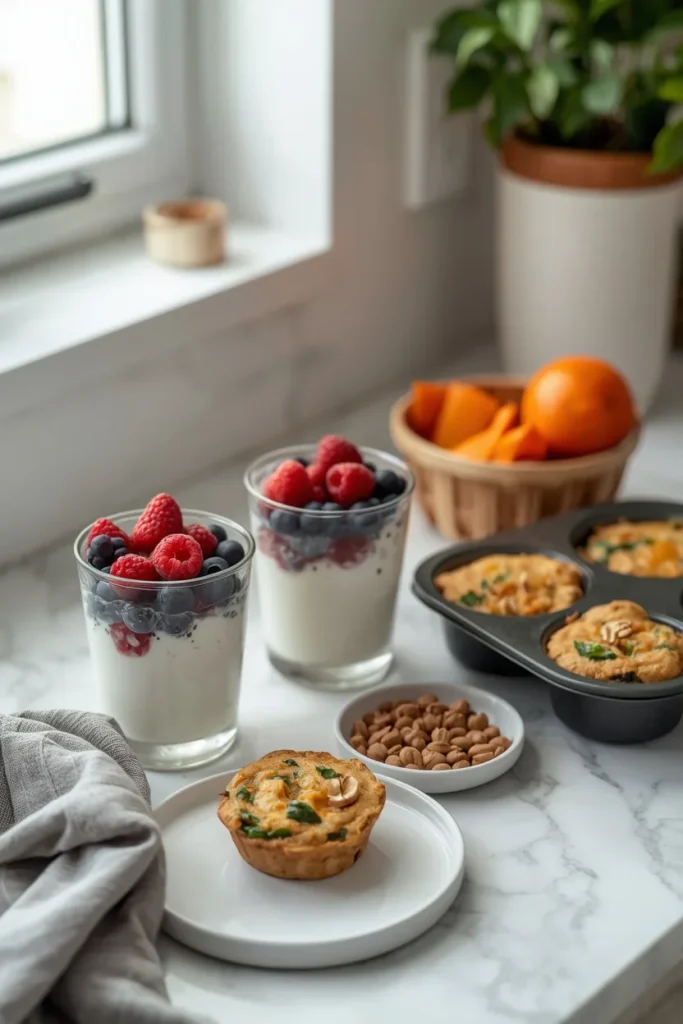
Egg muffins are the classic make-ahead breakfast, and they double as a portable snack.
Makes: 12 muffins (4 servings of 3) | Active prep: 15 minutes | Bake: 20–22 minutes | Per serving (3 muffins): ~21 g protein, ~280 calories
Ingredients
- 10 large eggs
- ¼ cup (60 ml) milk
- 1 cup (about 30 g) chopped fresh spinach
- 1 cup (150 g) diced bell pepper
- ½ cup (75 g) diced onion or sliced scallions
- ¾ cup (about 85 g) shredded cheddar or crumbled feta
- ½ teaspoon salt and ¼ teaspoon black pepper
- Cooking spray or a little olive oil for the tin
Method
- Preheat the oven to 350°F (175°C). Grease a 12-cup muffin tin well.
- Whisk the eggs, milk, salt, and pepper in a large bowl or measuring jug.
- Divide the vegetables and cheese evenly among the 12 cups.
- Pour the egg mixture over the top, filling each cup about ¾ full.
- Bake 20–22 minutes, until the centers are set and no longer jiggle. Cool in the tin for 5 minutes, then loosen with a knife.
Storage and reheating
Cool completely, then refrigerate in an airtight container for up to 4 days. To freeze, wrap each muffin individually, place in a freezer bag, and keep for up to about 2–3 months for best quality. Reheat in the microwave for 30–60 seconds from the fridge, or about 90 seconds from frozen, until steaming hot throughout (165°F / 74°C).
Make it a full breakfast: Pair three muffins with a piece of fruit and a slice of whole-grain toast.
Recipe 3: Lemon-Yogurt Chicken Quinoa Bowls
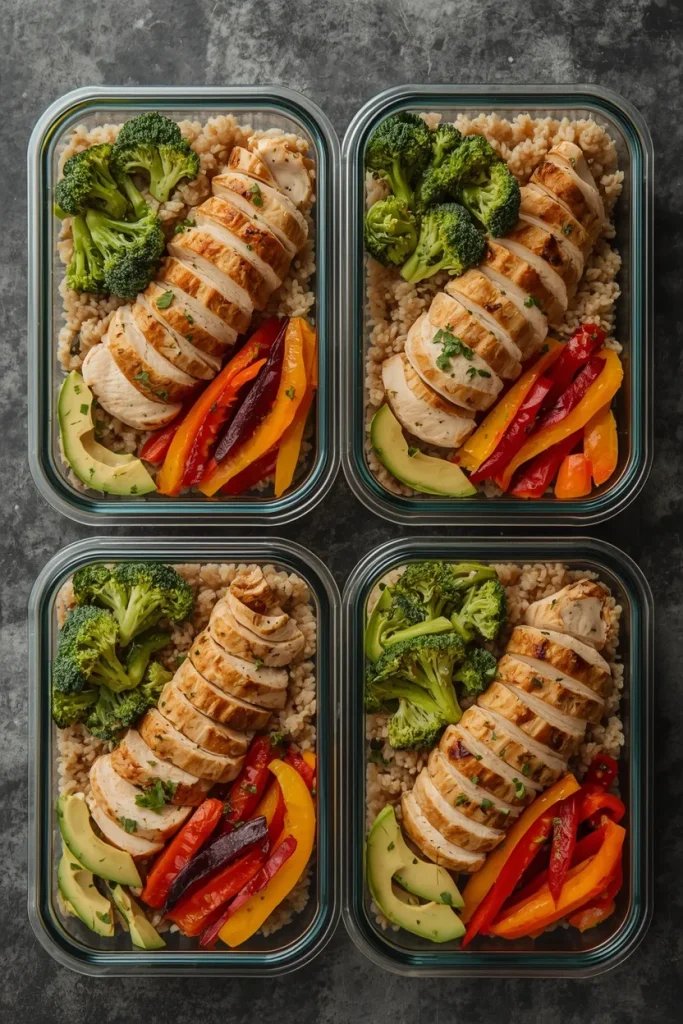
Build-your-own bowls are the backbone of a good meal prep week. This version keeps the sauce separate, so nothing turns soggy.
Makes: 4 bowls | Active prep: 20 minutes | Bake: 25–30 minutes | Per bowl: ~38 g protein, ~500 calories
Ingredients
Chicken and vegetables
- 1¼ lb (about 565 g) boneless, skinless chicken breast
- 2 tablespoons olive oil, divided
- 1 teaspoon each paprika, garlic powder, and ground cumin
- ½ teaspoon salt and ¼ teaspoon black pepper
- 2 bell peppers, cut into chunks
- 1 large zucchini, cut into half-moons
- 1 medium head broccoli, cut into florets (about 4 cups)
- 1 small red onion, cut into wedges
Quinoa
- 1 cup (170 g) dry quinoa, rinsed
- 2 cups (480 ml) water
- Pinch of salt
Lemon-yogurt sauce
- ½ cup (about 120 g) plain Greek yogurt
- 2 tablespoons lemon juice
- 1 small garlic clove, grated
- 1 tablespoon water
- 1 tablespoon chopped parsley
Method
- Preheat the oven to 425°F (220°C). Line two sheet pans with parchment.
- Toss the chicken with 1 tablespoon olive oil, the spices, salt, and pepper. Place on one pan.
- Toss the vegetables with the remaining 1 tablespoon olive oil and a pinch of salt. Spread on the second pan.
- Roast both pans for 25–30 minutes, stirring the vegetables halfway. The chicken is done when an instant-read thermometer reads 165°F (74°C) in the thickest part. Rest 5 minutes, then slice.
- While everything roasts, combine the quinoa, water, and salt in a saucepan. Bring to a boil, cover, reduce to low, and cook 15 minutes. Rest 5 minutes, covered, then fluff. You’ll have about 3 cups cooked.
- Whisk the sauce ingredients in a small jar.
- Divide among four containers: about ¾ cup quinoa, a quarter of the chicken (roughly 3¾ oz cooked), and a quarter of the vegetables. Put 2 tablespoons of sauce in a small separate cup or on the side.
Storage
Refrigerate for 3–4 days. Reheat the bowl until steaming hot (165°F / 74°C) and add the sauce afterward. You can freeze the chicken and quinoa for up to about 2–3 months, though the roasted vegetables soften when thawed.
Tip: If you want a lunch that needs no reheating at all, our no-cook high-protein lunches include eight options you can assemble in under 10 minutes.
Recipe 4: Turkey and Black Bean Chili
Chili is a meal prep favorite because it improves after a day in the fridge and freezes well. It’s also one of the easiest ways to get both lean protein and fiber in a single dish.
Makes: 6 servings (about 1½ cups each) | Active prep: 15 minutes | Cook: 35 minutes | Per serving: ~32 g protein, ~360 calories
Ingredients
- 1 tablespoon olive oil
- 1½ lb (680 g) lean ground turkey (93% lean)
- 1 large onion, diced
- 1 bell pepper, diced
- 3 garlic cloves, minced
- 2 tablespoons chili powder
- 1 teaspoon ground cumin
- 1 teaspoon smoked paprika
- 1 can (15 oz / 425 g) black beans, drained and rinsed
- 1 can (15 oz / 425 g) kidney beans, drained and rinsed
- 1 can (28 oz / 794 g) crushed tomatoes
- 1 cup (240 ml) low-sodium chicken broth
- 1 cup frozen corn, optional
- Salt and black pepper to taste
- For serving: 2 tablespoons plain Greek yogurt per bowl (adds about 3 g protein), chopped cilantro, lime wedges
Method
- Heat the olive oil in a large pot over medium heat. Add the onion and bell pepper and cook 5 minutes until softened. Add the garlic and cook 1 minute.
- Add the turkey and cook, breaking it up, until no pink remains, about 7–8 minutes.
- Stir in the chili powder, cumin, and paprika for 1 minute.
- Add the beans, tomatoes, broth, and corn. Bring to a simmer, reduce heat, and cook uncovered for 25–30 minutes, stirring occasionally, until thickened.
- Season to taste with salt and pepper. Make sure the chili reaches 165°F (74°C) throughout.
Storage
Cool quickly by dividing it into shallow containers rather than leaving it in the pot. Refrigerate within 2 hours and use within 3–4 days. For longer storage, freeze in individual portions for up to about 3 months and thaw overnight in the refrigerator. Reheat until steaming hot.
For more dinner ideas, see our recipes for fat loss meals with easy high-protein ideas and fat loss dinners under 500 calories.
Recipe 5: Protein Snack Boxes
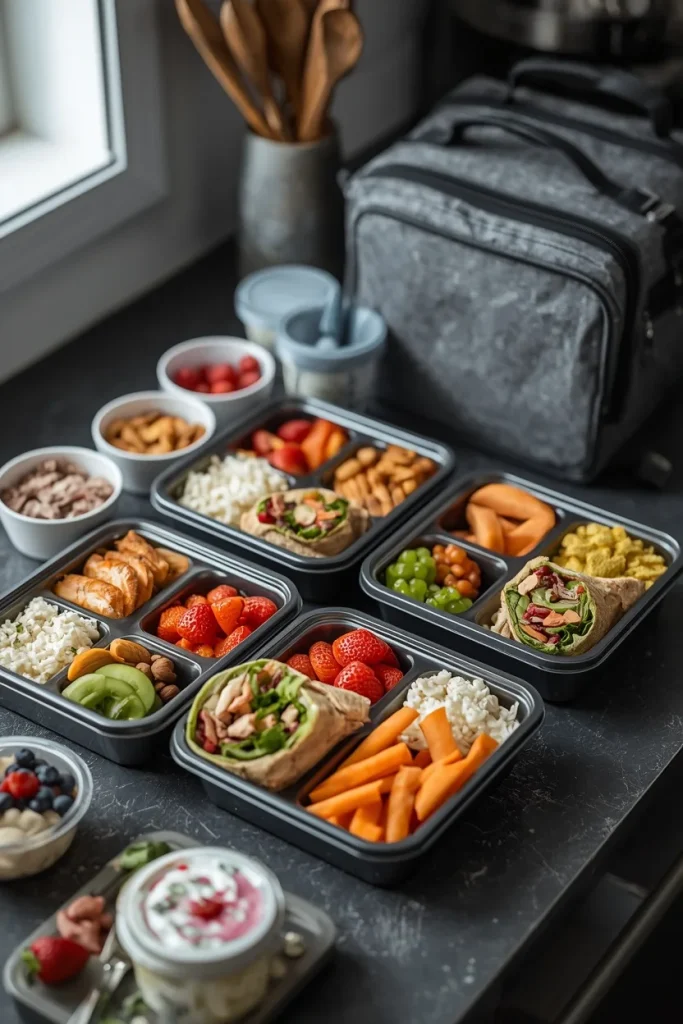
Snack boxes stop mid-afternoon hunger from turning into a vending-machine run. They can also work as a light lunch.
Makes: 5 boxes | Active prep: 20 minutes (mostly hands-off) | Per box: ~20 g protein, ~300 calories
Ingredients (for 5 boxes)
- 10 large eggs, for hard-boiling (2 per box)
- 5 string cheese sticks (1 per box)
- 5 small apples or pears (1 per box)
- 2½ cups baby carrots or cucumber slices (½ cup per box)
- Optional: 5 tablespoons almonds or hummus (1 per box, adds about 70–100 calories)
Method
- Place the eggs in a single layer in a pot and cover with about 1 inch of cold water. Bring to a boil, remove from the heat, cover, and let stand 11–12 minutes.
- Transfer to an ice bath for 5 minutes. Keep the eggs unpeeled until you’re ready to eat, since the shell protects them.
- Divide the eggs, cheese, fruit, and vegetables among five containers. Add the nuts or hummus if using.
Storage
Hard-boiled eggs keep for up to 1 week in the refrigerator, as noted in the USDA’s cold food storage chart. Cut apples can brown, so slice them just before eating or squeeze a little lemon juice on them.
Need more snack ideas? Our guide to quick high-protein snacks in 5 minutes lets you choose by situation, and our 8 high-protein nuts guide helps with the crunchy options.
Your Sunday Prep Timeline (About 90 Minutes)
Doing everything at once looks daunting, but the recipes overlap well. Here’s one efficient order:
| Time | Task |
|---|---|
| 0:00 | Preheat oven to 425°F. Put eggs on to boil for the snack boxes. |
| 0:10 | Season the chicken and chop the vegetables. Load both sheet pans and bake. |
| 0:20 | Assemble the overnight oats jars. Refrigerate. |
| 0:30 | Start the chili on the stove. Start the quinoa. |
| 0:45 | Remove the chicken and vegetables. Lower the oven to 350°F and mix the egg muffin batter. |
| 0:55 | Bake the egg muffins. Ice-bath and portion the eggs. |
| 1:15 | Finish the chili. Slice the chicken and make the sauce. |
| 1:30 | Cool everything quickly, portion into containers, and refrigerate. |
You don’t have to do all five recipes in a single session. If 90 minutes is too much, start with two or three and add more as you get comfortable.
A Sample Week Using All Five Recipes
| Day | Breakfast | Lunch | Snack | Dinner |
|---|---|---|---|---|
| Monday | Overnight oats | Chicken quinoa bowl | Snack box | Turkey chili |
| Tuesday | Egg muffins + fruit | Chicken quinoa bowl | Snack box | Turkey chili |
| Wednesday | Overnight oats | Chicken quinoa bowl | Snack box | Turkey chili (or freeze) |
| Thursday | Egg muffins + fruit | Chicken quinoa bowl | Snack box | Turkey chili |
| Friday | Overnight oats | Leftover chili or a no-cook lunch | Snack box | Flexible: eat out or cook fresh |
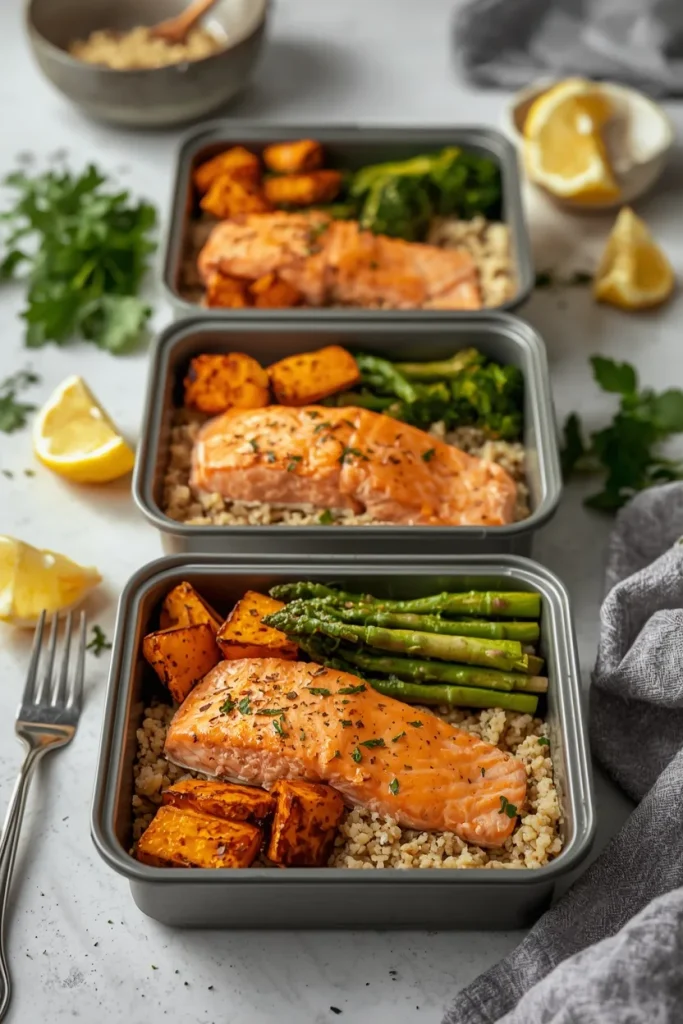
This pattern gives roughly 100–120 g of protein a day from the prepped meals alone, depending on the combinations. Your ideal intake may be higher or lower, so adjust portions to your needs. Leaving Friday dinner open also builds in flexibility, which makes the routine easier to keep up.
Food Safety for Meal Prep
Meal prep means food sits in the refrigerator for days, so safe handling matters. These guidelines come from the USDA and FDA:
- Cook to safe temperatures. Poultry and ground turkey should reach 165°F (74°C). The USDA’s safe temperature chart lists targets for other foods.
- Cool and refrigerate promptly. Refrigerate cooked food within 2 hours, or within 1 hour if the temperature is above 90°F (32°C).
- Use shallow containers. They help hot food cool faster than a deep pot.
- Keep your refrigerator at 40°F (4°C) or below.
- Eat leftovers within 3–4 days, or freeze them. The USDA’s leftovers and food safety guidance covers this in detail.
- Reheat to 165°F (74°C) until steaming hot throughout.
- Prevent cross-contamination. Use separate cutting boards for raw meat and vegetables, and wash hands often.
The FDA’s food safe meal prep tips and its page on safe food handling offer additional practical guidance. Our own article on how long meal prep lasts in the fridge gives a quick-reference storage guide.
Common Meal Prep Mistakes (and How to Avoid Them)
Making too much of one thing. Five identical lunches get boring. Prep two or three different meals and rotate them, or keep the sauce and toppings separate so each bowl tastes different.
Skipping the plan for Thursday and Friday. Food prepared on Sunday is at the edge of its fridge life by Friday. Freeze portions for the end of the week, or leave those days open.
Dressing everything in advance. Sauces and dressings make salads and grains soggy. Store them separately.
Ignoring flavor. If a meal prep recipe tastes bland, you’ll stop eating it. Keep lemon, hot sauce, herbs, and spices on hand to refresh reheated meals.
Overcomplicating it. You don’t need five recipes on day one. Start with one or two and build up. If your routine has fallen off, our guide on how to get back on track with healthy eating offers a gentle restart.
Adapting the Plan
Vegetarian: Swap the chicken in the bowls for 1 can of chickpeas and 7 oz (200 g) baked tofu per four servings. Make the chili with 3 cans of beans and lentils instead of turkey.
Lower calorie: Use nonfat yogurt, skip the cheese in the egg muffins, reduce quinoa to ½ cup per bowl, and fill the rest with vegetables.
Budget-friendly: Eggs, dried or canned beans, frozen vegetables, plain yogurt in large tubs, and whole chicken thighs are typically cheaper per gram of protein than pre-packaged items.
Higher protein: Add an extra ½ cup Greek yogurt to the oats, 1 more egg per serving at breakfast, or a bigger chicken portion in the bowls.
Weekly Grocery List (for All 5 Recipes)
Protein
- 1¼ lb (565 g) boneless, skinless chicken breast
- 1½ lb (680 g) lean ground turkey
- 20 large eggs (10 for muffins, 10 for snack boxes)
- 2 lb (about 900 g) plain nonfat Greek yogurt (plus a little extra for sauces and toppings)
- 5 string cheese sticks and about 3 oz (85 g) shredded cheddar or feta
Pantry
- Rolled oats, quinoa, chia seeds
- 2 cans (15 oz) black beans and kidney beans; 1 can (28 oz) crushed tomatoes
- Low-sodium chicken broth, olive oil, vanilla extract
- Chili powder, cumin, smoked paprika, garlic powder, cinnamon
Produce
- 5 bell peppers, 1 zucchini, 1 head broccoli, 3 onions, 1 head garlic
- 1 bag baby spinach, 1 bag baby carrots, 1 cucumber
- 2–3 lemons, fresh parsley or cilantro
- 5 apples or pears, 2½ cups berries (fresh or frozen), frozen corn (optional)
Dairy
- Milk of choice (about 2½ cups)
Frequently Asked Questions
How long does meal prep last in the fridge?
Most cooked dishes keep for 3–4 days. Hard-boiled eggs in the shell keep up to a week. Freeze anything you won’t eat within that window.
Can I freeze these meals?
The chili, egg muffins, and cooked chicken and quinoa freeze well. Overnight oats and fresh-cut snack items don’t.
Is it safe to reheat meals more than once?
It’s best to reheat only the portion you plan to eat. Repeated cooling and reheating increases safety risks and ruins texture.
Do I have to meal prep on Sunday?
No. Sunday is traditional, but any day with a free hour or two works. Some people split it into two shorter sessions, for example Sunday and Wednesday.
How do I keep from getting bored?
Prep the base ingredients (protein, grain, vegetables) and change the sauces and toppings, so each meal feels different.
Quick Takeaway
Meal prep works best when it’s specific: measured ingredients, clear timing, and realistic storage. With five recipes (Greek yogurt overnight oats, veggie egg muffins, chicken quinoa bowls, turkey and black bean chili, and protein snack boxes) you can cover breakfast, lunch, dinner, and snacks for a busy week in about 90 minutes.
Start small, rotate the recipes, store food safely, and adjust the portions to your needs. For long-term consistency, the 30-day fat-loss habit tracker can help you build the routine around your prep days.