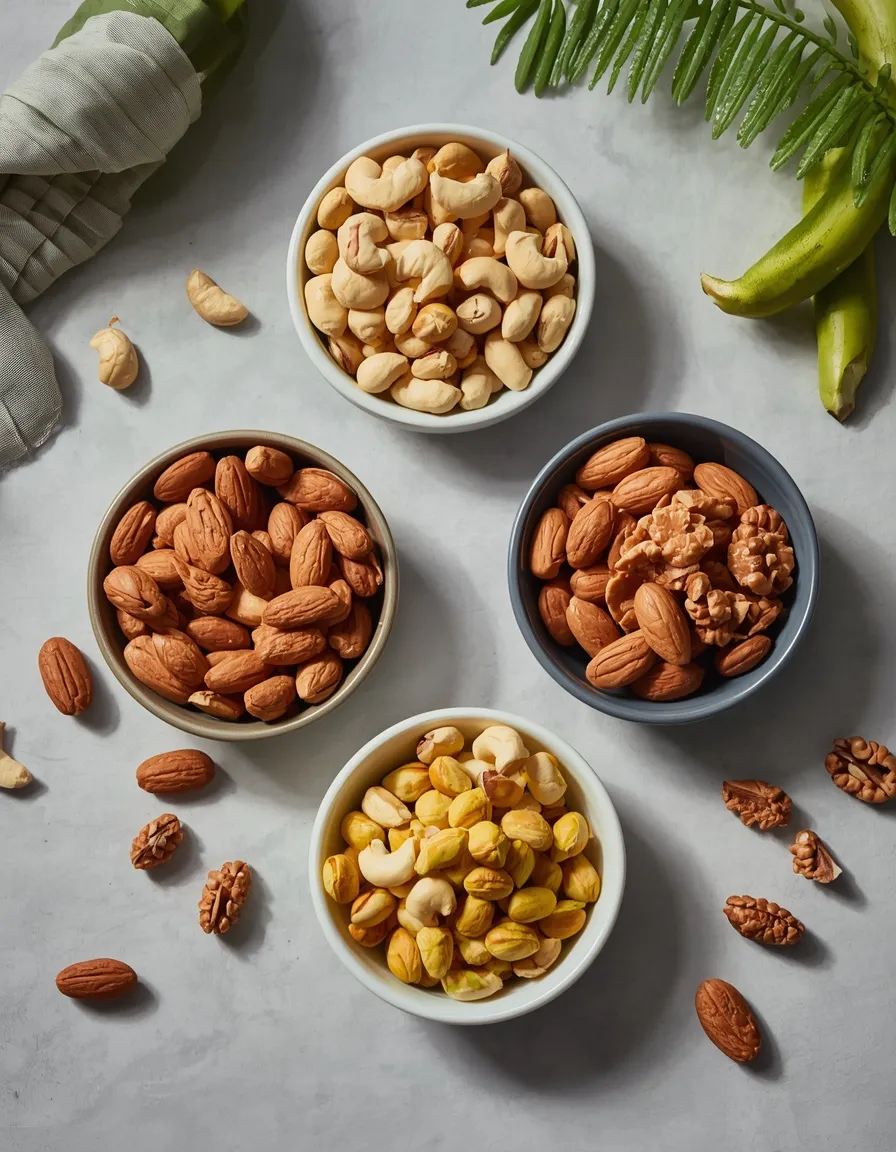
Nuts are small, convenient foods that can add protein, fiber, unsaturated fats, and important micronutrients to everyday meals. But if your specific goal is to increase protein intake, not every nut contributes the same amount.
Protein-rich nuts provide about 7 grams of protein per 1-ounce (28 g) serving, while almonds and pistachios provide about 6 grams. Cashews and walnuts provide around 5 and 4 grams, respectively.
One important point: peanuts are technically legumes rather than tree nuts, although they are commonly grouped with nuts nutritionally and are included with nuts in many dietary discussions.
For busy adults, nuts can be especially useful as a snack or as an addition to oatmeal, yogurt, salads, smoothies, grain bowls, and other meals. However, they are calorie-dense, so portion size matters.
Nuts can be a convenient addition to a balanced eating pattern, particularly when you want a portable snack or an easy way to add protein and healthy fats to a meal. For more practical strategies, see our guide to healthy eating for weight management.
Quick Takeaway
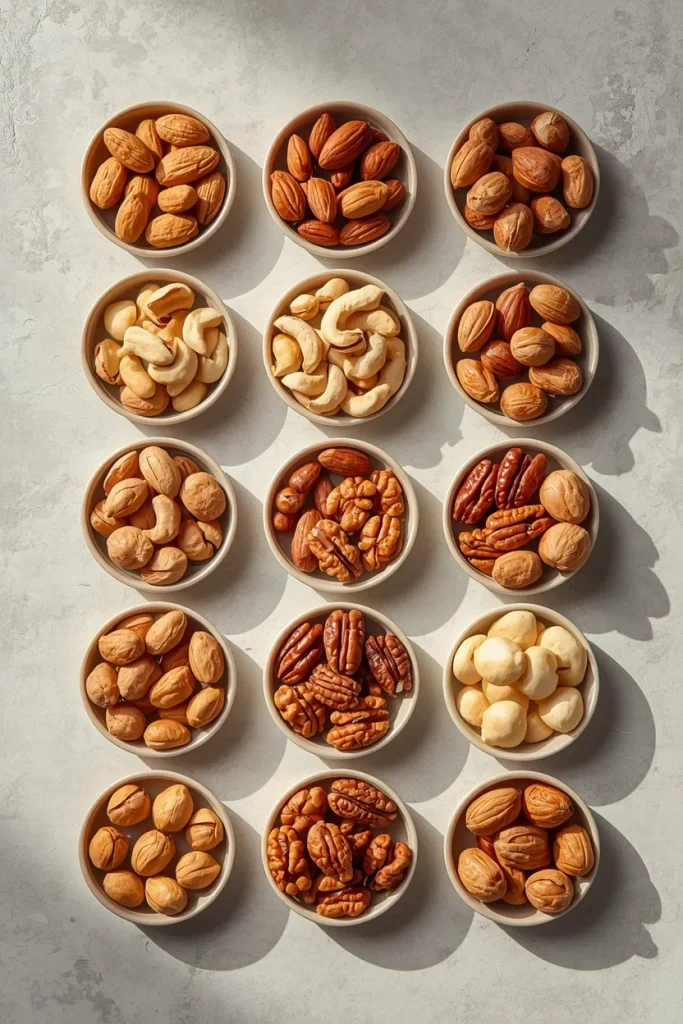
If you’re looking for nuts with relatively more protein per typical 1-ounce serving:
| Nut | Approx. Protein per 1 oz (28 g) | Practical Use |
|---|---|---|
| Peanuts* | 7 g | Snacks, peanut butter, oatmeal |
| Almonds | 6 g | Snacks, yogurt, oatmeal |
| Pistachios | 6 g | Snacks, salads, yogurt |
| Cashews | 5 g | Stir-fries, sauces, snacks |
| Walnuts | 4 g | Oatmeal, salads, yogurt |
| Hazelnuts | 4 g | Oatmeal, snacks |
| Brazil nuts | 4 g | Small snack portions |
| Pecans | 3 g | Oatmeal, salads, snacks |
| Macadamia nuts | 2 g | Snacks, salads |
*Peanuts are legumes botanically.
These figures are approximate and can vary with variety, preparation method, and database source. A 1-ounce serving of nuts generally provides roughly 3–7 grams of protein and around 160–200 calories.
What Makes Nuts a Useful Protein Food?
Nuts aren’t primarily protein foods in the same way that chicken, fish, eggs, Greek yogurt, tofu, or legumes can be. Instead, they provide a combination of protein, fats, fiber, and micronutrients.
This “protein package” matters because the food containing protein also determines what other nutrients you’re consuming. Harvard’s nutrition guidance emphasizes looking at the whole nutritional package rather than focusing on protein alone.
For example, one ounce of almonds provides approximately:
- 6 g protein
- 3–3.5 g fiber
- 14 g fat
- About 160–165 calories
Most of the fat in almonds is monounsaturated.
That combination makes nuts more than simply a source of protein.
8 Protein-Rich Nuts and How to Use Them
Because nuts require little preparation, they can work well for people with busy schedules. If you’re trying to make healthier choices more consistent, our guide to a healthy routine for busy people offers additional practical ideas.
1. Peanuts — About 7 g Protein per Ounce
Peanuts are technically legumes, but nutritionally they fit well into discussions about nuts.
A 1-ounce serving of dry-roasted, unsalted peanuts provides about 7 grams of protein, along with approximately 166 calories, 14 grams of fat, and 2.4 grams of fiber.
Best ways to use peanuts
- Eat them as a portioned snack.
- Add chopped peanuts to oatmeal.
- Stir them into yogurt.
- Add them to grain bowls.
- Use natural peanut butter on whole-grain toast.
- Add crushed peanuts to stir-fries.
FitVibe tip
Peanut butter can be an easy way to add protein to breakfast, but it is also calorie-dense. Measure your serving rather than eating directly from the jar if you’re trying to manage total calorie intake.
2. Almonds — About 6 g Protein per Ounce
Almonds are one of the more protein-rich tree nuts, providing about 6 grams of protein per 1-ounce serving. A serving is roughly 23 almonds.
They also provide fiber, vitamin E, magnesium, and predominantly unsaturated fats.
Best ways to use almonds
Try them:
- With fruit as a snack
- Chopped over Greek yogurt
- Added to oatmeal
- Sprinkled over salads
- Mixed into homemade trail mix
- Chopped into overnight oats
Almonds are particularly convenient because you can portion them into small containers ahead of time for work or travel.
3. Pistachios — About 6 g Protein per Ounce
Pistachios provide approximately 6 grams of protein per ounce and around 3 grams of fiber according to nutrition data summarized by Oregon State University’s Linus Pauling Institute.
Their naturally slightly sweet flavor works in both sweet and savory meals.
Best ways to use pistachios
- Add chopped pistachios to Greek yogurt.
- Sprinkle them over oatmeal.
- Add them to salads.
- Use them as a crunchy topping for grain bowls.
- Combine them with dried fruit for a homemade snack mix.
For everyday eating, choose unsalted or lightly salted pistachios when possible, particularly if you’re trying to keep sodium intake lower.
4. Cashews — About 5 g Protein per Ounce
Cashews provide roughly 5 grams of protein per ounce and are particularly useful in cooking because their creamy texture works well in sauces and blended dishes.
Best ways to use cashews
- Add them to vegetable stir-fries.
- Blend soaked cashews into creamy sauces.
- Add chopped cashews to rice bowls.
- Eat a measured portion as a snack.
- Add them to homemade trail mix.
Cashews are not the highest-protein nut, but their texture makes them versatile in plant-forward meals.
5. Walnuts — About 4 g Protein per Ounce
Walnuts provide about 4 grams of protein per ounce, along with approximately 2 grams of fiber and a substantial amount of polyunsaturated fat. They are also a notable plant source of alpha-linolenic acid (ALA), an omega-3 fatty acid.
Best ways to use walnuts
- Add chopped walnuts to oatmeal.
- Mix them into Greek yogurt.
- Sprinkle them over salads.
- Add them to whole-grain breakfast bowls.
- Combine them with fruit for a snack.
Walnuts are especially useful when you’re looking to add more than just protein to a meal.
6. Hazelnuts — About 4 g Protein per Ounce
Hazelnuts provide roughly 4 grams of protein per ounce, along with fiber and predominantly unsaturated fat.
They work particularly well in:
- Oatmeal
- Yogurt bowls
- Homemade granola
- Fruit and nut snack mixes
- Salads
Because hazelnuts have a rich flavor, a relatively small amount can add noticeable texture and flavor to a meal.
7. Brazil Nuts — About 4 g Protein per Ounce
Brazil nuts provide approximately 4 grams of protein per ounce.
They are particularly notable for their selenium content, but this is also a reason not to treat Brazil nuts like an unlimited snack. Their selenium concentration is unusually high and can vary considerably between individual nuts.
For everyday use, a small portion is more practical than eating large handfuls.
8. Pecans — About 3 g Protein per Ounce
Pecans are lower in protein than peanuts, almonds, and pistachios, providing around 3 grams per ounce.
They’re better viewed as a nutrient-dense addition to meals rather than a primary protein source.
Try them:
- Chopped into oatmeal
- Added to salads
- Combined with fruit
- Sprinkled over yogurt
- Used in homemade snack mixes
Which Nuts Have the Most Protein?
For a typical 1-ounce serving, the protein differences are fairly straightforward:
Peanuts → almonds/pistachios → cashews → walnuts/hazelnuts/Brazil nuts → pecans → macadamias.
The exact values vary depending on the food database, variety, and preparation method. Harvard notes that nuts generally provide around 3–7 grams of protein per ounce.
So if protein is your primary selection criterion, peanuts, almonds, and pistachios are particularly practical choices.
Are Nuts Good for Building Muscle?
They can contribute to a muscle-supportive diet, but nuts shouldn’t usually be your only protein source.
A typical ounce of nuts supplies several grams of protein, but it also supplies substantial amounts of fat and calories. For example, almonds provide about 6 grams of protein per ounce, while peanuts provide about 7 grams.
For someone trying to increase overall protein intake, a better strategy is to combine nuts with more concentrated protein foods.
Easy combinations
Breakfast
- Greek yogurt + berries + almonds
- Oatmeal + milk + peanut butter
- Eggs + whole-grain toast + pistachios on the side
Lunch
- Chicken salad + almonds
- Lentil bowl + cashews
- Tuna grain bowl + chopped pistachios
Snack
- Greek yogurt + walnuts
- Apple + peanut butter
- Cottage cheese + almonds
This approach lets nuts contribute protein without requiring very large portions.
How Much Protein Do Nuts Actually Provide?
A common mistake is assuming that a large handful of nuts is equivalent to a high-protein meal.
It isn’t.
For example, 1 ounce of almonds provides about 6 grams of protein, while the same amount of peanuts provides about 7 grams.
Compare that with foods such as legumes, dairy, eggs, fish, poultry, or soy foods, which can provide substantially more protein per typical serving.
That’s why nuts work particularly well as protein-supporting foods rather than the sole protein source in a meal.
Best Ways to Add Protein-Rich Nuts to Your Day
1. Add nuts to breakfast
Instead of eating plain oatmeal, try:
Oatmeal + Greek yogurt + berries + 1 tablespoon chopped almonds
This combines several protein sources while adding fiber and texture.

2. Upgrade your snack
Instead of relying on biscuits or highly processed snack foods:
Fruit + a measured portion of peanuts or almonds
For more protein, pair the nuts with Greek yogurt or cottage cheese.
3. Add nuts to salads
A salad can become more satisfying with:
- Chicken or chickpeas
- Mixed vegetables
- Whole grains
- Chopped almonds or pistachios
- Olive-oil-based dressing
4. Use nut butter strategically
Peanut or almond butter can be added to:
- Oatmeal
- Whole-grain toast
- Smoothies
- Yogurt
- Apple slices
Measure the serving because nut butters are concentrated sources of calories.
5. Make a homemade snack mix
Combine:
- Almonds
- Pistachios
- Peanuts
- Pumpkin seeds
- Unsweetened dried fruit
Keep the portion controlled and avoid turning the mixture into a large calorie-dense snack.
Protein-Rich Nuts for Fat-Loss-Friendly Eating
Nuts can fit into a fat-loss-oriented eating pattern, but portion size is important.
Nuts contain protein, fiber, and unsaturated fats, and they are relatively energy-dense. Harvard notes that an ounce of nuts generally contains around 160–200 calories.
That means eating several large handfuls can add a substantial amount of energy without feeling like a large meal.
A practical approach
Instead of eating directly from a large container:
- Measure about 1 ounce (28 g).
- Put it into a small bowl or container.
- Pair it with fruit, yogurt, or another protein-rich food.
- Eat slowly rather than continuously snacking from the package.
The goal isn’t to avoid nuts. It’s to use their nutritional value while keeping portions appropriate for your overall eating pattern.
Raw, Roasted, Salted or Flavored: Which Should You Choose?
The basic nut can be nutritious in several forms, but preparation changes the overall food.
Raw nuts
Good for simple snacks, oatmeal, yogurt, and meal prep.
Dry-roasted nuts
Convenient and flavorful. Check the ingredient list if you’re trying to minimize added oils or sodium.
Salted nuts
Still provide protein and nutrients, but sodium can add up depending on the product.
Honey-roasted or sugar-coated nuts
These can contain added sugars and additional ingredients. They’re better considered flavored snack foods rather than your default everyday protein choice.
Chocolate-coated nuts
These can be enjoyable occasionally, but the added sugar and calories make them different nutritionally from plain nuts.
For regular use, plain, unsalted or lightly salted varieties are simple choices.
Protein-Rich Nuts vs. Nut Butter
Nut butter can be a convenient way to include nuts, but the nutritional profile depends on the product.
Look for products where the main ingredient is the nut itself and check:
- Protein
- Added sugar
- Sodium
- Added oils
- Serving size
A typical 2-tablespoon serving of smooth peanut butter provides around 7 grams of protein according to the Linus Pauling Institute’s nutrition table, although brands vary.
If you’re tracking calories or protein, measuring nut butter is particularly useful because a tablespoon can be easy to underestimate.
Common Mistakes
| Common Mistake | Why It Happens | Better Approach |
|---|---|---|
| Eating unlimited handfuls | Nuts feel like a small snack | Portion about 1 oz / 28 g |
| Treating nuts as the main protein source | Nuts are marketed as protein foods | Combine them with concentrated protein sources |
| Choosing heavily flavored nuts every day | Sweet and savory coatings are appealing | Use plain or lightly seasoned nuts more often |
| Ignoring serving size | A handful can vary greatly | Use a kitchen scale when accuracy matters |
| Eating directly from the package | Portions become difficult to judge | Pre-portion snacks |
| Assuming all nuts have the same protein | Protein varies considerably | Choose peanuts, almonds, or pistachios when protein is the priority |
| Forgetting allergies | Nuts are common allergens | Check labels and avoid cross-contact when necessary |
Simple High-Protein Nut Snack Ideas
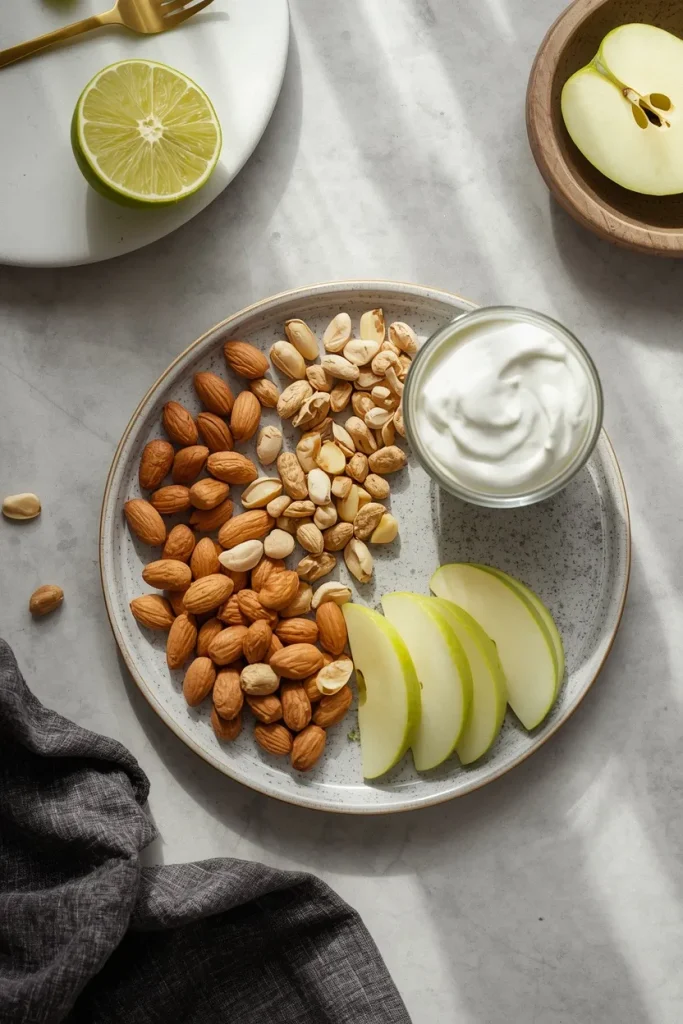
Apple + Peanut Butter
Pair apple slices with a measured serving of natural peanut butter.
Greek Yogurt + Pistachios
Add chopped pistachios and berries to plain Greek yogurt.
Oatmeal + Almonds
Top oatmeal with chopped almonds, cinnamon, and fruit.
Cottage Cheese + Walnuts
Add a small amount of chopped walnuts and berries to cottage cheese.
Trail Mix
Combine peanuts, almonds, pumpkin seeds, and a small amount of unsweetened dried fruit.
These combinations are more protein-focused than eating nuts alone because they pair nuts with other protein-rich foods.
How to Store Nuts
Nuts contain a significant amount of fat, so proper storage helps maintain quality.
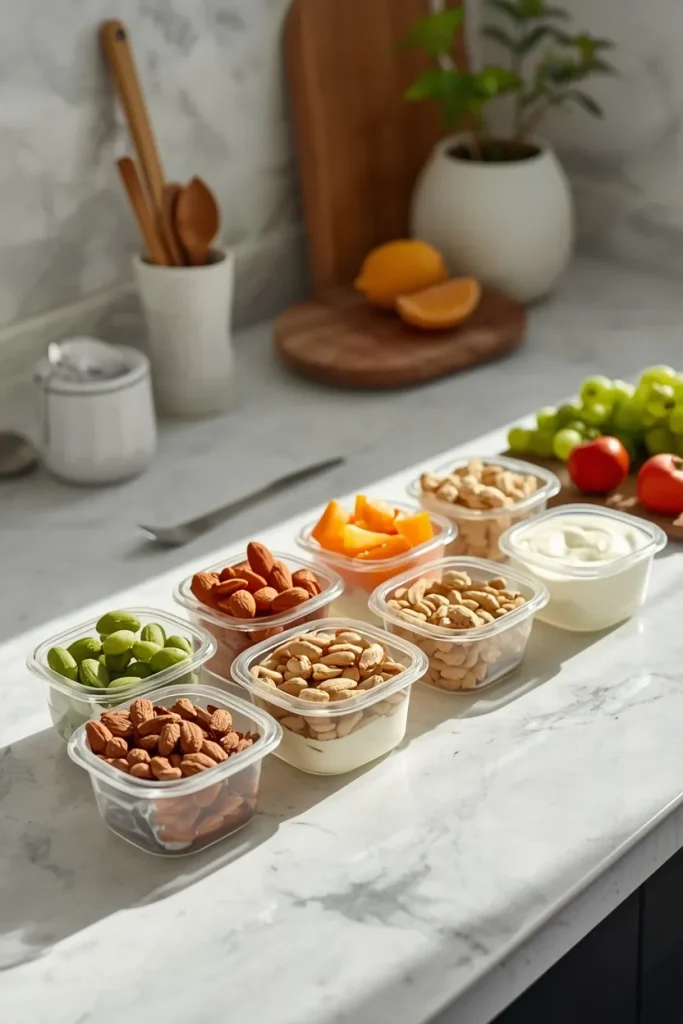
Portioning nuts into small containers or combining them with other nutritious foods can make snacks easier to manage throughout the week. You can also see our guide to meal prep for beginners for more practical preparation strategies.
Pantry
Keep nuts in an airtight container in a cool, dry, dark location if you’ll use them relatively quickly.
Refrigerator
Refrigeration can help extend quality, particularly for nuts you don’t use frequently.
Freezer
For longer-term storage, airtight freezer-safe packaging can help protect nuts from heat, moisture, and unwanted odors.
Always check for changes in smell, taste, or appearance before eating stored nuts.
Are Nuts Suitable for Everyone?
For most people, nuts can be part of a balanced eating pattern. However, tree-nut and peanut allergies can be serious.
If you have a known allergy, avoid the relevant food and pay attention to ingredient labels and cross-contact warnings. Do not assume that a food is safe simply because nuts are not listed as a major ingredient.
For young children, whole nuts can also present a choking hazard. Age-appropriate forms and supervision are important.
Frequently Asked Questions
Which nut has the most protein?
Among common nuts, peanuts provide about 7 grams of protein per 1-ounce serving. Almonds and pistachios provide around 6 grams. Peanuts are technically legumes, not tree nuts.
Are almonds high in protein?
Almonds are relatively high in protein compared with many other tree nuts, providing approximately 6 grams per ounce. They also provide fiber and predominantly unsaturated fat.
Are pistachios a good source of protein?
Yes. Pistachios provide about 6 grams of protein per ounce, making them one of the more protein-rich common tree nuts.
Can nuts replace a protein shake?
Usually, nuts are better viewed as one component of your protein intake rather than a direct replacement for a concentrated protein source. Their protein comes packaged with considerable fat and calories.
Are nuts good for breakfast?
Yes. Adding a measured portion of nuts to oatmeal, yogurt, whole-grain cereal, or fruit can increase protein, fiber, texture, and unsaturated fats.
How many nuts should I eat per day?
A practical reference serving is around 1 ounce (28 g). Individual needs vary, and nuts should fit into your overall calorie and nutrient intake. Harvard notes that an ounce is roughly a small handful or ¼ cup for many nuts.
Are peanuts healthier than tree nuts?
It’s more useful to consider the nutritional characteristics of each food rather than declare one universally healthier. Peanuts provide particularly high protein for a nut-like snack, while different tree nuts provide different combinations of fats, fiber, vitamins, minerals, and other nutrients.
Can nuts help with muscle gain?
They can contribute protein and calories to a muscle-building diet, but nuts alone generally aren’t the most protein-dense option. Pairing them with foods such as Greek yogurt, eggs, dairy, legumes, tofu, fish, or lean meat can make it easier to reach a higher protein intake.
Final Thoughts
Protein-rich nuts are useful supporting players in a balanced diet. Peanuts, almonds, and pistachios stand out for their protein content, while walnuts, cashews, hazelnuts, pecans, and other nuts bring their own combinations of fats, fiber, and micronutrients.
For busy adults, the simplest strategy is to keep a few varieties available, portion them ahead of time, and combine them with other protein-rich foods. That gives you the convenience of nuts without relying on them as your primary protein source.
Nuts can be useful as part of an overall healthy eating pattern, but no single food needs to carry the entire diet. If your eating habits have become inconsistent, see our guide on getting back on track with healthy eating for practical steps toward a more sustainable routine.
Sources & Further Reading
- Centers for Disease Control and Prevention (CDC): CDC — Tips for Healthy Eating for a Healthy Weight
- Centers for Disease Control and Prevention (CDC): CDC — How to Have Healthier Meals and Snacks
- World Health Organization (WHO): WHO — Healthy Diet