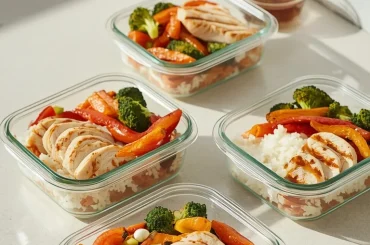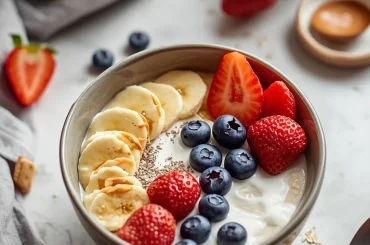
Getting back to healthy eating does not require a strict reset, a detox, or starting over from scratch.
Life can disrupt even a good routine. Work becomes busy, meals become less organized, groceries run out, travel changes your schedule, or a few relaxed meals turn into several weeks of inconsistent eating. When that happens, it is easy to feel that you need to fix everything at once.
You don’t.
A better approach is to rebuild your routine gradually. Start with one or two practical habits, make healthy choices easier at home, plan your next few meals, and give yourself time to establish consistency again.
Quick Answer: How Do You Get Back on Track With Healthy Eating?
Start with your next meal, not next Monday.
A practical reset looks like this:
- Skip the guilt and identify what disrupted your routine.
- Return to regular, balanced meals.
- Stock your kitchen with easy healthy staples.
- Choose one or two habits to focus on first.
- Plan a few meals instead of trying to plan your entire month.
- Build a flexible routine that works with your schedule.
- Treat occasional setbacks as information rather than failure.
Healthy eating does not have to be perfect to be useful. WHO describes a healthy diet around adequacy, balance, moderation, and diversity, while also emphasizing that the exact pattern can vary according to individual needs, culture, food availability, and lifestyle.
Why Is It So Easy to Fall Off Track With Healthy Eating?
Usually, the problem is not that you suddenly stopped caring about your health.
Your environment and routine may simply have changed.
Common reasons include:
- A busier work or family schedule
- Eating out more frequently
- Not having convenient food at home
- Decision fatigue
- Skipping meals and becoming overly hungry later
- Following an overly restrictive plan
- Losing your usual meal-preparation routine
- Expecting yourself to make perfect choices
- Trying to change too many habits simultaneously
This is important because the solution should address the actual problem.

If your schedule became unpredictable, you may need easier meals. If your kitchen is empty, you need a better grocery system. If your previous diet was too restrictive, making the same diet stricter is unlikely to solve the underlying problem.
Step 1: Start With Awareness Instead of Guilt
Before changing your diet, take a few minutes to understand what happened.
Ask yourself:
- What part of my routine changed?
- When did my eating habits become less consistent?
- Which meals are currently the most difficult?
- Am I skipping meals because of time?
- Am I relying heavily on takeout because I have nothing prepared?
- Which healthy habits were working before?
- What is one habit I could realistically restart this week?
This short check-in can prevent you from choosing an unnecessarily complicated solution.
You also do not need to label the previous weeks as a failure. The goal is to understand what disrupted the system so you can make the system easier to follow.
Step 2: Rebuild Your Routine One Change at a Time
Trying to completely redesign your diet overnight can create unnecessary friction.
Instead, think in stages.
| Stage | Main Focus | Examples |
|---|---|---|
| Week 1 | Stabilize | Regular meals, fruit and vegetables, simple protein sources |
| Week 2 | Add structure | Plan dinners, grocery shop, prepare a few ingredients |
| Week 3+ | Fine-tune | Adjust portions, food choices, and routines around your goals |
The timing does not have to be exactly one week per stage. Your schedule, experience, preferences, and goals will determine how quickly you progress.
Week 1: Stabilize
Your first priority is to make eating more predictable.
Focus on:
- Eating regular meals that fit your schedule
- Including a protein source in meals
- Adding vegetables or fruit regularly
- Keeping easy foods available
- Drinking water regularly
- Reducing unnecessary decision-making around meals
You do not need to immediately calculate every calorie or macro.
The CDC recommends an overall eating pattern that includes nutrient-dense foods such as vegetables, fruits, protein foods, whole grains, and healthy fats.
Week 2: Add Structure
Once meals feel more consistent, introduce some planning.
For example:
- Choose three or four dinners for the week.
- Write a basic grocery list.
- Prepare one or two ingredients in advance.
- Keep a few quick meals available.
- Decide what you will eat during your busiest workdays.
Meal planning does not mean every meal has to be prepared in advance. It simply reduces the number of decisions you need to make when you’re tired or busy.
Week 3 and Beyond: Fine-Tune
Once your basic routine is working, you can make more specific adjustments.
Depending on your goal, that might mean:
- Adjusting portions for weight management
- Increasing protein intake around your training needs
- Improving fiber intake
- Reducing frequent high-sugar or highly processed foods
- Improving meal timing around workouts
- Making meals more convenient
This order matters. It is much easier to fine-tune a routine that already exists than to optimize a routine you cannot consistently follow.
Step 3: Make the Healthy Choice Easier
Your kitchen can either support your routine or constantly work against it.
You do not need to remove every less nutritious food from your home. Instead, make useful foods visible, accessible, and easy to prepare.
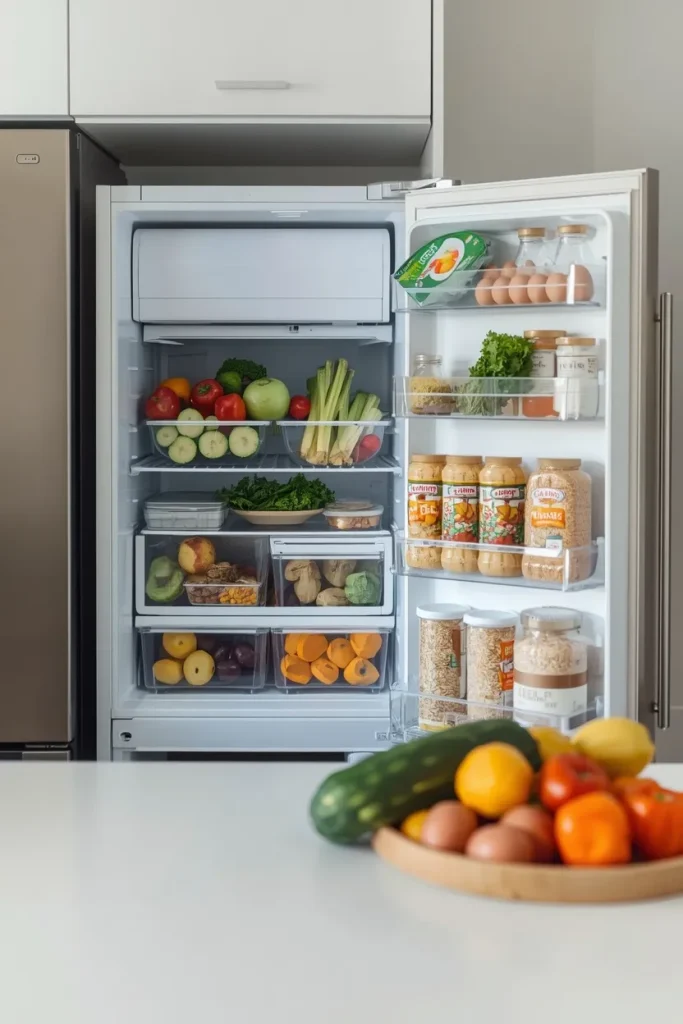
Try This Simple Kitchen Reset
Move less-helpful foods out of immediate reach
If certain foods tend to become automatic choices when you’re tired, consider storing them somewhere less visible.
The goal is not prohibition. It is reducing unnecessary cues and making your preferred choices easier to access.
Keep protein staples available
Choose three to five options you genuinely enjoy.
Examples include:
- Eggs
- Greek yogurt or plain yogurt
- Chicken
- Fish
- Tofu
- Beans
- Lentils
- Cottage cheese
- Nuts and seeds
Protein can come from both animal and plant sources, and dietary variety matters.
Make produce easy to see
Keep convenient options ready:
- Washed fruit
- Cut vegetables
- Salad ingredients
- Frozen vegetables
- Frozen fruit
- Ready-to-use vegetables
Frozen and canned fruits and vegetables can also be useful choices when they do not contain excessive added sugar or sodium.
Keep two or three backup meals
A backup meal is something you can prepare quickly when your original plan falls apart.
Examples:
- Eggs + whole-grain toast + fruit
- Chicken + rice + frozen vegetables
- Tuna + potatoes + salad
- Yogurt + oats + fruit
- Beans + rice + vegetables
A simple backup meal can be more useful than an ambitious meal plan that only works when your day goes perfectly.
Quick Restock Basics
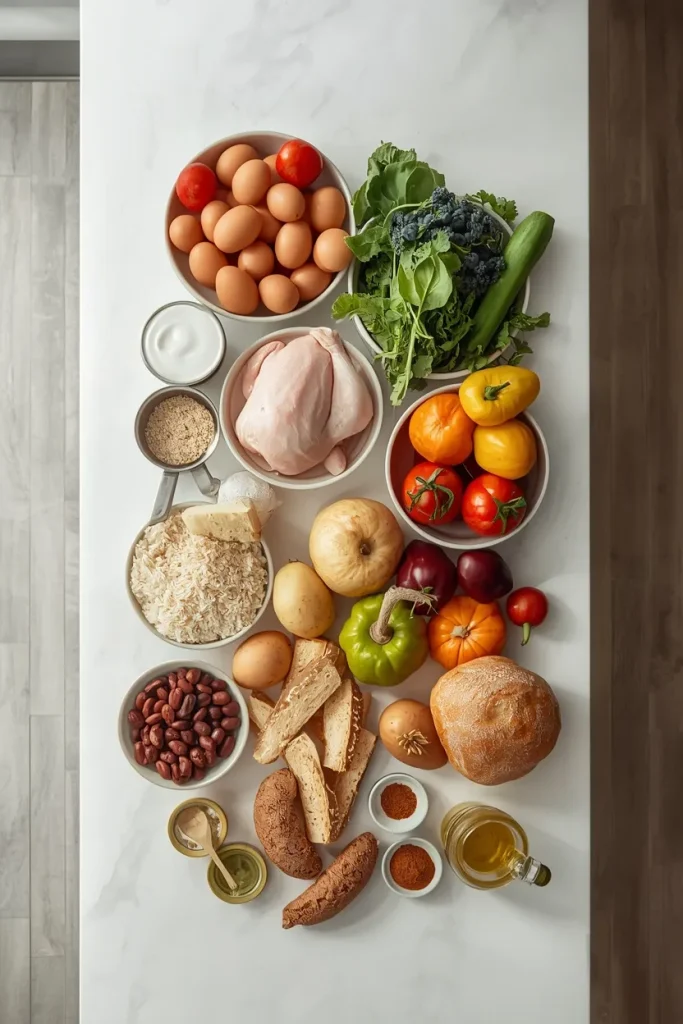
| Category | Easy Options |
|---|---|
| Protein | Eggs, yogurt, chicken, tofu, beans |
| Produce | Frozen vegetables, fruit, salad |
| Carbohydrates | Rice, oats, potatoes, whole-grain bread |
| Staples | Tomatoes, oil, spices, beans, basic sauces |
A healthy eating pattern does not have to consist of expensive specialty foods. WHO emphasizes variety, minimally processed foods, and dietary patterns that can differ according to local food availability and cultural context.
Step 4: Use a Simple Framework for Most Meals
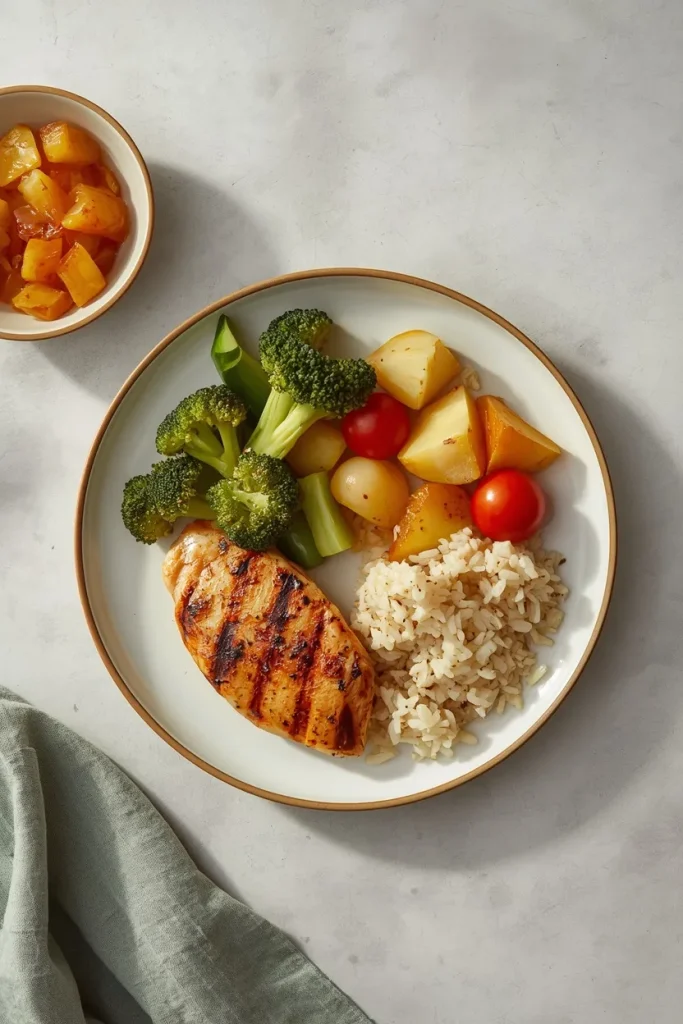
You do not need to create a completely different meal every day.
A simple framework can make meal decisions easier.
Think of most meals as a combination of:
Protein + produce + carbohydrate + a source of fat
For example:
- Chicken + broccoli + rice + olive oil
- Eggs + vegetables + whole-grain toast + avocado
- Tofu + mixed vegetables + noodles + sesame or another suitable fat source
- Fish + salad + potatoes + olive oil
- Beans + vegetables + rice + avocado
This is a flexible framework, not a rule that every plate must follow perfectly.
Healthy diets can take many forms. WHO specifically notes that dietary composition varies according to individual characteristics, cultural context, available foods, and dietary customs.
A Practical Plate Example
For a simple visual starting point, you can think of your plate as being made up mostly of vegetables or fruit, with a substantial protein portion, a carbohydrate source, and a smaller amount of dietary fat.
The exact proportions do not need to be identical at every meal.
Your activity level, appetite, food preferences, goals, and the meal itself can all change what makes sense.
Step 5: Build a Realistic Day of Healthy Eating
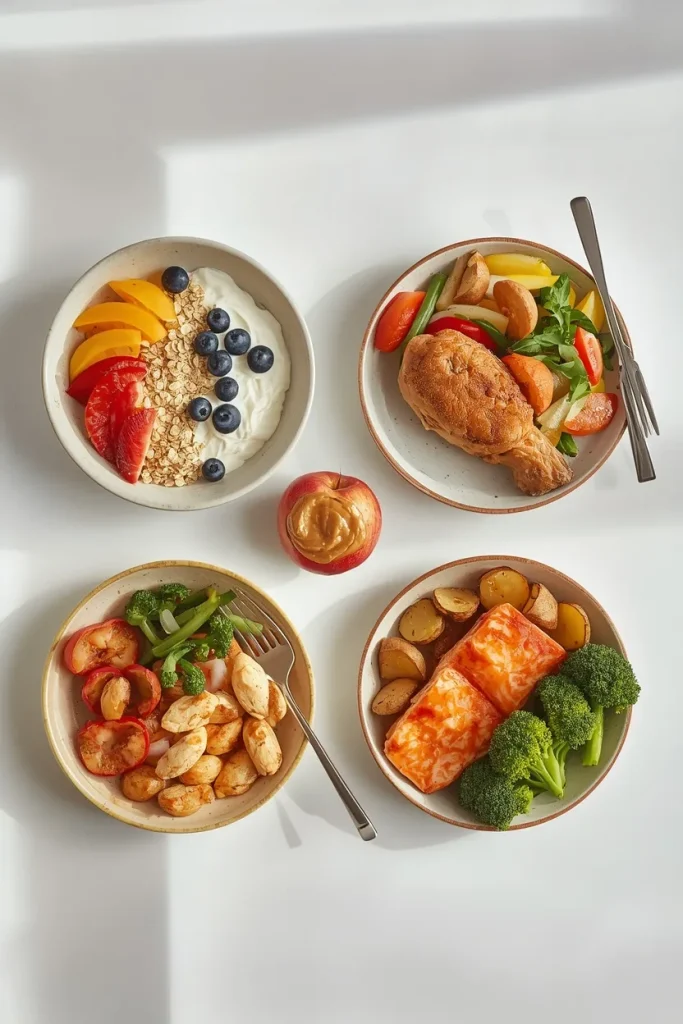
Healthy eating does not have to mean spending hours in the kitchen.
Here is one example:
| Meal | Example | Approx. Preparation |
|---|---|---|
| Breakfast | Greek yogurt + fruit + oats | 3 min |
| Lunch | Pre-cooked chicken + rice + vegetables | 5 min |
| Snack | Apple + peanut butter | 1 min |
| Dinner | Salmon + potatoes + broccoli | 25 min |
These are examples rather than requirements.
You can substitute foods based on your budget, culture, dietary preferences, cooking equipment, and availability.
For example, chicken can be replaced with beans, lentils, tofu, eggs, fish, or another protein source. Rice can be replaced with potatoes, oats, whole-grain bread, or another suitable carbohydrate.
The objective is to create meals that you can actually repeat.
Step 6: Plan for Your Busiest Days
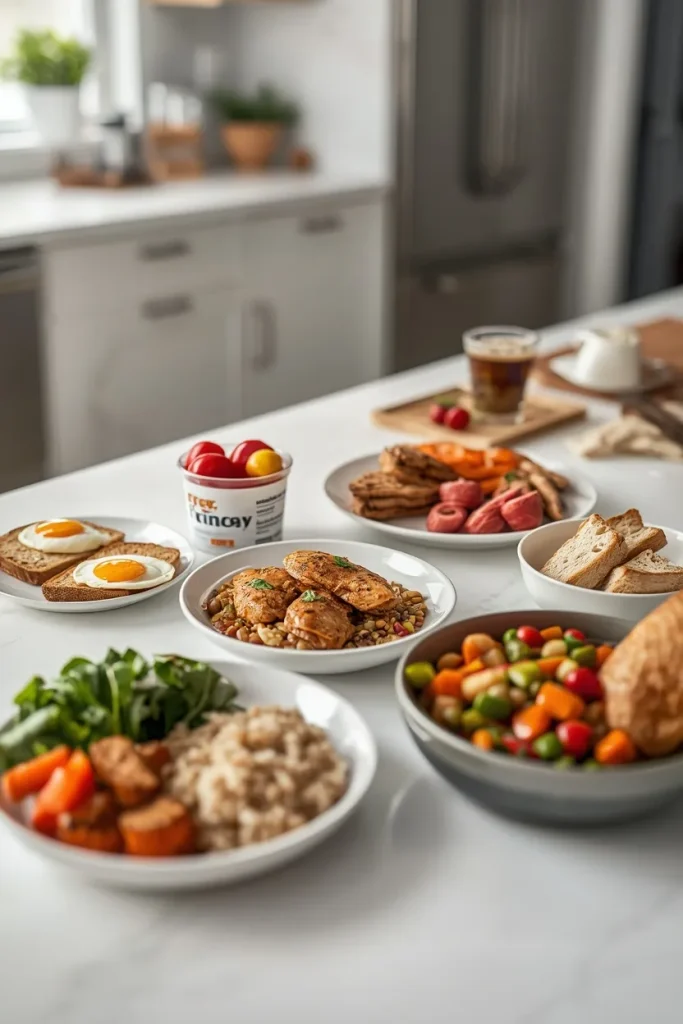
One of the biggest mistakes people make is creating a healthy eating plan that only works on their easiest days.
Instead, ask:
What will I eat when I have almost no time?
Create a short list of emergency meals.
Five-minute options
- Eggs + toast + fruit
- Yogurt + oats + berries or another fruit
- Pre-cooked chicken + rice + frozen vegetables
- Tuna + whole-grain bread + salad
- Beans + microwave rice + vegetables
Ten-minute options
- Omelet with vegetables and toast
- Chicken and vegetable wrap
- Tuna or bean salad
- Tofu and frozen vegetable stir-fry
- Rice bowl with leftover protein and vegetables
Planning for difficult days is often more useful than trying to make your normal days even more perfect.
The CDC similarly recommends planning meals and keeping nutritious foods available because planning can make healthier choices easier when routines become complicated.
Common Mistakes That Make Getting Back on Track Harder
| Mistake | Why It Can Be a Problem | Better Approach |
|---|---|---|
| Starting an extreme diet | Creates unnecessary restriction | Return to balanced meals |
| Changing everything at once | Too many habits compete for attention | Choose one or two priorities |
| Skipping meals to compensate | Can make the day harder to manage | Return to regular meals |
| Relying only on motivation | Motivation naturally changes | Build systems and routines |
| Eliminating entire food groups | Can make eating unnecessarily restrictive | Focus on overall dietary quality |
| Trying to be perfect | One deviation can trigger an all-or-nothing mindset | Return to your routine at the next meal |
| Ignoring the original trigger | The same problem can repeat | Identify what disrupted the routine |
A varied eating pattern is generally preferable to eliminating an entire food category without a specific reason. The CDC notes that consuming a variety of healthy foods is preferable to eliminating a food type such as carbohydrates.
What to Do After an Unplanned Meal
Suppose you planned a balanced dinner but ended up ordering takeout.
You do not need to compensate by starving yourself the next day.
Simply return to your normal routine at the next meal.
A useful sequence is:
Unplanned meal → acknowledge it → continue normally → return to routine
This prevents one meal from turning into several days of abandoning your routine.
The same principle applies to weekends, celebrations, travel, and other situations where your normal eating pattern changes.
Meal Prep vs. Fresh Cooking: Which Is Better?
You do not have to choose one.
A hybrid approach can be practical (Meal prep & Fresh cooking).
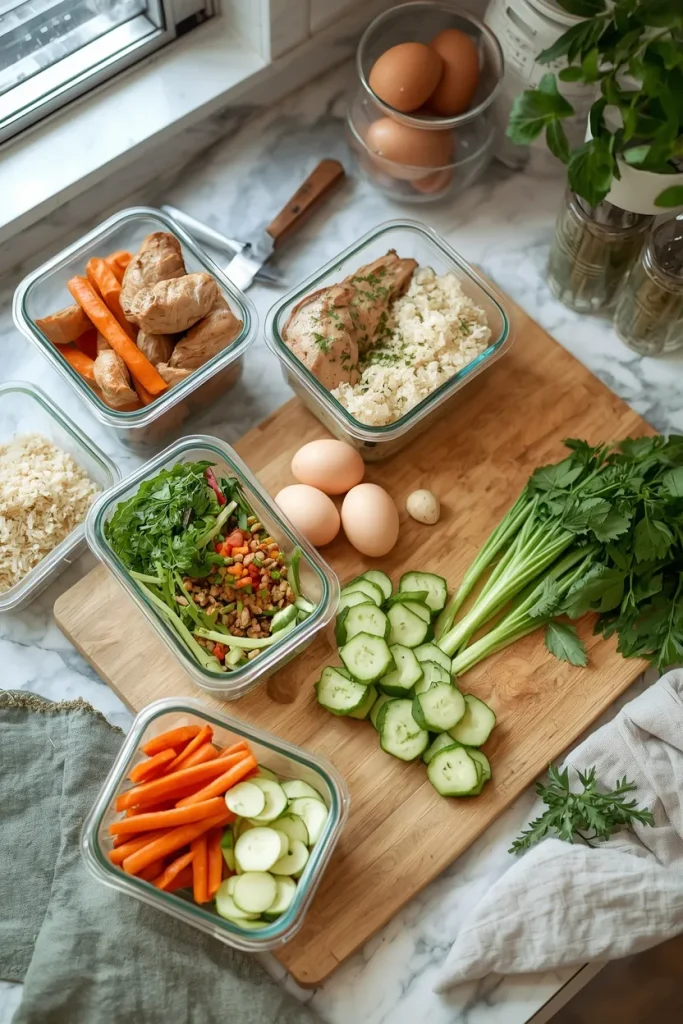
Prepare some foods ahead
For example:
- Cook a batch of chicken
- Wash vegetables
- Cook rice
- Prepare boiled eggs
- Portion snacks
- Make a simple sauce
Cook other foods fresh
You can then combine the prepared ingredients into different meals.
For example:
Prepared chicken + fresh vegetables + rice = lunch
Prepared vegetables + fresh eggs + toast = breakfast
Prepared rice + fresh tofu + vegetables = dinner
This gives you some of the convenience of meal prep without requiring every meal to be cooked days in advance.
Don’t Depend on Motivation Alone
Motivation can help you begin, but a repeatable system makes healthy eating easier to maintain.
Instead of asking:
“How can I stay motivated every day?”
Ask:
“How can I make my preferred choice easier on an ordinary day?”
That might mean:
- Keeping fruit visible
- Buying protein staples every week
- Planning three dinners
- Preparing ingredients on one day
- Keeping frozen vegetables available
- Creating a grocery list on your phone
- Having two emergency meals ready
The goal is to reduce the amount of effort required to make a reasonable choice.
When You Should Get Professional Support
General healthy-eating advice is not a substitute for individualized nutrition or medical care.
Consider speaking with a doctor, registered dietitian, or another appropriately qualified healthcare professional if you are dealing with:
- Significant or unexplained changes in weight or appetite
- A medical condition that affects nutrition
- Persistent distress or anxiety around eating
- Restrictive eating that is difficult to control
- Episodes of loss of control around food
- Questions about a medically prescribed diet
- Nutrition needs related to pregnancy, medication, or another specific health situation
Your individual needs can differ substantially from general dietary guidance.
Frequently Asked Questions
How long does it take to get back into a healthy eating routine?
There is no universal timeline.
Some people may find a routine becomes easier after a week or two, while others need longer. Focus on repeating manageable behaviors rather than waiting for a specific date when you will suddenly feel “back on track.”
Do I need to count calories?
Not necessarily.
Calorie awareness can be useful for some people and some goals, but you do not have to begin by tracking everything you eat. Start by improving meal structure, food quality, portions, and consistency.
The CDC notes that counting calories all the time is not necessary for everyone, while also recognizing that calorie needs vary among individuals.
Should I stop eating carbohydrates?
No general rule requires you to eliminate carbohydrates.
Carbohydrate-rich foods include grains, potatoes, fruits, legumes, and other foods. WHO recommends that carbohydrates come primarily from sources such as whole grains, vegetables, fruits, and pulses.
What should I do if I eat something unhealthy?
Continue with your next normal meal.
Avoid turning one meal into a reason to abandon your entire routine. A flexible eating pattern can accommodate occasional foods that do not fit your usual choices.
Is meal prep necessary?
No.
Meal prep is simply one strategy for making healthy eating more convenient. If you prefer fresh cooking, use that approach. If your schedule is unpredictable, preparing a few ingredients ahead may be useful.
A combination of both can work well.
What should I change first?
Choose the change that solves your biggest practical problem.
If you regularly skip breakfast because you’re rushed, prepare a fast breakfast. If dinner is where your routine breaks down, plan three easy dinners. If your kitchen is usually empty, start with groceries.
Solve the biggest obstacle first rather than trying to improve everything simultaneously.
The Bottom Line
Getting back on track with healthy eating is less about starting over and more about rebuilding a routine that fits your actual life.
You do not need an extreme reset.
Start with the next meal. Stock a few useful foods. Make meals simpler. Add structure gradually. Keep convenient backup options available. Then fine-tune your routine once the basics are working.
A healthy eating pattern should be practical enough to follow on an ordinary Tuesday, not just on your most motivated day.
Save This Guide: Healthy Eating Reset
Start here:
- Skip guilt and extreme reset diets.
- Identify what disrupted your routine.
- Return to regular, balanced meals.
- Keep protein, produce, and useful carbohydrate sources available.
- Plan a few meals instead of every meal.
- Prepare one or two components ahead when useful.
- Keep quick backup meals available.
- Change one or two habits at a time.
- If one meal goes off plan, return to your routine at the next meal.
- Fine-tune your nutrition after your basic routine becomes consistent.
The aim is not perfect eating.
The aim is a healthy routine you can realistically keep.
Sources & Further Reading
- Centers for Disease Control and Prevention (CDC): CDC — Tips for Healthy Eating for a Healthy Weight
- Centers for Disease Control and Prevention (CDC): CDC — How to Have Healthier Meals and Snacks
- World Health Organization (WHO) & Food and Agriculture Organization of the United Nations (FAO): WHO & FAO — What are healthy diets?