Most “high-protein breakfast” lists tell you to eat eggs, yogurt, and cottage cheese, then leave you guessing how much of each. This guide does the math for you. Below are ten breakfasts built around 30 grams of protein, each with exact portions, a protein breakdown, an approximate calorie count, and a quick method. You can follow the amounts as written, or use the swap tables to adapt them to what’s in your kitchen.
Why 30 Grams? (And When It Doesn’t Matter)
Thirty grams is a practical, round target for a protein-forward meal. It’s roughly what you’d get from a palm-sized portion of cooked chicken, and it’s an easy number to build a breakfast around. Many people eat very little protein in the morning and most of it at dinner, so a 30 g breakfast is a simple way to spread intake more evenly across the day.
It isn’t a magic threshold, though. The general adult recommendation is about 0.8 grams of protein per kilogram of body weight per day, and needs vary with body size, age, activity level, and health status (Harvard Nutrition Source: Protein). A smaller or less active person may do well with less than 30g Protein Breakfasts, and someone training hard may want more. To work out a daily figure that fits you, read how much protein you need a day. If you have kidney disease or another condition that affects protein intake, check with your healthcare provider before raising your protein.
How the Numbers Were Calculated
Protein varies by brand, so every figure here is an estimate based on standard reference values, such as those in the USDA’s FoodData Central database:
- 1 large egg ≈ 6 g protein
- Plain nonfat Greek yogurt ≈ 9 to 10 g per 100 g
- 1% low-fat cottage cheese ≈ 12 g per 100 g (about 28 g per cup)
- 1 slice whole-grain bread ≈ 4 g
- 1 cup low-fat milk ≈ 8 g
Where a product varies a lot (protein powder, tofu, strained yogurts), the recipe says so. Always check your own labels, and adjust a portion up or down if your product differs. Measure foods in the state the recipe lists (for example, uncooked oats and drained cottage cheese).
The Ten Breakfasts at a Glance
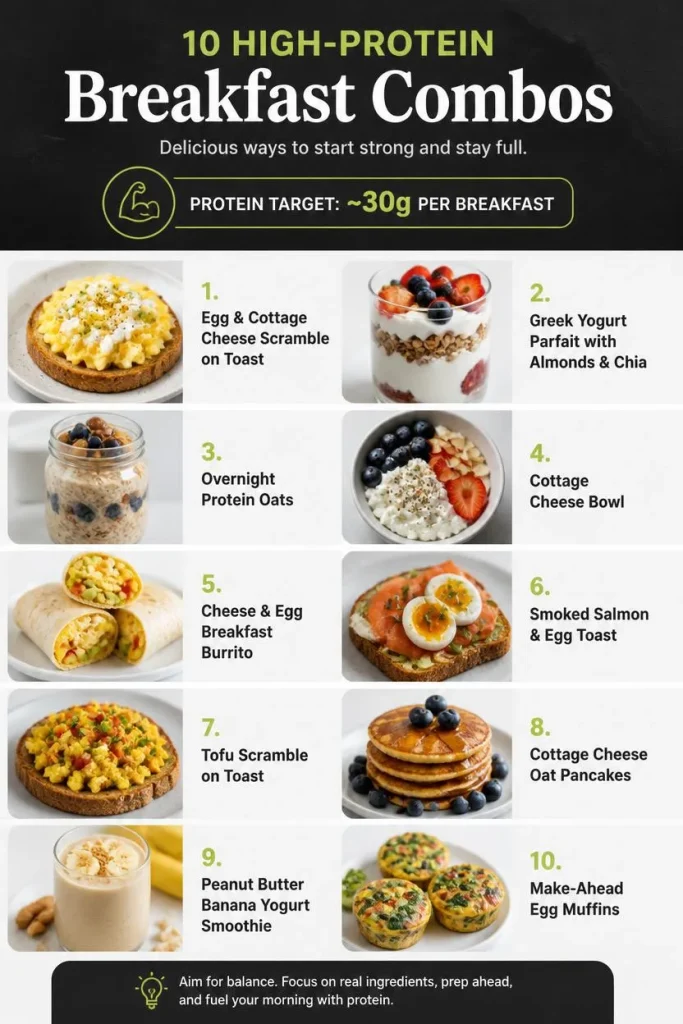
| # | Breakfast | Protein (approx.) | Calories (approx.) | Time |
|---|---|---|---|---|
| 1 | Egg and cottage cheese scramble on toast | 30 g | 375 | 8 min |
| 2 | Greek yogurt parfait with almonds and chia | 31 g | 390 | 3 min |
| 3 | Overnight protein oats | 31 g | 370 | 5 min + overnight |
| 4 | Cottage cheese bowl (sweet or savory) | 31 g | 260 | 3 min |
| 5 | Cheese and egg breakfast burrito | 30 g | 500 | 10 min |
| 6 | Smoked salmon and egg toast | 32 g | 360 | 8 min |
| 7 | Tofu scramble on toast (egg-free) | 32 g | 450 | 12 min |
| 8 | Cottage cheese oat pancakes | 32 g | 450 | 15 min |
| 9 | Peanut butter banana yogurt smoothie | 30 g | 400 | 4 min |
| 10 | Make-ahead egg muffins with milk | 32 g | 410 | 5 min (after prep) |
Calories are rounded estimates and include small amounts of cooking oil where used.
1. Egg and Cottage Cheese Scramble on Toast
Ingredients: 3 large eggs, 1/4 cup (about 55 g) low-fat cottage cheese, 1 slice whole-grain bread, 1 tsp olive oil, salt and pepper.
Method: Whisk the eggs and stir in the cottage cheese. Warm the oil in a non-stick pan over medium-low heat, add the mixture, and stir gently until the eggs are cooked firm with no liquid left. Serve on the toast.
Protein math: eggs ≈ 19 g + cottage cheese ≈ 7 g + bread ≈ 4 g = about 30 g.
The cottage cheese keeps the eggs creamy and adds protein without extra fat.
2. Greek Yogurt Parfait With Almonds and Chia
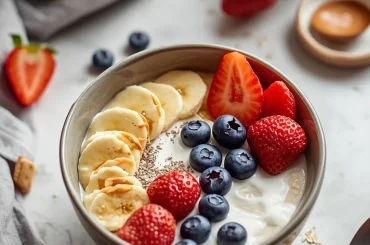
Ingredients: 1 cup (about 225 g) plain nonfat Greek yogurt, 1 oz (about 23) almonds, roughly chopped, 1 tbsp chia seeds, 1/2 cup berries.
Method: Layer the yogurt, chia, almonds, and berries in a glass or bowl. Done.
Protein math: yogurt ≈ 22 g + almonds ≈ 6 g + chia ≈ 2 g + berries ≈ 1 g = about 31 g.
Strained “high-protein” yogurts can contain more per cup, and flavored or low-protein yogurts far less, so read the label. If you want a full recipe built around yogurt and oats, see our Greek yogurt protein oats.
3. Overnight Protein Oats
Ingredients: 1/2 cup rolled oats, 3/4 cup 1% milk, 1 scoop protein powder that provides 20 g of protein, 1/2 cup berries.
Method: Stir the oats, milk, and powder together in a jar until smooth. Refrigerate overnight, then top with berries in the morning.
Protein math: oats ≈ 5 g + milk ≈ 6 g + powder = 20 g (check your label) = about 31 g.
Powders range widely, from about 15 to 30 g per scoop. If your scoop has 25 g, use about 3/4 of it.
4. Cottage Cheese Bowl (Sweet or Savory)
Sweet version: 1 cup (about 225 g) 1% low-fat cottage cheese, 1/2 cup berries, 1 tbsp chia seeds, a small drizzle of honey if you like.
Savory version: The same cottage cheese with halved cherry tomatoes, sliced cucumber, a drizzle of olive oil, and black pepper. Skip the chia if you prefer.
Protein math: cottage cheese ≈ 28 g + chia ≈ 2 g + berries ≈ 1 g = about 31 g.
Cottage cheese can be fairly high in sodium, so compare labels if you watch your salt intake. This is the lowest-calorie option on the list.
5. Cheese and Egg Breakfast Burrito
Ingredients: 3 large eggs, 1/4 cup shredded cheddar, 1 whole-wheat tortilla (8-inch), 2 tbsp salsa, a handful of spinach, 1 tsp oil. Optional: 1/4 cup rinsed canned black beans.
Method: Scramble the eggs until cooked firm, wilting the spinach in at the end. Spoon into the tortilla with the cheese and salsa, then roll.
Protein math: eggs ≈ 19 g + cheddar ≈ 7 g + tortilla ≈ 4 g = about 30 g. Add the beans for roughly 4 g more.
To make these ahead, wrap them individually and freeze. Reheat until steaming hot throughout (165°F / 74°C).
6. Smoked Salmon and Egg Toast
Ingredients: 2 large eggs, 3 oz (about 85 g) smoked salmon, 1 slice whole-grain or rye bread, lemon, black pepper, optional cucumber slices or dill.
Method: Cook the eggs your preferred way (poached or fried work well). Layer the salmon on the toast, top with the eggs, and finish with lemon and pepper.
Protein math: eggs ≈ 13 g + salmon ≈ 15 g + bread ≈ 4 g = about 32 g.
Smoked salmon is usually eaten cold and is relatively high in sodium. People who are pregnant, and others at higher risk from foodborne illness, are generally advised to avoid it unless it’s cooked, so check with your healthcare provider if that applies to you.
7. Tofu Scramble on Toast (Egg-Free)
Ingredients: 200 g (about 7 oz) extra-firm tofu, 2 slices whole-grain bread, 1 tbsp nutritional yeast, 1 tbsp hemp hearts, 1 tsp oil, 1/4 tsp turmeric, a handful of spinach, salt and pepper.
Method: Crumble the tofu into a pan with the heated oil. Add the turmeric and spinach and cook for 5 to 7 minutes, stirring, until the tofu is warmed through and lightly golden. Stir in the nutritional yeast and season. Serve on the toast with the hemp hearts sprinkled over.
Protein math: tofu ≈ 18 g + bread ≈ 8 g + nutritional yeast ≈ 3 g + hemp hearts ≈ 3 g = about 32 g.
Tofu varies by brand, roughly 8 to 13 g per 100 g, so use your label to adjust the amount. Nutritional yeast also varies, especially fortified versions.
8. Cottage Cheese Oat Pancakes
Ingredients (makes about 4 small pancakes): 1/2 cup rolled oats, 1/2 cup (about 110 g) low-fat cottage cheese, 2 large eggs, 1/2 tsp baking powder, a pinch of cinnamon, 1 tsp oil for the pan, 1/2 cup berries to serve.
Method: Blend the oats, cottage cheese, eggs, baking powder, and cinnamon until fairly smooth. Cook small rounds in a lightly oiled non-stick pan over medium heat for 2 to 3 minutes per side until set and golden. Top with berries.
Protein math: oats ≈ 5 g + cottage cheese ≈ 14 g + eggs ≈ 13 g = about 32 g.
This is the best choice when you want something that feels like a “proper” breakfast rather than a bowl.
9. Peanut Butter Banana Yogurt Smoothie
Ingredients: 3/4 cup (about 170 g) plain nonfat Greek yogurt, 1 cup 1% milk, 1 tbsp peanut butter, 1 medium banana, a few ice cubes.
Method: Blend until smooth.
Protein math: yogurt ≈ 17 g + milk ≈ 8 g + peanut butter ≈ 4 g + banana ≈ 1 g = about 30 g.
No protein powder needed. For a thicker smoothie, freeze the banana first.
10. Make-Ahead Egg Muffins With Milk
Ingredients (makes 12 muffins): 12 large eggs, 3/4 cup shredded cheddar, 1 cup finely chopped vegetables (peppers, spinach, onion), salt and pepper.
Method: Heat the oven to 350°F (175°C). Grease a 12-cup muffin tin. Divide the vegetables among the cups, pour in the whisked eggs, and sprinkle with cheese. Bake for 20 to 25 minutes until the centers are set and firm.
Per serving: 3 muffins ≈ 24 g protein + 1 cup 1% milk ≈ 8 g = about 32 g. Each muffin carries roughly 8 g.
Refrigerate within 2 hours of baking and eat within 3 to 4 days, in line with USDA leftover guidance (USDA FSIS). Freeze extras for longer storage. For a full system to build these into a weekly routine, read our meal prep guide for beginners.
Protein Boosters: Quick Swap Table
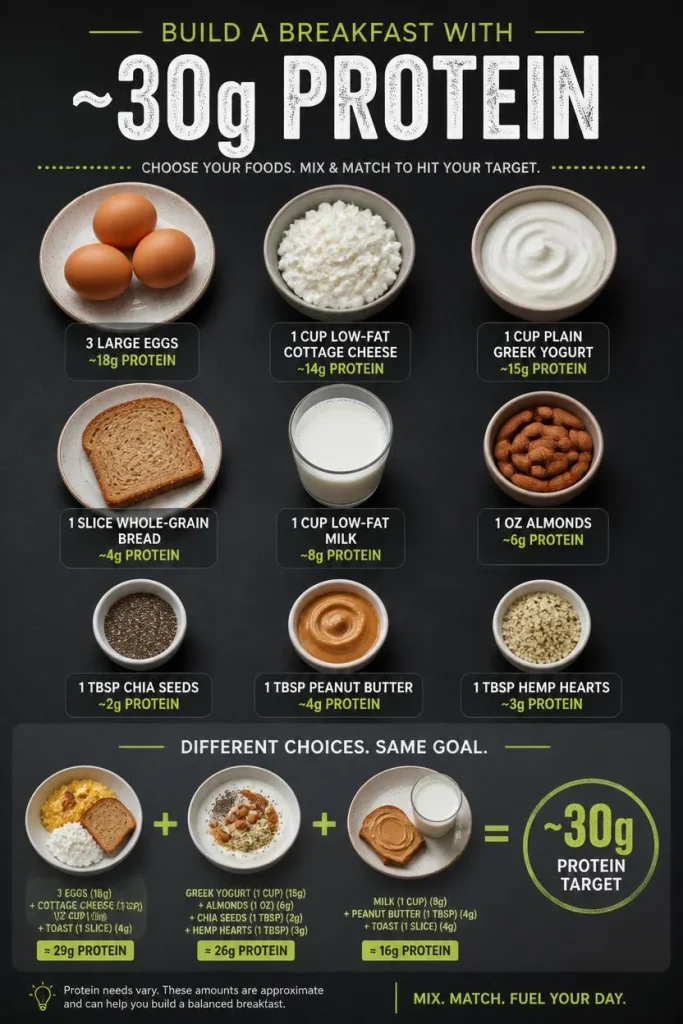
If you want to build your own breakfast or nudge a recipe up or down, use this table. All values are approximate.
| Add this | Protein |
|---|---|
| 1 large egg | 6 g |
| 1/4 cup (55 g) low-fat cottage cheese | 7 g |
| 1/2 cup (110 g) low-fat cottage cheese | 14 g |
| 1/2 cup (115 g) plain nonfat Greek yogurt | 11 g |
| 1 oz (28 g) cheddar | 7 g |
| 1 cup low-fat milk | 8 g |
| 1 slice whole-grain bread | 4 g |
| 1 oz (about 23) almonds | 6 g |
| 1 tbsp peanut butter | 4 g |
| 3 tbsp hemp hearts | 10 g |
| 1 tbsp chia seeds | 2 g |
| 1 scoop protein powder | 15 to 30 g (check label) |
How to Scale Up or Down
- Need about 20 g? Cut the main protein roughly by a third. For example, use 2 eggs instead of 3 in the scramble, or 3/4 cup yogurt instead of 1 cup in the parfait.
- Need about 40 g? Add one booster from the table, such as an extra egg, a 1/4 cup of cottage cheese, or an extra tablespoon of peanut butter.
- Dairy-free? Use the tofu scramble, and swap dairy milk for unsweetened soy milk, which has a similar protein content to cow’s milk. Many other plant milks (almond, oat, rice) contain far less, so check the label.
- Egg-free? Try the parfait, cottage cheese bowl, overnight oats, smoothie, or tofu scramble.
Common Mistakes When Aiming for 30 Grams
Assuming all yogurt is the same. Flavored or regular yogurts can contain half the protein of Greek yogurt. Look at grams per serving and the serving size.
Measuring cooked vs. raw inconsistently. Weigh or measure foods as the recipe states, especially oats, tofu, and meat.
Trusting “protein” on the front of the package. Check the nutrition panel. Marketing claims don’t always match the grams you actually get.
Ignoring the rest of the plate. Protein is one part of a satisfying meal. Fruit, whole grains, and healthy fats add fiber and keep you full. The CDC recommends building meals from a mix of food groups rather than focusing on one nutrient (CDC: How to Have Healthier Meals and Snacks).
Forgetting portions. Even healthy foods add calories quickly, particularly nuts, nut butters, and cheese. The NIDDK offers helpful guidance on portion awareness (NIDDK: Food Portions).
Frequently Asked Questions
Is 30 grams of protein at breakfast necessary?
No. It’s a useful, achievable target for many adults, but your total daily intake matters more than any single meal. Use it as a guide, not a requirement.
Can I eat a 30 g protein breakfast every day?
Yes, for most healthy adults, as long as it fits within a varied overall diet. Rotating between the ten options also keeps your nutrient intake more varied.
Which of these is the lowest in calories?
The cottage cheese bowl, at around 260 calories, followed by the smoothie and the overnight oats.
Which is best for meal prep?
The egg muffins and the overnight oats. The burritos also freeze well.
What if I don’t use protein powder?
Most of these recipes don’t. Only the overnight oats rely on powder, and you can swap in a thick Greek yogurt-based oats recipe instead.
Are these good for weight loss?
Protein can help meals feel more filling, but no single breakfast causes weight loss. Overall eating pattern, activity, sleep, and individual factors all matter. For a broader approach, see how to lose weight without extreme dieting.
Final Thoughts
Hitting 30 grams of protein at breakfast doesn’t require supplements or complicated recipes. It takes a little arithmetic, which is what the portions above are for. Pick two or three you like, rotate them through your week, and use the booster table to adjust as your needs change. If you’d like to personalize your daily target, start with our guide to how much protein you need.
Sources and Further Reading
- Harvard T.H. Chan School of Public Health: Protein covers protein sources and general intake guidance.
- CDC: How to Have Healthier Meals and Snacks covers building balanced meals.
- NIDDK: Food Portions, Choosing Just Enough for You explains portions vs. serving sizes.