Feeling hungry while trying to lose fat is common, but constantly reaching for snacks to manage it often backfires. Grazing throughout the day can make it harder to track intake accurately, and it doesn’t always address what’s actually causing the hunger in the first place — which is frequently how your meals are built, not a lack of willpower.
This guide (How to Handle Hunger During Fat Loss ) focuses on the structural fixes that reduce hunger at the source: how you build your meals, how much protein and fiber they contain, how much physical volume of food you’re eating, and how consistent your eating pattern is. Get these right, and the urge to snack constantly tends to fade on its own.
Quick Answer
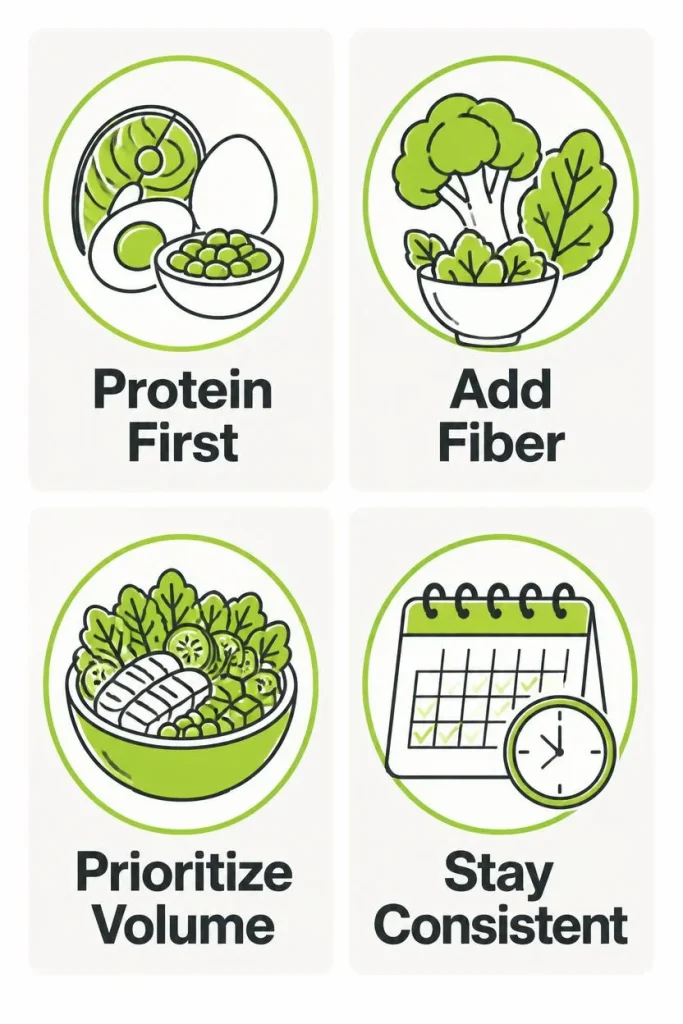
Persistent hunger during fat loss is usually a sign that meals aren’t doing enough heavy lifting — not a sign of weak willpower. The most effective fixes are: building meals around a solid protein source at every sitting, including fiber-rich carbohydrates and vegetables, prioritizing food volume (not just calorie count) by choosing water-rich, lower-energy-density foods, and eating on a consistent schedule rather than letting meals slide or get skipped. Addressing these four areas directly reduces the physiological drive to snack, rather than relying on willpower to resist it.
Why Constant Snacking Becomes a Problem During Fat Loss
Snacking itself isn’t inherently bad — plenty of people manage fat loss successfully with planned snacks built into their day. The issue is reactive snacking: eating in response to hunger that a poorly structured meal created, rather than as part of a planned eating pattern.
This matters for a few practical reasons:
- Tracking accuracy suffers. Frequent small snacks are easy to underestimate or forget to log, which can quietly add up over a week.
- It often signals an unmet need rather than solving one. Reaching for a snack because a meal left you hungry an hour later treats the symptom, not the cause.
- It can make a deficit feel harder than it needs to be. Constantly negotiating with hunger throughout the day is mentally tiring in a way that a few well-structured meals usually isn’t.
The goal isn’t to eliminate snacks entirely — it’s to reduce the need for them by making meals more satisfying in the first place.
Build Meals Around Protein First
Protein is consistently one of the most filling macronutrients per calorie, and it plays a direct role in appetite regulation. A controlled crossover study looking at meal structure and protein content found that higher-protein meals slowed gastric emptying and increased GLP-1, a gut hormone associated with reduced appetite, compared to lower-protein meals (meal structure and protein’s effects on gastric emptying and gut hormones). The same research also found that meal structure — eating a solid, substantial meal rather than something more liquid or minimal — had a meaningful effect on self-reported fullness, suggesting that how a meal is built matters alongside what it contains.
Practical application:
- Aim for a clear protein source at every meal — eggs, poultry, fish, lean beef, tofu, tempeh, Greek yogurt, cottage cheese, or legumes.
- A useful starting benchmark many people use is roughly 25-40 grams of protein per meal, though individual needs vary with total daily targets, body size, and activity level.
- Don’t treat protein as an afterthought added to a carb- or fat-heavy plate — build the meal around it first, then fill in the rest.
If you’re also training to preserve muscle during a deficit, this approach lines up directly with the broader body-recomposition framework of prioritizing protein across the day, not just at one meal.
Include Fiber at Most Meals
Fiber slows digestion, which extends the time food spends in the stomach and small intestine. That slower transit is part of why fiber-rich meals tend to feel more filling than low-fiber meals with a similar calorie count.
Practical sources to build into meals:
- Vegetables (most types, especially non-starchy ones like broccoli, leafy greens, peppers, and zucchini)
- Legumes (beans, lentils, chickpeas) — these also contribute meaningful protein
- Whole grains (oats, brown rice, quinoa, whole-wheat products) in place of refined versions
- Fruit, particularly with the skin on where applicable (apples, pears, berries)
Fiber-rich foods also tend to require more chewing and take up more physical space in a meal, both of which contribute to a more satisfying eating experience — not just a nutritional one.
Prioritize Food Volume, Not Just Calories
This is one of the most underused tools for managing hunger, and it’s backed by a reasonable body of research on energy density — the number of calories packed into a given weight of food.
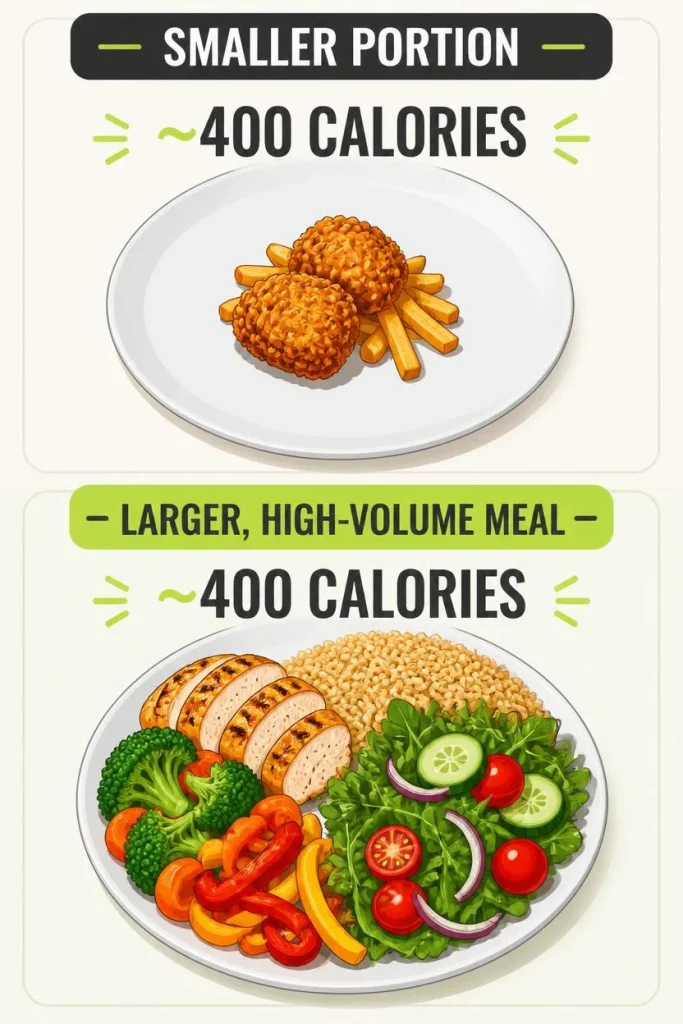
A scientific review on energy density and appetite control found that when people eat a consistent weight of food, their total calorie intake tends to track the energy density of that food — meaning that reducing energy density (by choosing foods with more water and fiber relative to their calorie content) spontaneously lowers how much people eat, without requiring conscious restriction (energy density, food volume, and appetite control review). The same review also highlighted that starting a meal with a large portion of a low-energy-density food — like a vegetable-based soup or a big salad — can reduce total intake across the whole meal, a strategy sometimes called “filling up first.”
How to apply this:
- Build meals with a large portion of vegetables or salad before adding more energy-dense components like oils, cheese, or starches.
- Choose water-rich foods (soups, salads, vegetables, fruit) over their more concentrated counterparts when portion size and satisfaction matter more than convenience.
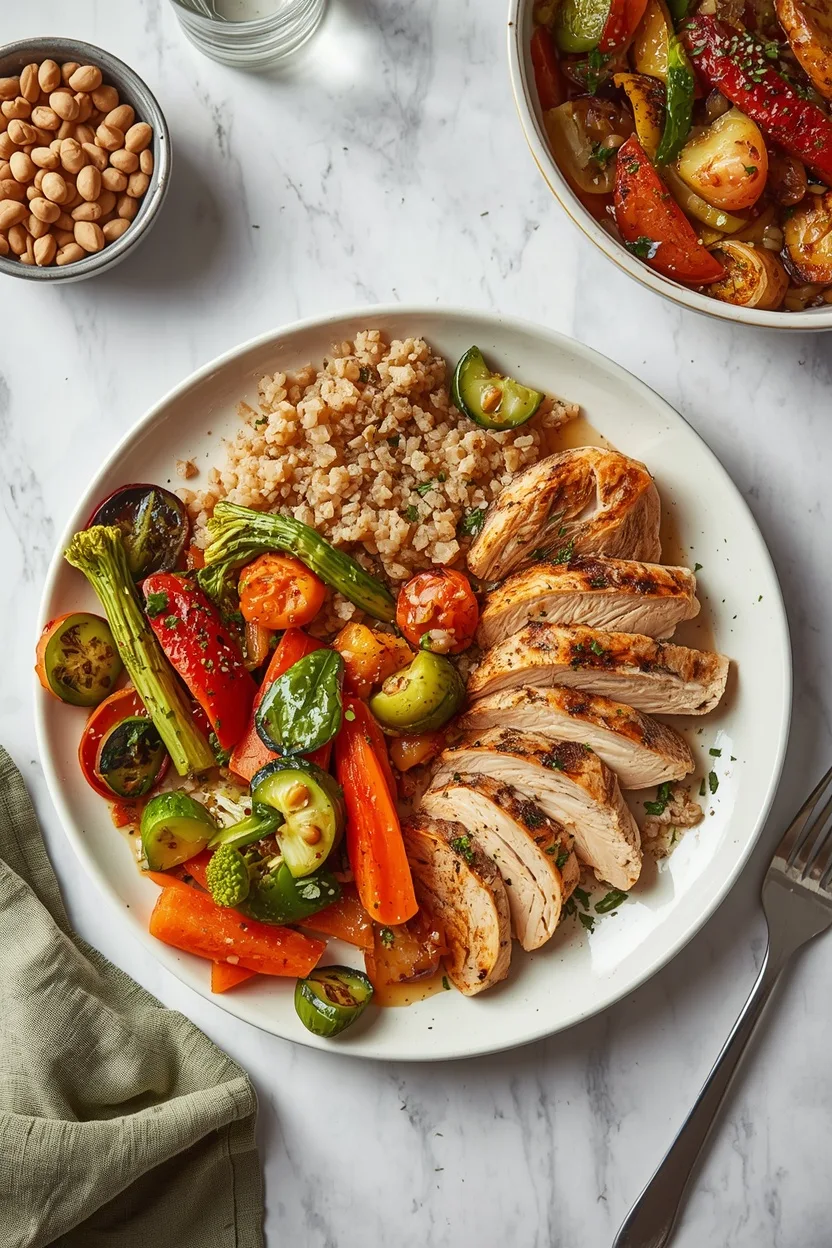
- Recognize that two meals with the same calorie count can feel very different depending on their volume — 400 calories of a small portion of pasta with oil feels very different from 400 calories spread across a large bowl of vegetables, lean protein, and a modest grain portion.
This doesn’t mean energy-dense foods (nuts, oils, cheese, nut butter) are off-limits — they’re often valuable for flavor and healthy fats. It means leaning on lower-energy-density foods specifically in the moments when hunger and fullness are the priority.
Eat on a Consistent Schedule
Irregular eating — skipping meals, delaying them significantly, or eating very differently from day to day — tends to make hunger harder to manage, not easier. When a meal gets pushed back by hours or skipped altogether, it’s common to arrive at the next eating opportunity overly hungry, which makes it harder to stop at a reasonable portion and easier to reach for whatever’s convenient.
A few practical patterns that tend to work well:
- Eating at roughly similar times each day, even if the exact clock time shifts somewhat with your schedule.
- Not skipping meals specifically to “save calories” for later, which often backfires into overeating or snacking out of excessive hunger.
- Building a realistic eating rhythm around your actual schedule rather than an idealized one you won’t stick to — this is the same principle behind FitVibe’s guide to a minimum viable healthy routine for busy adults.
There’s no single “correct” number of meals per day — three solid meals, three meals plus a planned snack, or other structures can all work. What matters more is consistency and whether each eating occasion is substantial enough to actually satisfy you.
Protein and Fiber Pairing Ideas
Combining a protein source with a fiber-rich food in the same meal or snack tends to be more filling than either on its own. A few practical, accessible pairings:
| Protein Source | Fiber Pairing | Easy Combination |
|---|---|---|
| Eggs | Spinach, peppers, or mixed vegetables | Vegetable omelet or scramble |
| Greek yogurt | Berries, chia seeds, or oats | Yogurt bowl with fruit and a spoonful of oats |
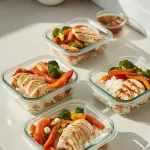
| Chicken or tofu | Mixed roasted vegetables, brown rice | Protein and vegetable bowl |
| Canned tuna or salmon | Leafy greens, beans | Simple salad with a bean or legume base |
| Cottage cheese | Sliced fruit or vegetables | Quick, low-effort snack or light meal |
| Lentils or chickpeas | Already fiber-rich on their own | Lentil or chickpea-based soup or salad |
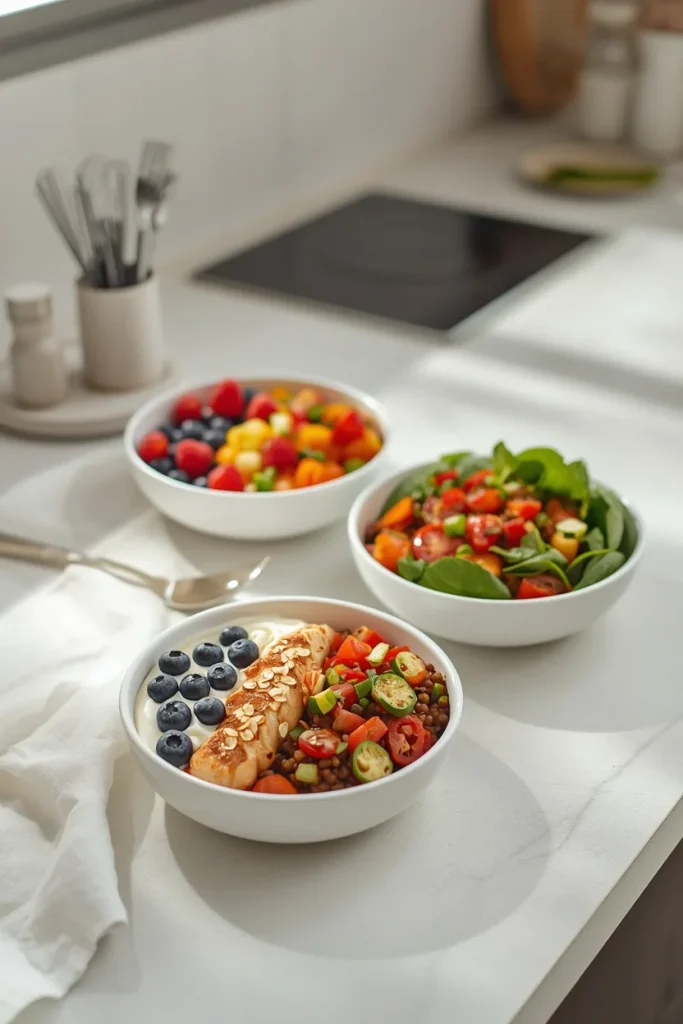
These pairings aren’t about following a rigid formula — they’re a practical shortcut for building meals that naturally hit the protein-and-fiber targets covered above without much extra planning.
Physical Hunger vs. Habitual or Emotional Eating
Not every urge to snack comes from genuine physical hunger, and distinguishing between the two can reduce unnecessary snacking without requiring extra willpower.
Signs that point toward genuine physical hunger:
- It builds gradually over time rather than appearing suddenly
- It’s accompanied by physical cues like stomach emptiness or low energy
- Any reasonably filling food sounds appealing, not just one specific item
Signs that point toward habitual or emotional eating:
- The urge appears suddenly, often tied to a specific trigger (stress, boredom, a particular time of day, or a specific food craving)
- Only one specific food feels satisfying, and other filling options don’t seem appealing
- It shows up shortly after a substantial meal that should still be providing fullness
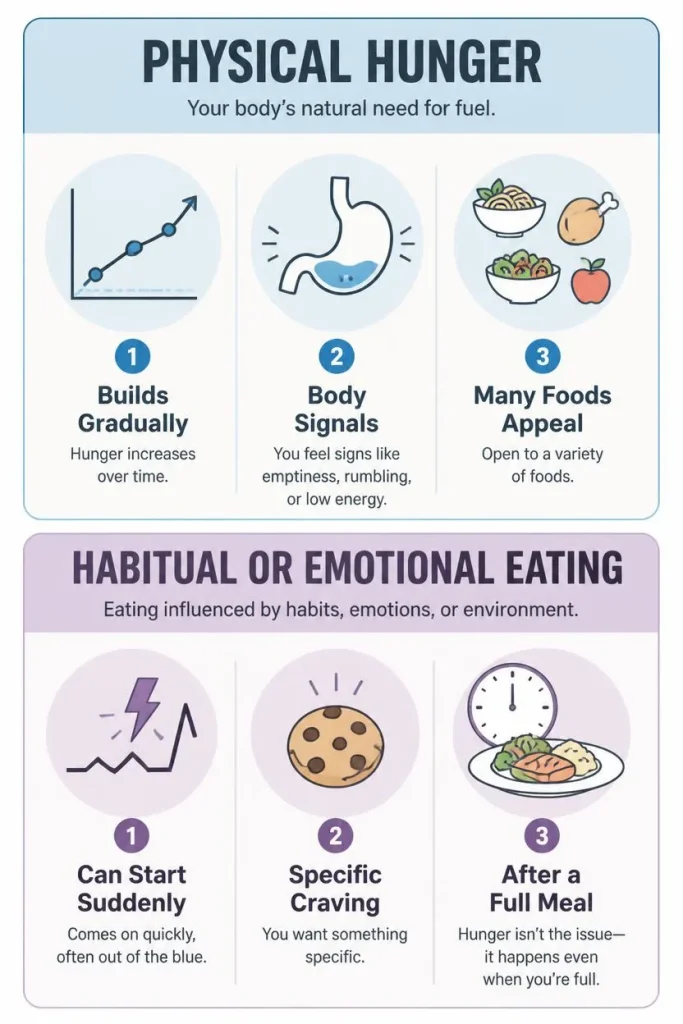
This distinction isn’t about judgment — habitual and emotional eating are extremely common and not a personal failing. But recognizing the difference helps you apply the right fix: a meal-structure adjustment for genuine hunger, and a different strategy (addressing stress, boredom, or habit directly) for the other kind, rather than assuming more food is always the answer.
A Sample Meal Structure for Managing Hunger
This isn’t a rigid meal plan — it’s an illustration of how the four principles above (protein, fiber, volume, consistency) come together in a realistic day.
| Meal | Protein Anchor | Fiber/Volume Component | Why It Works |
|---|---|---|---|
| Breakfast | Eggs or Greek yogurt | Vegetables (e.g., spinach in eggs) or berries | Protein and fiber early reduce mid-morning hunger spikes |
| Lunch | Chicken, fish, or legumes | Large portion of mixed vegetables or salad, whole grain | Volume and fiber extend fullness into the afternoon |
| Dinner | Lean beef, tofu, or fish | Roasted vegetables, soup starter if desired | A substantial, solid meal supports evening satiety |
| Planned snack (if needed) | Cottage cheese, a handful of nuts with fruit | — | Addresses genuine hunger between meals without becoming constant grazing |
If you’re building this out as part of a full week of meal prep, see FitVibe’s complete beginner’s guide to meal prepping for batch-cooking strategies that make consistent, protein-and-fiber-forward meals easier to maintain on busy days.
Common Mistakes That Fuel Constant Snacking
| Mistake | Why It Happens | Better Approach |
|---|---|---|
| Building meals around carbs or fat with little protein | Protein often gets treated as a side rather than the anchor | Choose the protein source first, then build the rest of the meal around it |
| Skipping meals to “save” calories | Feels like a shortcut to a bigger deficit | Spread intake across consistent meals; extreme hunger later often leads to overeating |
| Choosing calorie-dense, low-volume foods when hunger is the priority | These foods are often more convenient or habitual | Lean on water-rich, high-fiber foods when fullness matters most |
| Treating all hunger as something to snack away immediately | Snacking feels like the fastest fix | Check whether your last meal had enough protein, fiber, and volume before reaching for a snack |
| Eating at wildly inconsistent times day to day | Busy or unpredictable schedules | Anchor meals to rough, repeatable times even if the exact hour shifts |
| Drinking most calories (smoothies, shakes) instead of eating solid meals | Convenient, especially when busy | Favor solid, chewable meals when managing hunger is a priority, based on research suggesting meal structure affects fullness |
Before-You-Build-a-Meal Checklist
- [ ] Does this meal have a clear protein source (roughly 25-40g as a starting benchmark)?
- [ ] Is there a fiber-rich component (vegetables, legumes, whole grains, or fruit)?
- [ ] Does the meal have enough physical volume, not just calories?
- [ ] Is this meal happening at a roughly consistent time relative to your usual schedule?
- [ ] If you’re still hungry afterward, was anything above missing — rather than defaulting straight to a snack?
Real-World Examples
Busy workday, limited time: A pre-cooked protein (rotisserie chicken, canned tuna, or pre-cooked eggs) paired with a bagged salad kit or microwaveable vegetables covers protein, fiber, and volume in under five minutes of assembly.
Eating out or ordering in: Prioritize dishes with a visible, substantial protein portion and ask for extra vegetables or a side salad in place of extra starch when possible — the same volume and protein principles still apply outside a home kitchen.
Evening hunger after dinner: Rather than defaulting to a snack, consider whether dinner itself had enough protein and volume. If it did and hunger is still genuine, a planned, protein-forward option (Greek yogurt, cottage cheese) is a more deliberate choice than open-ended grazing.
Frequently Asked Questions
Is snacking always bad during fat loss? No. Planned snacks that fit into your overall intake and include protein or fiber can be a completely reasonable part of a fat-loss approach. The concern here is specifically reactive, frequent snacking driven by meals that aren’t satisfying enough to begin with.
How much protein do I actually need per meal to feel full? This varies by individual, but a commonly used starting point is roughly 25-40 grams per meal. Your ideal amount depends on your total daily protein target, body size, and activity level, so treat this as a practical starting range rather than a fixed rule.
Does drinking water help with hunger? Water doesn’t replace the need for adequate protein, fiber, and food volume, but staying adequately hydrated is a reasonable habit, and thirst is sometimes mistaken for hunger. It’s a minor supporting factor rather than a primary solution.
Can intermittent fasting help manage hunger during fat loss? Different eating patterns work for different people, and consistency matters more than the specific structure. If a compressed eating window genuinely helps you feel satisfied with fewer, larger meals, that’s a reasonable approach — but it isn’t necessary for managing hunger, and some people find the opposite (smaller, more frequent meals) works better for them.
Why do I feel hungry again soon after eating, even when I ate a reasonable amount? This often points to a meal that was lower in protein, fiber, or physical volume than it needed to be — a meal heavy in refined carbohydrates or fats but light on the fuller, slower-digesting components covered in this guide. Reviewing the before-you-build checklist above against your recent meals can help identify the gap.
Is it normal to feel some hunger during a calorie deficit? Some increase in hunger is a common part of sustained calorie reduction and isn’t necessarily a sign anything is wrong. The goal of the strategies in this guide is to keep that hunger manageable and avoid the kind of excessive, constant hunger that leads to overeating or abandoning a reasonable eating pattern altogether.
Other Factors That Influence Hunger Beyond Meal Structure
Meal composition is the most directly actionable lever, but it isn’t the only factor that shapes how hungry you feel.
- Sleep: Inadequate or inconsistent sleep is commonly associated with increased appetite and a stronger pull toward convenient, energy-dense foods. If hunger has become harder to manage despite solid meal structure, reviewing sleep habits is a reasonable next place to look.
- Stress: High stress levels can increase the drive to eat for reasons unrelated to physical hunger, which ties back to the habitual-versus-physical distinction above.
- Activity level: More physically active days generally increase genuine hunger, which is appropriate and expected rather than something to suppress — the goal on those days is often adjusting portions within your plan, not ignoring the signal.
- Alcohol: Alcohol can lower inhibition around food choices and contributes calories without much fullness, which can make hunger management harder on days it’s consumed.
None of these replace the core meal-structure strategies above, but they’re worth considering if hunger still feels difficult to manage after addressing protein, fiber, volume, and consistency.
What should a high-protein breakfast look like if I tend to get hungry by mid-morning? A breakfast anchored by a solid protein source — eggs, Greek yogurt, or cottage cheese, for example — combined with some fiber tends to extend fullness further into the morning than a carb-heavy, low-protein breakfast. For a detailed starting point, see FitVibe’s guide to a practical high-protein breakfast, which covers protein sources and approximate amounts per serving.
A Note on Individual Variation
Hunger and fullness responses vary meaningfully between individuals based on factors like activity level, sleep, stress, hormonal factors, and overall health. If hunger feels persistently extreme, unmanageable, or is accompanied by other concerning symptoms, that’s worth discussing with a doctor or registered dietitian rather than assuming it will resolve with meal adjustments alone.
Conclusion
Constant snacking during fat loss is usually less about self-control and more about meal structure. Prioritizing protein, building in fiber, choosing foods with enough physical volume, and eating on a consistent schedule address the actual physiological drivers of hunger, rather than asking willpower to do all the work. These changes don’t require eliminating snacks entirely — they simply reduce how often you genuinely need one.
Save This Guide: Quick Reference
- Protein first: Roughly 25-40g per meal as a starting benchmark
- Add fiber: Vegetables, legumes, whole grains, or fruit at most meals
- Prioritize volume: Water-rich, lower-energy-density foods when fullness matters most
- Stay consistent: Regular meal timing beats skipping meals to “save” calories
- Before snacking: Check whether your last meal had enough protein, fiber, and volume
- Planned snacks are fine: The goal is reducing reactive, constant snacking — not eliminating snacks altogether