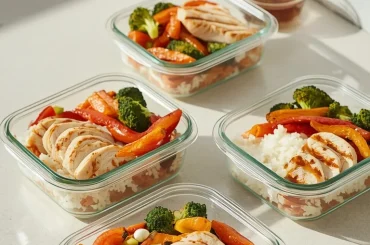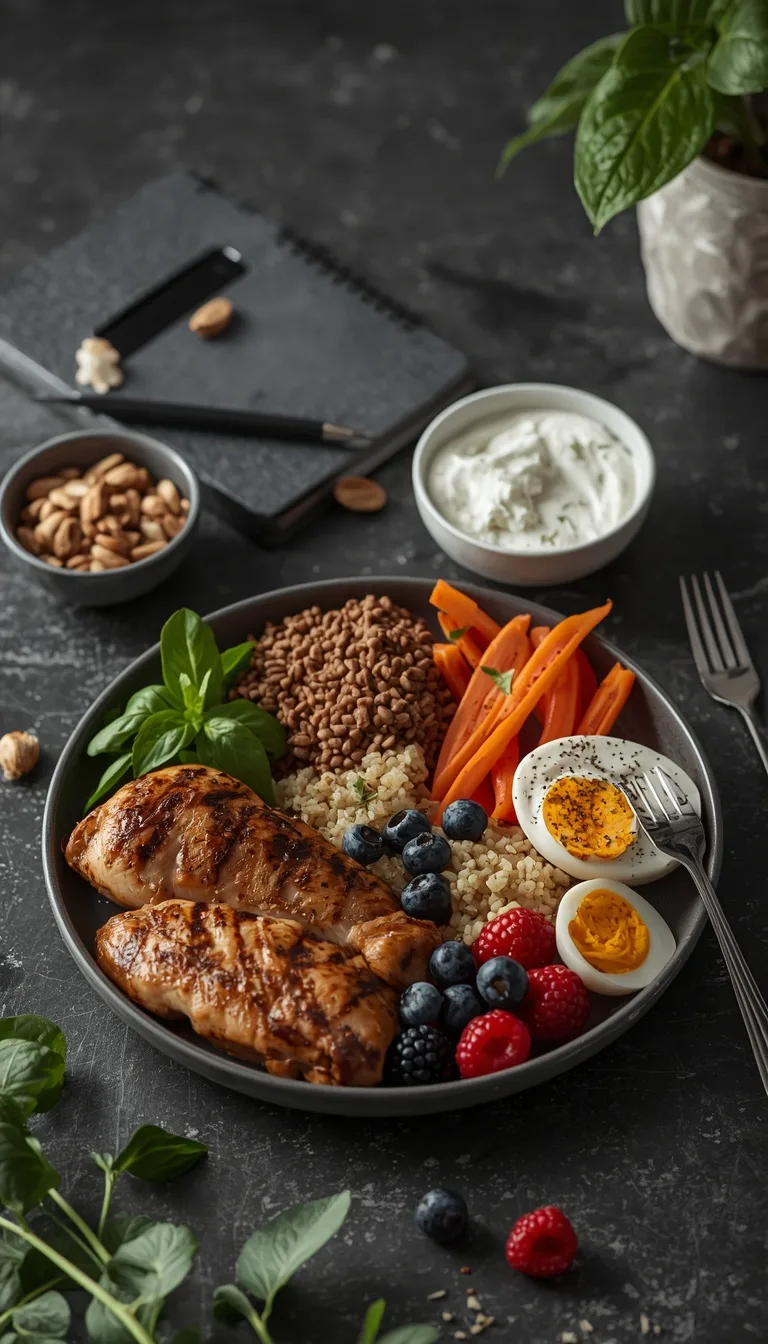
Protein is one of the most important nutrients in your diet, but figuring out how much protein you need a day can be surprisingly confusing.
You may see recommendations ranging from a basic minimum to much higher amounts for people who exercise regularly. The right amount depends on factors such as your body weight, activity level, age, training, goals, overall diet, and health status.
The good news is that most beginners do not need to obsess over protein targets or build every meal around a protein shake.
A better starting point is to understand the basic requirement, adjust it according to your activity level and goals, and then build simple meals that make your target realistic.
Quick Answer: How Much Protein Do You Need a Day?
For healthy adults, the standard Recommended Dietary Allowance (RDA) for protein is 0.8 grams per kilogram of body weight per day. This is a general adequacy target for healthy adults; it is not necessarily an optimal target for someone who regularly performs resistance training.
For people who exercise regularly, particularly those doing resistance training, sports-nutrition guidance commonly uses higher ranges. The International Society of Sports Nutrition (ISSN) states that 1.4–2.0 g/kg/day is sufficient for most exercising individuals, while guidance for athletes can extend to approximately 1.2–2.0 g/kg/day depending on the sport and circumstances.
| Situation | Approximate protein target |
|---|---|
| Healthy adult baseline | 0.8 g/kg/day |
| Beginner who is becoming regularly active | About 1.2–1.6 g/kg/day can be a practical starting range |
| Regular resistance training | About 1.4–2.0 g/kg/day |
| Older adults | Often at least 1.0–1.2 g/kg/day, depending on circumstances |
| Pregnancy, illness, kidney disease or other medical conditions | Individual guidance may be appropriate |
These are reference ranges, not rules that every person must follow.
For a beginner who has recently started exercising, you usually do not need to jump straight to the highest end of the range.
A useful way to think about the numbers
- 0.8 g/kg: basic adult RDA for general adequacy
- 1.2–1.6 g/kg: practical range that can work well for many active beginners
- 1.4–2.0 g/kg: commonly used range for people doing regular resistance training
- Higher intakes: may have a role in specific circumstances, particularly during calorie restriction in lean, resistance-trained athletes, but should not automatically be applied to everyone
Research in resistance-trained adults suggests that increasing total protein intake improves resistance-training-related gains in muscle size and strength, with a meta-analysis finding that benefits to fat-free mass generally plateaued around 1.6 g/kg/day under the conditions studied.
That does not mean 1.6 g/kg is a mandatory target or a hard upper limit. Individual needs vary.
Why Does Your Body Need Protein?
Protein is made from amino acids, which your body uses to build and maintain tissues.
Protein contributes to:
- Muscle maintenance and growth
- Repair and remodeling of body tissues
- Production of enzymes and hormones
- Immune-system functions
- Maintenance of skin and other tissues
Your body needs protein every day because it does not store protein in the same way it stores carbohydrate or fat.
That does not mean every meal needs to contain a huge amount of protein. Your total intake across the day is an important starting point.
For people who exercise, resistance training and protein intake work together to support muscle protein synthesis and adaptation.
How to Calculate Your Daily Protein Needs
The simplest method is to multiply your body weight in kilograms by your chosen protein target.
Formula
Body weight in kg × protein target in g/kg = approximate grams of protein per day
Step 1: Convert Your Weight to Kilograms
If you know your weight in pounds:
Body weight in kilograms = weight in pounds ÷ 2.2
For example:
150 lb ÷ 2.2 = about 68 kg
Step 2: Choose an Appropriate Protein Target
For a generally healthy adult who is not training regularly:
68 kg × 0.8 g = about 54 g protein per day
For someone exercising regularly:
68 kg × 1.2–1.6 g = about 82–109 g protein per day
For someone following regular resistance training:
68 kg × 1.4–2.0 g = about 95–136 g protein per day
These calculations are examples rather than prescriptions.
Your needs may differ depending on your age, training volume, calorie intake, body composition, dietary pattern, health status and goals.
Protein Calculator: Examples for Different Goals
Here are some simple examples using the same body weight so you can see how the target changes.
Example 1: Sedentary 70 kg Adult
A generally healthy 70 kg adult who is not exercising regularly could use the basic RDA:
70 × 0.8 = 56 g protein/day
This is a general adequacy target, not a muscle-building prescription.
Example 2: 70 kg Beginner Starting Exercise
Someone who has recently started exercising could consider a moderate range:
70 × 1.2 = 84 g
to
70 × 1.6 = 112 g
That gives a practical planning range of approximately 84–112 g/day.
Example 3: 70 kg Regular Strength-Training Adult
Someone who regularly performs resistance training could consider:
70 × 1.4 = 98 g
to
70 × 2.0 = 140 g
That gives a reference range of approximately 98–140 g/day.
Example 4: 70 kg Adult Trying to Lose Fat While Strength Training
For someone trying to lose body fat while maintaining or building lean mass, a reasonable starting point might be somewhere within the regular resistance-training range rather than automatically choosing an extremely high target.
For example:
70 × 1.6 = 112 g/day
This can provide a practical target while keeping the overall diet balanced.
Higher protein intakes have been studied during calorie restriction, particularly in lean, resistance-trained athletes. However, some research expresses those higher recommendations relative to fat-free mass rather than total body weight, and the findings should not be automatically applied to every person trying to lose weight.
The takeaway: use protein calculations as planning tools, not as precise prescriptions.
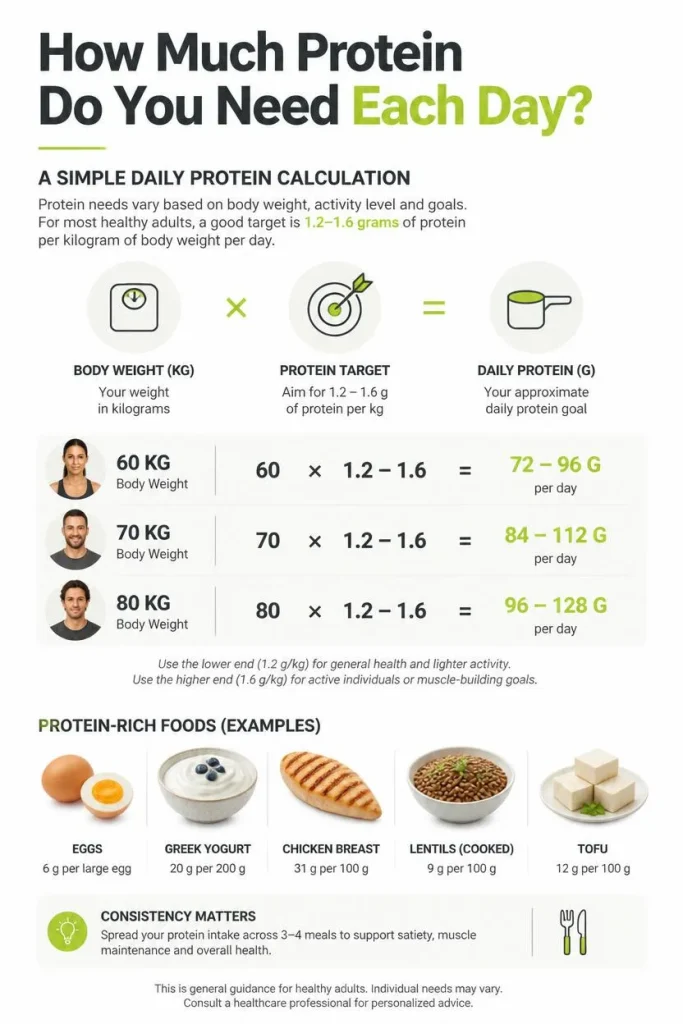
A Simple Protein Calculator
Use this formula:
Body weight in kg × protein target = grams of protein per day
| Body weight | 0.8 g/kg | 1.2 g/kg | 1.6 g/kg | 2.0 g/kg |
|---|---|---|---|---|
| 50 kg | 40 g | 60 g | 80 g | 100 g |
| 60 kg | 48 g | 72 g | 96 g | 120 g |
| 70 kg | 56 g | 84 g | 112 g | 140 g |
| 80 kg | 64 g | 96 g | 128 g | 160 g |
| 90 kg | 72 g | 108 g | 144 g | 180 g |
| 100 kg | 80 g | 120 g | 160 g | 200 g |
The highest column should not automatically be treated as the goal.
For example, a 70 kg beginner who has just started strength training does not necessarily need to consume 140 grams of protein every day. A more moderate target may be easier to achieve and entirely reasonable for their situation.
How Much Protein Do You Need If You Work Out?
Exercise changes the conversation.
Regular resistance training increases the importance of adequate protein because training stimulates adaptations that require amino acids and protein synthesis.
The ISSN position stand on protein and exercise describes 1.4–2.0 g/kg/day as sufficient for most exercising individuals.
For a beginner, a practical approach is to start somewhere within a moderate range rather than automatically choosing the maximum.
Example: 60 kg Beginner
A 60 kg adult who has started strength training might consider:
60 × 1.2 = 72 g
to
60 × 1.6 = 96 g
That gives a practical daily range of roughly 72–96 grams.
Someone training more seriously may have reason to use a higher target, but more protein is not automatically better.
What If Your Goal Is Muscle Gain?
Protein is important for building muscle, but protein alone does not build muscle.
Resistance training provides the stimulus. Adequate protein, sufficient energy, recovery and consistency all contribute to the process.
A beginner trying to build muscle can focus on three basics:
- Perform consistent resistance training.
- Eat enough total protein.
- Allow enough recovery between challenging sessions.
A useful evidence-based reference point is around 1.6 g/kg/day for many resistance-training adults, although the appropriate amount varies between individuals. A large meta-analysis found that protein supplementation supported improvements in fat-free mass and strength during prolonged resistance training, while benefits to fat-free mass generally showed diminishing returns beyond approximately 1.6 g/kg/day.
You do not need to eat protein immediately after every workout to get results. The overall daily intake matters, and protein consumed around training can fit naturally into a normal eating pattern.
For example, if you train in the morning, a normal protein-containing breakfast after training can be part of your daily target.
What If Your Goal Is Fat Loss?
If you’re trying to lose body fat, protein can be one useful part of your eating strategy.
However, there is no magic protein number that automatically causes fat loss.
Your overall energy intake, food choices, activity, resistance training, sleep and long-term consistency all matter.
Protein can be particularly useful during a calorie deficit because adequate protein combined with resistance training can help support the retention of lean mass. Research in this area, however, often involves resistance-trained athletes and should not be interpreted as a universal requirement for everyone trying to lose weight.
What about very high protein targets?
You may see numbers such as 2.3–3.1 g/kg associated with fat loss.
Be careful with how these numbers are interpreted.
The frequently cited 2.3–3.1 g/kg range refers to fat-free mass (FFM) in research involving lean, resistance-trained athletes undergoing calorie restriction—not simply 2.3–3.1 g per kilogram of total body weight for everyone.
That distinction matters.
For most beginners, there is no reason to automatically jump to those levels.
A practical approach is to choose a sustainable protein target, continue resistance training, and create an appropriate overall calorie deficit.
Rather than trying to make protein extremely high, focus on meals that are:
- Satisfying
- Nutrient-dense
- Reasonable in portion size
- Rich in vegetables and fruit
- Built around a useful protein source
- Practical enough to repeat
For example:
Chicken + rice + vegetables
can be a practical meal.
So can:
Lentils + rice + vegetables
or:
Tofu + noodles + vegetables
The goal is not to make every meal “high protein.”
The goal is to make your overall eating pattern work.
For more practical meal-planning ideas, see How to Build a Healthy Routine When You Have a Busy Schedule.
Do You Need More Protein When You’re Older?
Protein needs can change with age.
Guidance for older adults commonly recommends a higher intake than the basic adult RDA, often around 1.0–1.2 g/kg/day for healthy older adults, although individual needs can be different when illness, poor appetite, weight loss or other health conditions are involved.
For older adults who are physically able, combining adequate protein with appropriate physical activity and resistance exercise can be particularly useful for supporting muscle and physical function.
If you’re an older adult with a medical condition, poor appetite, unintended weight loss or other nutrition concerns, individualized advice from a qualified healthcare professional is more appropriate than relying on a generic protein calculator.
Do You Need Protein at Every Meal?
You don’t need to hit an exact protein number at every meal.
But distributing protein across your meals can make reaching your daily target easier.
For example, someone aiming for around 90 grams could organize their day roughly like this:
| Meal | Example protein target |
|---|---|
| Breakfast | 20–25 g |
| Lunch | 25–30 g |
| Snack | 10–15 g |
| Dinner | 25–30 g |
| Daily total | About 80–100 g |
These are planning examples, not mandatory targets.
The important point is that you don’t have to eat 90 grams of protein in one sitting.
What Foods Are High in Protein?
Protein comes from both animal and plant foods.
Animal-Based Protein
- Eggs
- Greek yogurt
- Cottage cheese
- Milk
- Chicken
- Turkey
- Fish
- Seafood
- Lean meat
Plant-Based Protein
- Lentils
- Beans
- Chickpeas
- Tofu
- Tempeh
- Edamame
- Soy foods
- Peas
- Nuts
- Seeds
- Nut butters
The American Heart Association’s guidance on healthy protein sources emphasizes a variety of protein foods, including legumes, nuts, seeds and soy, along with fish and seafood, lower-fat dairy and lean, unprocessed meats when desired.
You can therefore build a protein-rich diet without relying on meat at every meal.
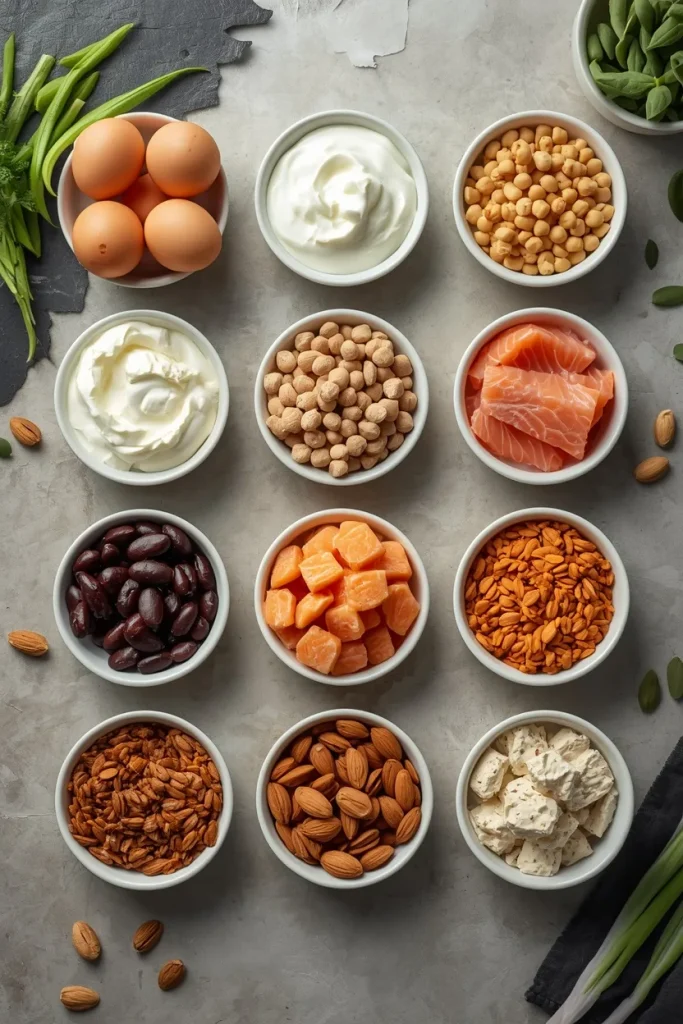
Easy Protein Foods for Busy People
You don’t need complicated recipes to increase your protein intake.
Keep a few convenient options available:
| Food | Easy use |
|---|---|
| Greek yogurt | Breakfast or snack |
| Eggs | Breakfast, lunch or snack |
| Cottage cheese | Quick snack |
| Canned tuna or salmon | Sandwiches or grain bowls |
| Cooked chicken | Wraps, salads and rice bowls |
| Lentils | Curries, soups and bowls |
| Beans | Rice bowls, salads and wraps |
| Tofu | Stir-fries and noodle bowls |
| Milk or fortified soy milk | Oats and smoothies |
| Nuts and seeds | Toppings and snacks |
For quick ideas, see Quick High-Protein Snacks You Can Make in 5 Minutes.
For breakfast, see High-Protein Breakfast for Muscle Gain: Greek Yogurt Protein Oats.
Protein-Rich Foods Don’t All Provide the Same Amount
One common beginner mistake is assuming that every food described as “protein-rich” contains a large amount of protein.
Nuts are a good example.
Peanuts provide protein, but they also provide a significant amount of fat and energy. They can be useful additions to meals and snacks without necessarily being the main protein source.
This distinction is useful:
Protein-containing food ≠ necessarily a high-protein main food.
A handful of nuts can complement yogurt or fruit, but it may not replace a substantial serving of another protein source if you are trying to reach a higher daily target.
See Protein-Rich Nuts: 8 High-Protein Nuts to Try for practical ways to use nuts without treating them as your only protein source.
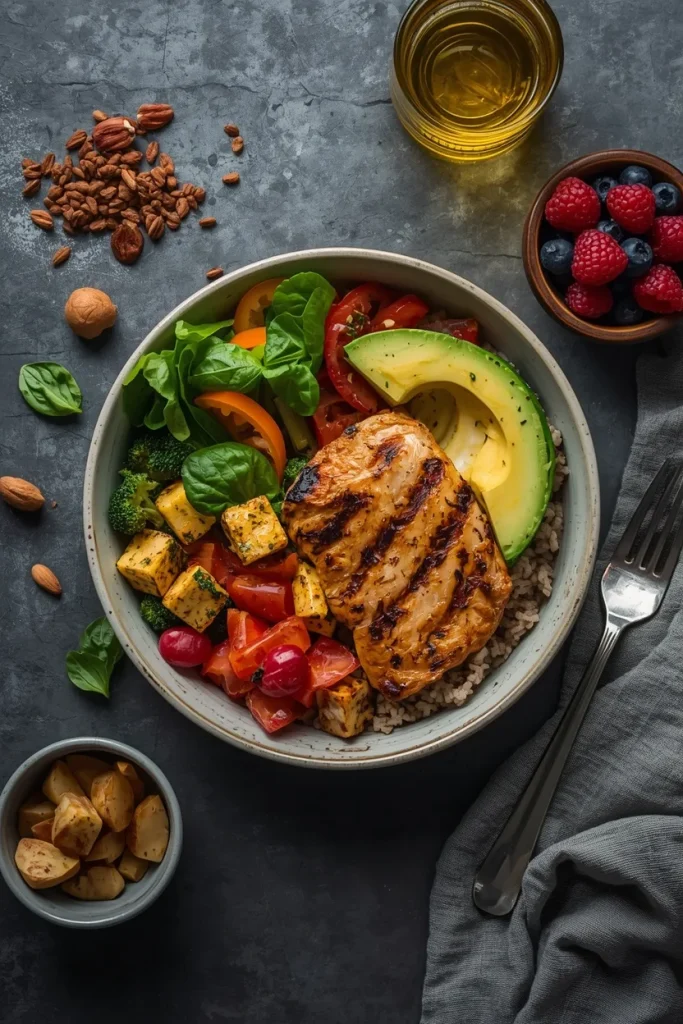
How to Build a High-Protein Meal Without Overthinking It
Use this simple formula:
Protein + carbohydrate + vegetables or fruit + optional healthy fat
For example:
Breakfast
Greek yogurt + oats + berries + seeds
Lunch
Chicken + rice + mixed vegetables
Snack
Cottage cheese + fruit
Dinner
Lentils + rice + vegetables
Or, for a plant-forward option:
Breakfast
Soy yogurt + oats + fruit
Lunch
Tofu + rice + vegetables
Snack
Hummus + whole-grain crackers + vegetables
Dinner
Lentil curry + rice + salad
The exact foods can be adapted to your culture, budget, preferences and dietary needs.
For more practical meal-building ideas, see How to Build a Healthy Routine When You Have a Busy Schedule.
A Simple One-Day Protein Example
Suppose a 70 kg beginner is aiming for approximately 85–100 grams of protein.
One possible day could look like:
| Meal | Example |
|---|---|
| Breakfast | Greek yogurt, oats and berries |
| Lunch | Chicken, rice and vegetables |
| Snack | Cottage cheese and fruit |
| Dinner | Lentil and vegetable curry with rice |
The exact protein total will depend on portions and brands, so nutrition labels or a reliable food database should be used when precise tracking matters.
You do not need to copy this menu.
The useful idea is to include a recognizable protein source at each main meal and add a protein-rich snack when needed.
Do You Need Protein Powder?
Not necessarily.
Protein powder is a convenience food, not a requirement for building a healthy diet or gaining muscle.
You can obtain protein from ordinary foods such as:
- Eggs
- Dairy
- Fish
- Chicken
- Beans
- Lentils
- Soy
- Tofu
- Nuts
- Seeds
Protein powder can be useful when convenience matters or when getting enough protein from normal meals is difficult.
But it should not replace a varied diet simply because the label says “high protein.”
When choosing protein products, check the ingredient list and nutrition label rather than assuming a more expensive product is automatically better.
How to Increase Protein Without Completely Changing Your Diet
If your current diet is low in protein, don’t overhaul everything overnight.
Try one change at a time.
Breakfast
Add Greek yogurt, eggs, milk or a suitable soy product.
Lunch
Add chicken, fish, tofu, beans or lentils to your normal meal.
Afternoon Snack
Replace a low-protein snack with yogurt, cottage cheese, eggs or another protein-containing option.
For ideas, see Quick High-Protein Snacks You Can Make in 5 Minutes.
Dinner
Make sure your meal includes a clear protein source.
Meal Prep
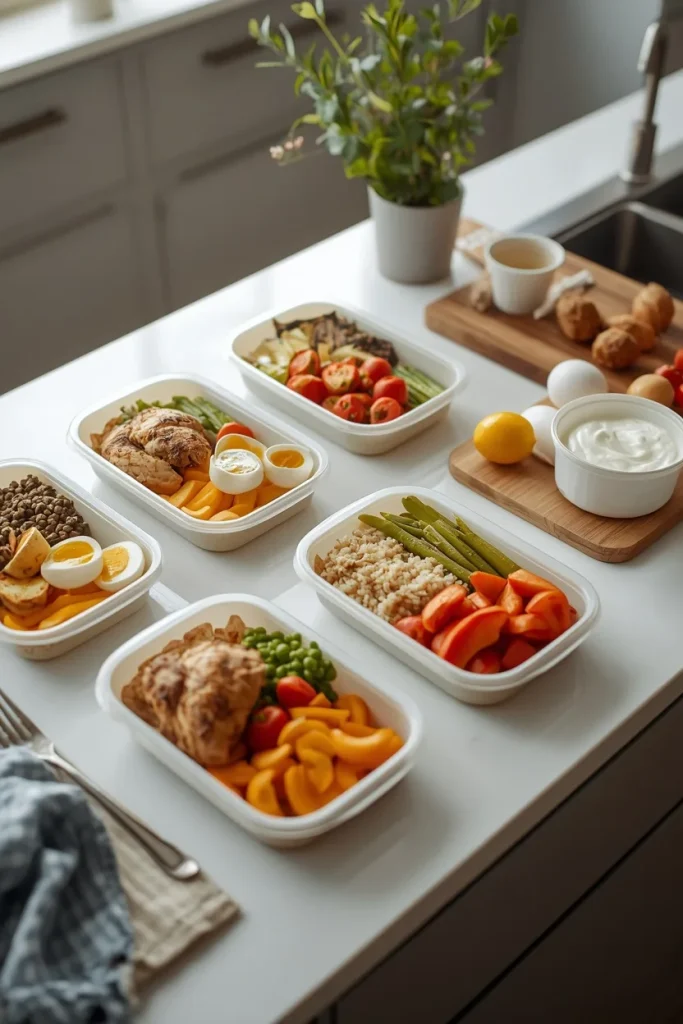
Prepare one or two protein foods in advance.
For example:
- Cook chicken for several meals.
- Prepare lentils or beans.
- Boil eggs.
- Portion Greek yogurt.
- Prepare tofu for quick stir-fries.
For a practical component-based approach, see Meal Prep for Beginners: The Complete Guide.
A Simple Protein Checklist
Use this checklist if you’re trying to improve your protein intake:
- Know your approximate body weight in kilograms.
- Choose a reasonable protein range for your activity level.
- Include a protein source at breakfast.
- Include a protein source at lunch.
- Include a protein source at dinner.
- Keep one or two convenient protein-rich snacks available.
- Rotate animal and plant protein sources if they fit your diet.
- Include vegetables, fruit and high-fiber carbohydrate foods.
- Use protein powder only if it makes your routine easier.
- Adjust your intake if your health or training circumstances change.
Common Protein Mistakes Beginners Make
| Mistake | Why it can be a problem | Better approach |
|---|---|---|
| Eating enormous amounts of protein | Can make meals unnecessarily restrictive or crowd out other foods | Choose a realistic daily target |
| Focusing only on protein | A balanced diet also needs carbohydrates, fats, vegetables, fruit and other nutrients | Build balanced meals |
| Assuming protein powder is necessary | Supplements are optional | Use convenient whole foods when practical |
| Eating protein only at dinner | Makes the daily target harder to reach | Include protein throughout the day |
| Treating nuts as a complete protein meal | Nuts provide protein but are also energy-dense | Pair them with other foods |
| Chasing the highest possible number | More isn’t automatically better for every person | Match intake to your needs and goals |
| Ignoring medical conditions | Protein requirements can change with health conditions | Seek individualized guidance when appropriate |
How Much Protein Is Too Much?
There isn’t one universally defined daily number at which protein suddenly becomes “too much” for every healthy adult.
The absence of a specific upper limit does not mean extremely high protein intake is necessary.
For most beginners, there is little reason to chase very large protein numbers simply because they are possible.
A balanced diet still needs a variety of foods.
If a very high-protein diet means you are eating fewer vegetables, fruits, whole grains, healthy fats or other important foods, the overall eating pattern may become less balanced.
What About Protein and Kidney Health?
Healthy people should not automatically assume that eating a moderate amount of protein will damage their kidneys.
However, people with kidney disease or other medical conditions affecting protein requirements should not use a generic high-protein recommendation without discussing it with their healthcare professional.
Protein needs can be different in certain medical circumstances.
If you have been diagnosed with kidney disease, are pregnant, have significant liver disease, are recovering from illness or surgery, or have another condition that affects nutrition, individualized advice is more appropriate.
Frequently Asked Questions
How much protein should I eat a day as a beginner?
A healthy adult’s basic protein RDA is 0.8 g/kg/day. If you’re beginning regular exercise, particularly resistance training, a higher intake may be useful. A practical starting range for many active beginners is around 1.2–1.6 g/kg/day, with individual needs varying.
How much protein do I need to build muscle?
Regularly exercising individuals commonly use approximately 1.4–2.0 g/kg/day. Research suggests that around 1.6 g/kg/day is a useful reference point for many resistance-training adults, although this is not a universal requirement.
Protein is only one part of muscle development; resistance training, adequate energy intake and recovery also matter.
Can I get enough protein without meat?
Yes.
Beans, lentils, chickpeas, tofu, tempeh, edamame, soy foods, dairy products, eggs, nuts and seeds can all contribute protein to a varied diet.
Do I need protein immediately after working out?
No.
You do not need to consume protein within a few minutes of finishing a workout. Your overall daily intake is important, and protein consumed before or after training can fit into a normal eating pattern.
Is protein good for weight loss?
Protein can be part of a weight-management eating pattern, but protein itself does not guarantee fat loss.
Overall energy intake, food choices, activity, resistance training, sleep and consistency matter.
Is protein powder necessary?
No.
Protein powder can be convenient, but many people can meet their protein needs through ordinary foods.
Should I eat protein at every meal?
It isn’t mandatory, but including a protein source in most meals can make it easier to reach your daily target without having to consume a very large amount at one meal.
Can older adults need more protein?
Yes.
Guidance for older adults commonly recommends higher protein intakes than the basic adult RDA, often around 1.0–1.2 g/kg/day for healthy older adults. Individual needs can be higher in some medical situations.
The Bottom Line
So, how much protein do you need a day?
Start with your body weight and activity level rather than copying someone else’s target.
For a healthy adult, 0.8 g/kg/day is the established basic RDA.
If you’re regularly exercising, particularly doing strength training, 1.2–1.6 g/kg/day can be a practical starting range, while sports-nutrition guidance commonly places exercising individuals around 1.4–2.0 g/kg/day.
Research also suggests that approximately 1.6 g/kg/day is a useful evidence-based reference point for many people performing resistance training, although individual requirements vary and more is not automatically better.
You don’t have to get the number perfect.
For most beginners, the better strategy is to:
- Choose a realistic target.
- Include protein at your main meals.
- Use convenient protein-rich foods when needed.
- Keep your overall diet balanced.
- Pair adequate protein with appropriate resistance training if muscle gain or muscle retention is a goal.
- Adjust your approach as your training, goals or circumstances change.
Consistency matters more than turning protein intake into another source of stress.
Save This Guide: Protein Quick Reference
Basic adult RDA: 0.8 g/kg/day
Regularly active adult: roughly 1.2–1.6 g/kg/day can be a practical starting range
Regular resistance training: roughly 1.4–2.0 g/kg/day is commonly used in sports-nutrition guidance
Common protein foods: eggs, Greek yogurt, cottage cheese, milk, fish, chicken, beans, lentils, tofu, tempeh, soy foods, nuts and seeds
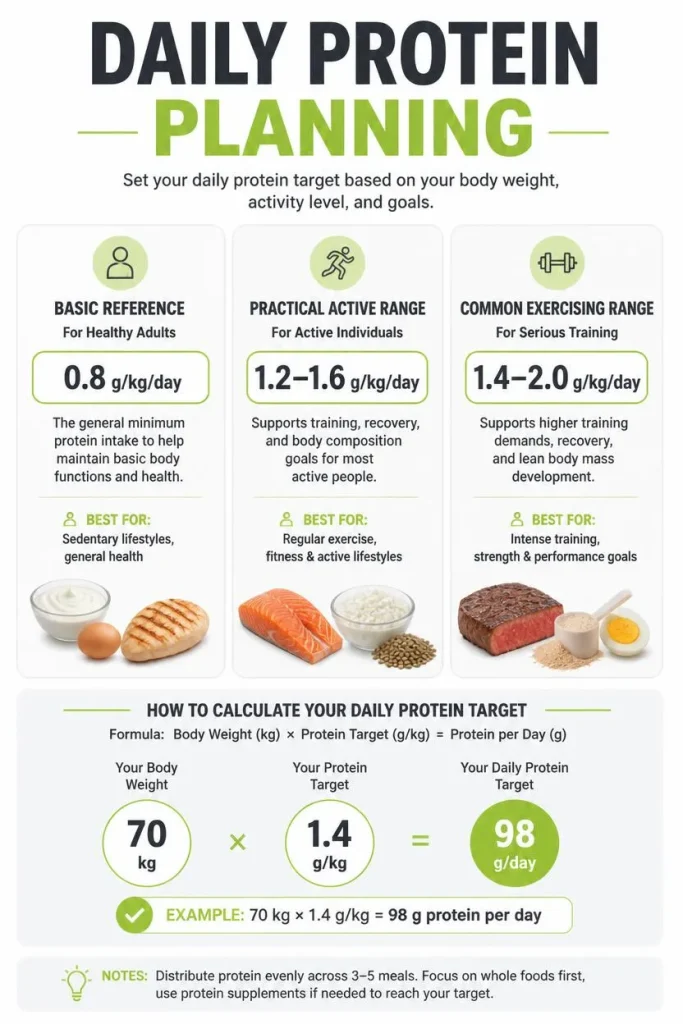
Simple formula
Body weight in kg × protein target = approximate grams of protein per day
For example:
70 kg × 1.4 g = 98 g protein/day
Use these numbers as planning tools, not rigid rules.
A Note on Individual Needs
This article provides general nutrition information and is not individualized medical advice.
If you have kidney disease, liver disease, are pregnant or breastfeeding, are recovering from significant illness or surgery, have been advised to follow a medically restricted diet, or have another condition that affects your nutritional needs, discuss your protein intake with a qualified healthcare professional.
If exercise causes significant pain, dizziness, fainting or unusual shortness of breath, stop and seek appropriate medical advice.
Sources & Further Reading
National Academies of Sciences, Engineering, and Medicine
Dietary Reference Intakes for Energy, Carbohydrate, Fiber, Fat, Fatty Acids, Cholesterol, Protein, and Amino Acids
The Dietary Reference Intake framework provides the basis for the adult protein RDA of 0.8 g/kg/day.
International Society of Sports Nutrition
Position Stand: Protein and Exercise
Evidence-based discussion of protein intake for exercising individuals, resistance training and muscle protein synthesis.
Morton et al. — British Journal of Sports Medicine
A systematic review, meta-analysis and meta-regression of the effect of protein supplementation on resistance training-induced gains in muscle mass and strength in healthy adults
This large systematic review and meta-analysis examined protein supplementation and resistance-training outcomes and found diminishing additional benefits to fat-free mass above approximately 1.6 g/kg/day under the conditions studied.
Helms et al. — International Journal of Sport Nutrition and Exercise Metabolism
A systematic review of dietary protein during caloric restriction in resistance-trained lean athletes
This review discusses higher protein needs during calorie restriction in lean, resistance-trained athletes and is particularly relevant when interpreting the frequently quoted 2.3–3.1 g/kg figure, which is expressed relative to fat-free mass.
American Heart Association
Picking Healthy Proteins
Practical guidance on incorporating a variety of protein sources into a balanced eating pattern.
Editorial Review:
For health conditions, medically prescribed diets, pregnancy, kidney disease, liver disease or other individual medical concerns, readers should consult an appropriately qualified healthcare professional.