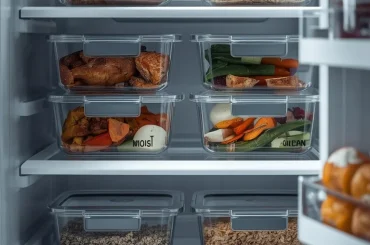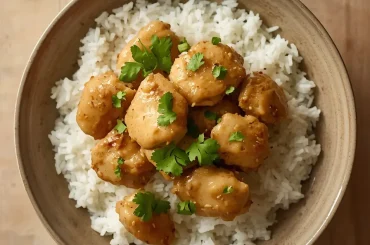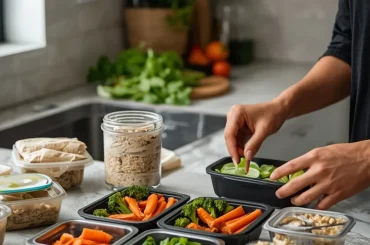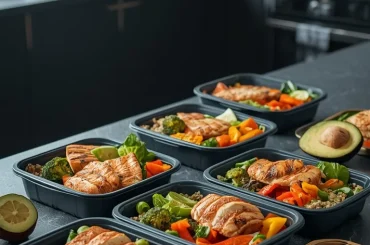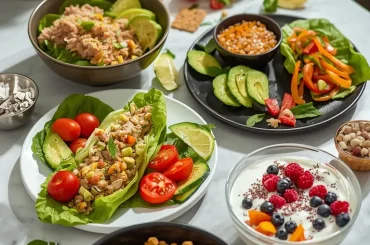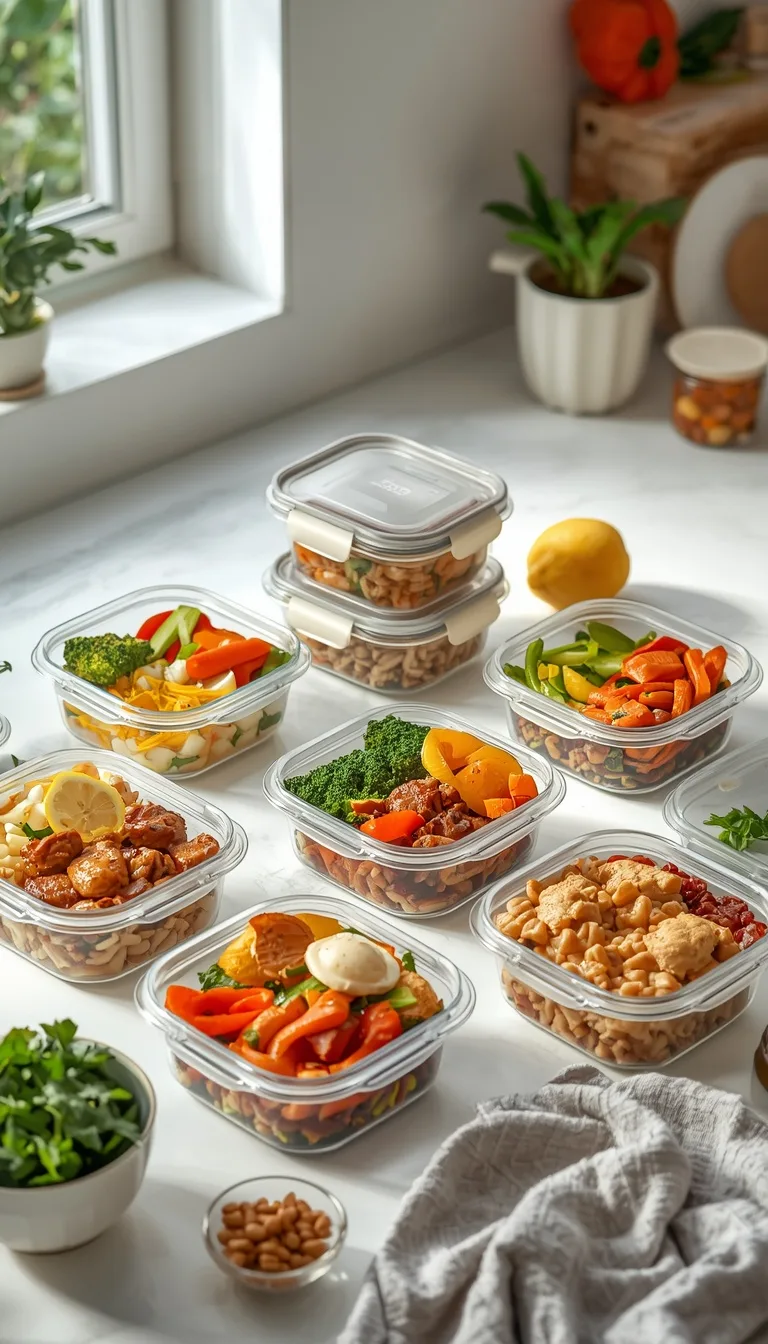
Healthy freezer meals can completely change the way you handle busy evenings.
Instead of deciding what to cook when you are already tired and hungry, you can open the freezer, grab a portion, reheat it, and have a balanced meal ready with very little effort. The goal isn’t to fill your freezer with dozens of identical containers. A better approach is to prepare a small selection of meals that freeze well, portion them around your actual schedule, and keep a few fresh ingredients on hand to make reheated food taste fresh.
The best healthy freezer meals combine a satisfying protein source, vegetables, a useful carbohydrate, and enough moisture or sauce to survive freezing and reheating without becoming dry or mushy.
This guide explains what freezes well, what doesn’t, how to choose freezer containers, how to portion meals for one person, how to reheat frozen meals safely, and how to build a simple five-meal freezer plan you can repeat whenever your week gets busy.
If you’re new to meal prep, start with FitVibe’s Meal Prep for Beginners guide for a broader approach to planning, shopping, cooking, and organizing meals ahead of time.
Why Healthy Freezer Meals Are Worth Making
Meal prep doesn’t have to mean cooking every meal for the entire week.
Sometimes the most useful meal prep is simply having a few reliable dinners waiting in the freezer.
Freezer meals can help you:
- Reduce weeknight cooking
- Make healthier choices more convenient
- Use batch-cooked ingredients before they go to waste
- Control portions more easily
- Save money by cooking larger batches
- Avoid relying on takeout when your schedule gets hectic
- Keep emergency meals available for unexpectedly busy days
There is also a psychological advantage.
When dinner is already prepared, you don’t have to make another food decision at the end of a long day. You simply choose a meal, reheat it, and add whatever fresh ingredients you have available.
That makes freezer meal prep less about perfection and more about creating a convenient default.
For another low-effort approach to healthy eating, you can also explore FitVibe’s No-Cook High-Protein Lunches, which can complement freezer meals on days when you don’t want to cook at all.
What Makes a Meal Freezer-Friendly?
Not every healthy meal is a good freezer meal.
Some foods become watery, grainy, limp, or unpleasant after freezing. Others actually taste better after the flavors have had time to develop.
The most freezer-friendly meals usually have at least one of these characteristics:
- A sauce, broth, gravy, or stew-like consistency
- Cooked grains that aren’t overcooked
- Roasted or cooked vegetables rather than delicate raw vegetables
- Protein that won’t dry out easily
- Ingredients that can tolerate moisture changes
- A texture that remains enjoyable after reheating
Think about the complete freeze-thaw-reheat cycle when choosing a recipe.
A meal can be nutritious and delicious when freshly cooked but still be a poor freezer candidate.
For example, a crisp green salad may be an excellent lunch, but freezing lettuce and cucumber usually destroys the texture that makes the salad enjoyable. A turkey chili, on the other hand, generally handles freezing and reheating much better.
What Freezes Well?
Knowing which ingredients perform well in the freezer makes meal planning much easier.
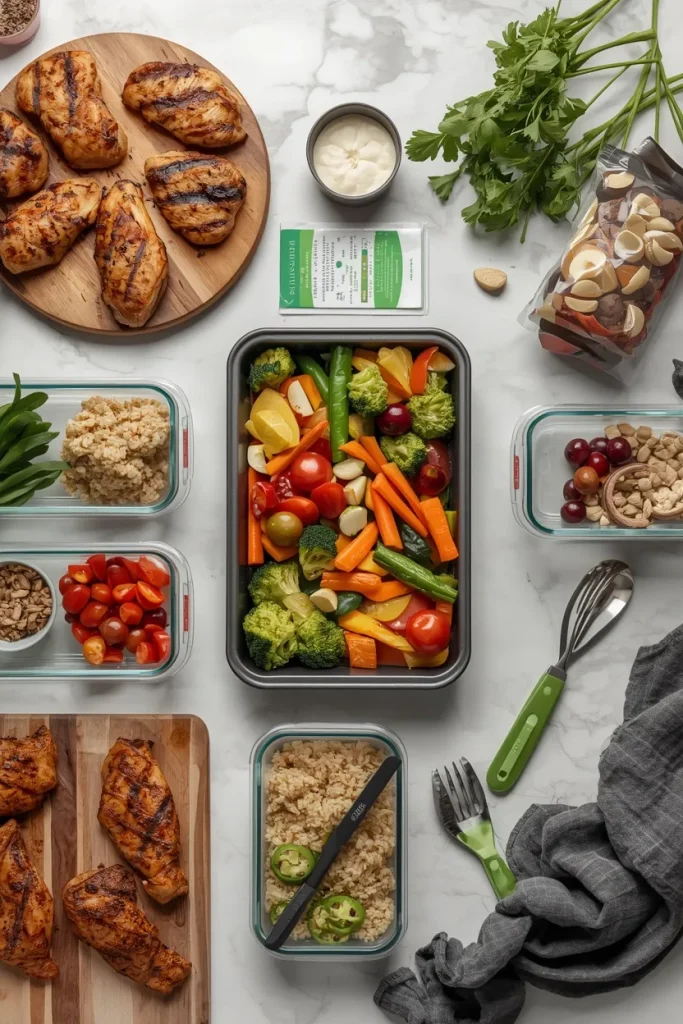
Proteins That Usually Freeze Well
Cooked proteins that are combined with moisture or sauce tend to perform particularly well.
Good options include:
- Chicken in curry or tomato-based sauces
- Shredded chicken
- Lean ground turkey
- Lean ground beef
- Meatballs
- Cooked beans
- Lentils
- Chickpeas
- Tofu in saucy dishes
- Cooked shredded pork
- Some cooked fish dishes, although texture can vary
Chicken breast can become dry when frozen by itself. Pairing it with a sauce, stew, curry, or flavorful grain bowl can help produce a better result after reheating.
Ground meat is especially convenient because it can be transformed into chili, pasta sauce, taco filling, stuffed peppers, or grain bowls.
Vegetables That Freeze Well
Cooked vegetables generally have better freezer performance than delicate raw vegetables.
Good choices include:
- Broccoli
- Cauliflower
- Carrots
- Peas
- Corn
- Green beans
- Bell peppers
- Onions
- Spinach
- Kale
- Sweet potatoes
- Butternut squash
- Zucchini when incorporated into cooked dishes
Roasting or sautéing vegetables before freezing can help them retain more character than simply freezing them raw inside a finished meal.
However, remember that most vegetables will become somewhat softer after thawing and reheating. That’s normal.
If you want crunch, add fresh vegetables after reheating.
Carbohydrates That Freeze Well
Several everyday carbohydrate sources work nicely in freezer meals:
- Rice
- Brown rice
- Quinoa
- Barley
- Whole-wheat pasta
- Oats
- Cooked potatoes
- Sweet potatoes
- Beans
- Lentils
Rice is particularly useful for freezer bowls.
For the best texture, avoid cooking grains significantly past the point of tenderness before freezing. They will soften somewhat during reheating.
You can also freeze the protein and sauce separately from the rice. This gives you more flexibility when reheating.
What Doesn’t Freeze Well?
Some ingredients are better added after the meal has been reheated.
This is one of the easiest ways to make freezer meals taste fresher.
Delicate Raw Vegetables
Avoid freezing these as part of an assembled meal when texture matters:
- Lettuce
- Cucumber
- Fresh salad greens
- Radishes
- Fresh sprouts
- Some raw tomatoes
They tend to release water and lose their crisp texture.
Instead, keep a small supply of fresh vegetables in the refrigerator and add them when you serve your freezer meal.
Fresh Avocado
Avocado can change significantly in texture after freezing.
Instead of freezing avocado inside your burrito bowl or fajita bowl, add fresh avocado immediately before eating.
Crispy Foods
Foods that depend on crispness are generally poor candidates for traditional freezer storage.
Examples include:
- Tortilla chips
- Crispy fried toppings
- Fresh croutons
- Crispy roasted toppings
- Breaded foods that aren’t reheated appropriately
For these meals, freeze the main components and prepare the crispy element separately.
Fresh Herbs
Fresh cilantro, parsley, basil, and similar herbs are usually better added after reheating.
Frozen herbs can lose some of their fresh appearance and texture.
A small amount of fresh herbs, lemon juice, lime juice, or green onion can make a reheated meal taste much less like “leftovers.”
Creamy Sauces
Cream-based sauces can sometimes separate during freezing and reheating.
That doesn’t mean you can never freeze them. It simply means texture can be less predictable.
If a recipe depends heavily on a delicate cream sauce, consider freezing the main components and adding the sauce fresh when practical.
The Best Freezer Containers for Meal Prep
The container you choose can make a noticeable difference.
A good freezer container should be:
- Freezer-safe
- Airtight
- Durable
- Easy to label
- Easy to clean
- Suitable for your reheating method
- Large enough for the food without leaving excessive empty space
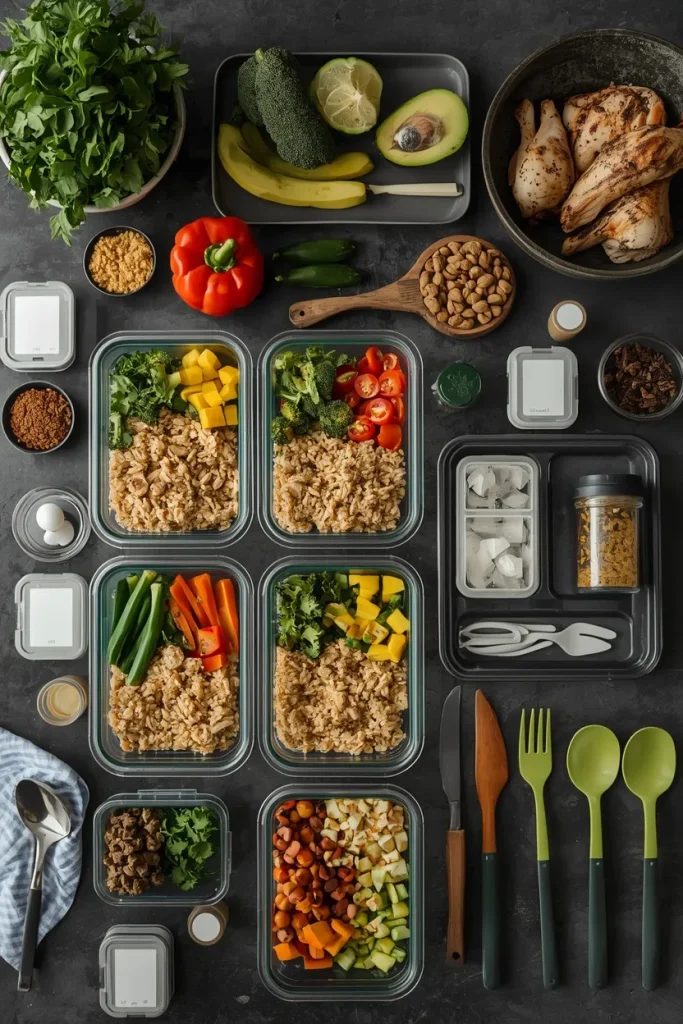
Glass Containers
Glass containers are useful when you want a durable option that can move from refrigerator storage to reheating, provided the specific container is designed for that use.
However, temperature changes can create thermal stress, so always follow the manufacturer’s instructions.
Do not assume that every glass container is safe to move directly from a freezer into a hot oven.
Plastic Freezer Containers
Freezer-safe plastic containers are lightweight and practical for batch meal prep.
They are particularly convenient if you are preparing many individual portions.
Check the manufacturer’s instructions for microwave use, dishwasher use, and temperature limits.
Freezer Bags
Freezer bags are useful for foods such as:
- Soups
- Chili
- Curries
- Shredded chicken
- Cooked ground meat
- Smooth sauces
When using bags, remove as much excess air as practical before sealing.
Flat bags can also be stacked efficiently, which is useful if freezer space is limited.
Leave Room for Expansion
Don’t fill containers completely to the lid.
Liquid-rich foods expand as they freeze, so leave appropriate headspace according to the container manufacturer’s guidance.
Forgetting this step can lead to cracked containers, leaking bags, or messy freezer shelves.
Why Individual Portions Are Better for Most People
One large freezer container may seem convenient, but individual portions often work better for everyday meal prep.
Individual freezer portions allow you to:
- Thaw only what you need
- Reheat food more evenly
- Reduce repeated thawing
- Pack lunches more easily
- Mix different meals throughout the week
- Track how many meals you have available
For example, instead of freezing six servings of chili in one large container, divide it into six individual portions.
That way, one busy evening doesn’t require you to thaw the entire batch.
If you’re cooking for a family, family-sized containers may be more practical. The best portion size is the amount your household is likely to eat at one meal.
How to Cool Food Before Freezing
Food safety matters just as much as convenience.
Cooked food should be handled promptly after preparation. The USDA Food Safety and Inspection Service guide to leftovers and food safety recommends refrigerating leftovers within two hours, or within one hour when the surrounding temperature is above 90°F (32°C). Large batches can be divided into shallow containers to help them cool more rapidly.
A practical freezer-meal workflow is:
- Cook the meal thoroughly.
- Divide the food into smaller portions.
- Transfer portions into suitable shallow containers when appropriate.
- Allow the food to cool appropriately.
- Refrigerate or freeze promptly.
- Seal the containers.
- Label them with the meal name and date.
Don’t leave a large pot of cooked food sitting on the counter for hours because you are waiting for it to become completely cold.
Rapid cooling is more important than trying to cool a huge batch at room temperature.
How to Label Freezer Meals
A freezer can quickly become a collection of mystery containers.
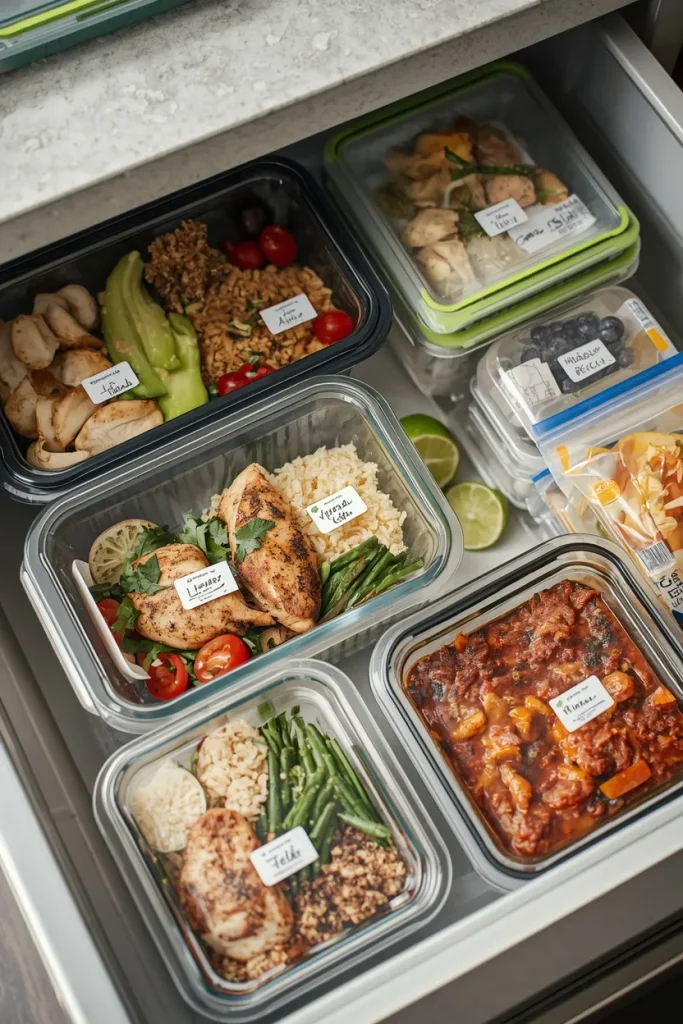
Avoid that problem by labeling everything.
Write:
Meal name + date prepared + reheating notes
For example:
Chicken Curry — October 8 — Thaw overnight — Microwave 4–6 min, stir halfway
You can also add:
- Number of portions
- Allergens
- Sauce or topping stored separately
- Whether the meal should be thawed first
- Any ingredient that needs to be added fresh
A simple label can save you from opening several containers just to figure out what is inside.
How Long Do Healthy Freezer Meals Last?
Freezing keeps food safe for a long time when it remains continuously frozen, but safety and quality are not the same thing.
According to the USDA’s food-safety guidance, freezing keeps food safe almost indefinitely when maintained at 0°F (-17.8°C), but recommended freezer storage periods are primarily about maintaining the best quality.
For many cooked leftovers, USDA recommends using them within approximately 3–4 months in the freezer for best quality, although specific foods can have different quality windows.
For everyday meal prep, a useful habit is to rotate your freezer.
Put newer meals toward the back and bring older meals toward the front.
This creates a simple “first in, first out” system.
The Best Ways to Reheat Frozen Meals
Reheating isn’t just about making food hot.
The goal is to heat the meal evenly without drying it out.
The USDA recommends reheating leftovers to an internal temperature of 165°F (73.9°C).
Method 1: Refrigerator Thaw + Microwave
This is one of the easiest methods for individual portions.
The night before:
- Move the frozen meal from the freezer to the refrigerator.
- Keep it covered.
- Reheat the following day.
- Stir halfway through if appropriate.
- Check that the meal is heated thoroughly.
Refrigerator thawing is also one of the safest ways to thaw frozen leftovers because the food stays at a controlled temperature throughout the process.
Method 2: Microwave From Frozen
You can also reheat some frozen meals directly from frozen.
This is particularly convenient for:
- Chili
- Curries
- Stews
- Rice bowls
- Pasta dishes
- Casseroles
Use a microwave-safe container.
Cover the meal appropriately, leaving a way for steam to escape, and stir or rotate the food during reheating where possible.
Because microwaves can create cold spots, USDA recommends checking the food in multiple places with a food thermometer. Covering and stirring or rotating the food also promotes more even heating.
Method 3: Oven
The oven is useful for:
- Pasta bakes
- Casseroles
- Enchiladas
- Stuffed peppers
- Larger portions
Oven reheating generally takes longer but can produce a better texture for baked dishes.
Only use containers that are specifically designed for oven use.
Never place a container in the oven simply because it is labeled freezer-safe.
For meat and poultry leftovers, USDA advises that oven reheating should be done at no lower than 325°F (162.8°C).
Method 4: Stovetop
The stovetop works particularly well for:
- Chili
- Soups
- Curries
- Stews
- Sauces
Transfer the food to a saucepan and heat gradually.
If the meal has thickened during freezing, add a small amount of water or broth to restore the desired consistency.
For sauces, soups, and gravies, USDA recommends bringing them to a rolling boil when reheating.
Should You Thaw Freezer Meals First?
Not necessarily.
You can safely reheat some frozen leftovers directly from frozen. The USDA’s guidance on reheating frozen leftovers confirms that frozen leftovers can be reheated without thawing, although the process takes longer.
Thawing first is useful when:
- You want faster reheating
- The portion is large
- You want more even heating
- The meal contains separate components
- You are using an oven
- You want better control over texture
Reheating directly from frozen is useful when:
- You forgot to thaw dinner
- You need a meal quickly
- The food is a soup, stew, curry, or similar dish
- The container and recipe are suitable for the method
When in doubt, follow the recipe and container manufacturer’s instructions.
A Simple 5-Meal Healthy Freezer Plan
You don’t need to make five completely different recipes.
A more efficient strategy is to prepare five meals using overlapping ingredients.
Here is an example weekly freezer plan.
| Day | Freezer Meal | Protein | Fresh Finishing Ingredient |
|---|---|---|---|
| Monday | Chicken & Vegetable Rice Bowl | Chicken | Lemon + herbs |
| Tuesday | Turkey & Bean Chili | Turkey + beans | Greek yogurt + green onion |
| Wednesday | Chicken Lentil Curry | Chicken + lentils | Cilantro + lime |
| Thursday | Beef Vegetable Pasta Bake | Lean beef | Fresh greens |
| Friday | Chicken Fajita Bowl | Chicken | Salsa + avocado |
This gives you variety without requiring an enormous grocery list.
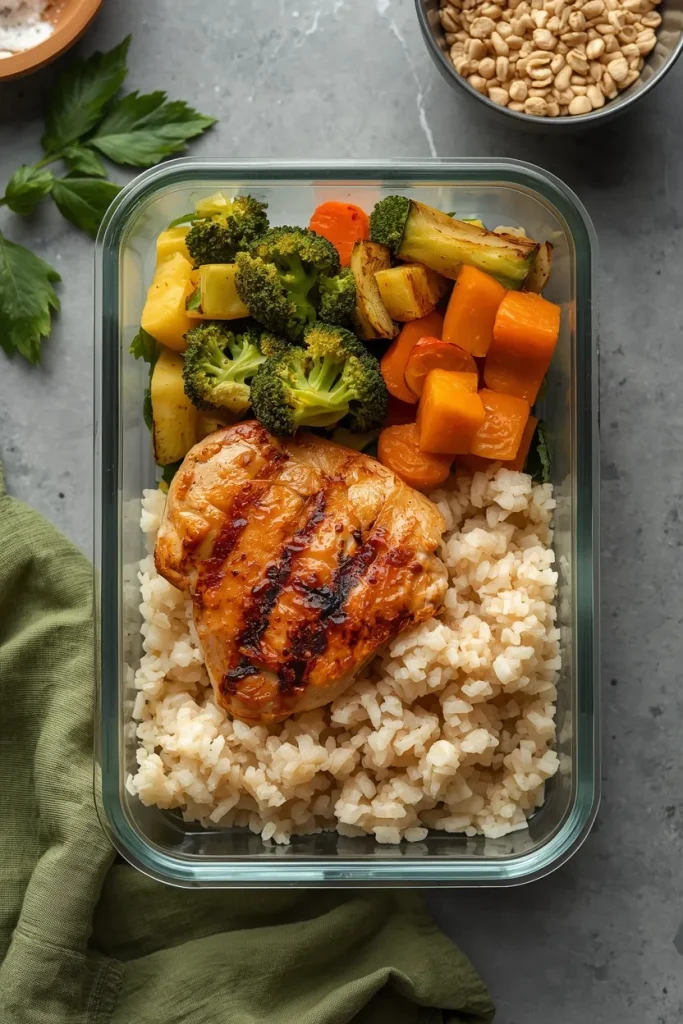
Meal 1: Chicken & Vegetable Rice Bowls
Combine:
- Cooked chicken
- Brown rice
- Broccoli
- Bell peppers
- Carrots
- A savory sauce
Freeze individual portions.
After reheating, add fresh lemon juice or herbs.
This type of meal also fits naturally into a broader meal-prep system. For more guidance on preparing proteins, grains, vegetables, and fresh toppings ahead of time, see FitVibe’s Meal Prep for Beginners: The Complete Guide.
Meal 2: Turkey & Bean Chili
Chili is one of the easiest freezer meals to batch cook.
Combine:
- Lean ground turkey
- Kidney beans
- Black beans
- Tomatoes
- Onion
- Garlic
- Chili powder
- Cumin
- Broth
Freeze in individual containers.
After reheating, add Greek yogurt, green onion, cilantro, or a small amount of cheese.
Because chili is moisture-rich and contains several ingredients that hold up well during freezing, it is an excellent starting point if you are new to freezer meal prep.
Meal 3: Chicken & Lentil Curry
Combine:
- Chicken
- Lentils
- Onion
- Garlic
- Ginger
- Curry spices
- Coconut milk
- Spinach
Freeze the curry in individual portions.
Serve with rice or quinoa.
For the best texture, you can freeze the curry separately from the cooked grain.
Meal 4: Beef & Vegetable Pasta Bake
Combine:
- Whole-wheat pasta
- Lean ground beef
- Tomato sauce
- Zucchini
- Bell pepper
- Onion
- Italian seasoning
- A moderate amount of cheese
Cook the pasta until just tender rather than very soft.
Freeze individual portions or a family-sized casserole.
Meal 5: Chicken Fajita Bowls
Combine:
- Chicken
- Brown rice
- Bell peppers
- Onion
- Cumin
- Chili powder
- Smoked paprika
- Lime
Freeze without avocado, fresh salsa, or other delicate toppings.
Add those ingredients after reheating.
How to Make the 5-Meal Plan More Efficient
The secret to efficient freezer meal prep is ingredient overlap.
Instead of buying completely different ingredients for every meal, use the same ingredients in different ways.
For example:
Chicken
Use it for:
- Rice bowls
- Curry
- Fajita bowls
Bell peppers
Use them in:
- Rice bowls
- Fajita bowls
- Pasta bake
Onions
Use them in:
- Chili
- Curry
- Pasta bake
- Fajita bowls
Rice
Use it for:
- Chicken bowls
- Fajita bowls
- Curry side dishes
This reduces both preparation time and food waste.
If you already have a favorite meal-prep routine, you can simply add freezer portions to the process rather than creating a completely separate cooking day.
A Practical Sunday Freezer Prep Schedule
You can prepare several freezer meals without spending the entire day in the kitchen.
Step 1: Make a Plan
Choose two or three recipes.
Don’t start by trying to make ten.
Three reliable freezer meals are more useful than ten recipes you don’t enjoy.
Step 2: Prepare Your Ingredients
Wash and chop:
- Onions
- Bell peppers
- Carrots
- Broccoli
- Garlic
- Fresh herbs
Measure your spices and sauces.
Step 3: Cook the Grains
Prepare rice, quinoa, or another grain.
Avoid overcooking.
Spread the workload across multiple recipes.
Step 4: Cook Your Proteins
Cook chicken, turkey, or beef according to the recipe.
Make sure raw meats reach their appropriate safe internal temperatures. The USDA Safe Minimum Internal Temperature Chart recommends 165°F for poultry, 160°F for ground meats, and 165°F for leftovers and casseroles.
Step 5: Assemble
Divide the meals into individual portions.
Keep delicate toppings separate.
Step 6: Label
Add the name and date to every container.
Step 7: Freeze
Once appropriately cooled and packaged, move the meals into the freezer.
Keep older meals toward the front so they are used first.
How to Prevent Soggy Freezer Meals
Soggy food is one of the most common reasons people give up on freezer meal prep.
The solution is not complicated.
Don’t Freeze Everything Together
If an ingredient is supposed to be fresh and crisp, don’t freeze it.
Keep these separate:
- Lettuce
- Cucumber
- Avocado
- Fresh salsa
- Fresh herbs
- Crispy toppings
- Tortilla chips
Don’t Overcook Pasta
Pasta continues to soften during reheating.
Cook it until just tender.
This leaves enough structure for the second cooking process.
Use Sauce Strategically
Sauces aren’t only for flavor.
They also help prevent meat and other ingredients from becoming dry.
Chili, curry, tomato-based pasta sauces, and stews are often excellent freezer meals for exactly this reason.
Avoid Excess Water
Watery ingredients can release liquid as they thaw.
If you’re making a freezer bowl, use cooked vegetables rather than adding raw watery vegetables directly into the container.
Healthy Freezer Meal Ideas to Mix Into Your Rotation
Once you understand the basic formula, you don’t have to rely on the same five meals.
Try:
- Chicken taco bowls
- Turkey meatballs with tomato sauce
- Lentil vegetable curry
- Chicken enchilada casserole
- Beef and bean burritos
- Sweet potato turkey chili
- Chicken teriyaki rice bowls
- Vegetable and chickpea curry
- Turkey stuffed peppers
- Chicken noodle soup
- Beef and vegetable stew
- Black bean enchiladas
- Chicken marinara pasta
- Lentil bolognese
- Turkey and vegetable shepherd’s pie
- Chicken burrito bowls
- Moroccan-style chickpea stew
- Vegetable lasagna
- Chicken and sweet potato bowls
- Bean and vegetable chili
The key isn’t whether a meal sounds like a traditional “freezer recipe.”
Ask a simpler question:
Will this food still taste good after it has been frozen, thawed, and reheated?
That is the real test.
How to Keep Freezer Meals Balanced
A healthy freezer meal doesn’t need to be perfect.
Instead, build most meals around a simple structure:
Protein + vegetables + carbohydrate + flavorful sauce or healthy fat
For example:
Chicken Rice Bowl
Protein: chicken
Vegetables: broccoli, peppers, carrots
Carbohydrate: brown rice
Flavor: lemon-soy sauce
Turkey Chili
Protein: turkey and beans
Vegetables: tomatoes, onion, peppers
Carbohydrate/fiber: beans
Flavor: chili, cumin, smoked paprika
Lentil Curry
Protein: chicken and lentils
Vegetables: spinach and onion
Carbohydrate: rice
Flavor: curry spices and coconut milk
This flexible structure is much easier to maintain than trying to make every meal fit a rigid nutritional formula.
If you’re working toward a higher-protein eating pattern, you can increase the portion of chicken, turkey, lean beef, beans, lentils, tofu, Greek yogurt, or another protein-rich ingredient that fits the recipe.
For more practical protein-focused ideas, explore FitVibe’s No-Cook High-Protein Lunches.
Freezer Meal Portions for Different Households
Cooking for One
Individual containers are usually ideal.
Freeze single-serving meals so you don’t have to thaw more food than you need.
You can also freeze two portions of the same meal if you know you’ll eat it twice during the week.
Cooking for Two
Two-serving containers can reduce packaging and freezer space.
You can also freeze individual portions if you and your partner have different schedules.
Cooking for a Family
Family-sized containers may be more practical.
Consider freezing meals in portions that match the number of people you normally serve.
For example, if your household usually eats four servings at dinner, a four-serving casserole may make more sense than four separate containers.
Common Healthy Freezer Meal Mistakes
Mistake 1: Freezing Food Without a Plan
A freezer full of random containers isn’t meal prep.
Choose meals intentionally.
Mistake 2: Making Every Meal Identical
Variety matters.
Prepare two or three recipes rather than seven identical portions if you know you’ll get bored.
Mistake 3: Freezing Fresh Toppings
Keep fresh ingredients separate.
They can completely change the final texture and flavor of the meal.
Mistake 4: Using the Wrong Container
A container that works for the refrigerator isn’t automatically suitable for the freezer, microwave, or oven.
Check the manufacturer’s instructions.
Mistake 5: Overfilling Containers
Leave appropriate room for expansion, particularly with soups, stews, and other liquid-rich foods.
Mistake 6: Forgetting the Date
Always label meals.
Freezer organization becomes much easier when you know what you’re looking at.
Mistake 7: Reheating Without Checking the Center
A meal can be steaming around the edges while remaining cold in the middle.
Stir when possible and check the internal temperature.
Mistake 8: Treating the Freezer as a Permanent Storage Solution
Freezing preserves food, but quality still changes.
Use older meals first and rotate your freezer regularly.
Can You Refreeze a Thawed Meal?
It depends on how the food was thawed and handled.
The USDA guidance on freezing and food safety explains that food thawed in the refrigerator can generally be safely refrozen, although quality may decline because of moisture loss. Food thawed using cold water or the microwave requires additional handling before refreezing. Food that has been left at room temperature beyond safe limits should not simply be refrozen.
For normal meal prep, the easiest strategy is to freeze individual portions in the first place.
Then you only thaw the amount you intend to eat.
How to Make Frozen Meals Taste Fresh Again
The freezer doesn’t have to be the final step in the flavor process.
Fresh finishing ingredients can make a huge difference.
Try adding:
- Fresh lemon juice
- Lime juice
- Chopped cilantro
- Parsley
- Green onion
- Fresh salsa
- Greek yogurt
- Avocado
- A squeeze of hot sauce
- Toasted seeds
- Freshly ground black pepper
- A small drizzle of olive oil
Think of the frozen portion as the foundation.
The fresh topping is what gives it a just-cooked feeling.
For example, a frozen chicken fajita bowl can taste completely different after adding fresh salsa, avocado, lime, and cilantro.
A Simple Freezer Meal Formula
If you want to create your own freezer meals instead of following recipes, use this formula:
1. Choose a protein
Chicken, turkey, lean beef, beans, lentils, tofu, or another protein.
2. Choose two vegetables
Broccoli and carrots.
Peppers and onions.
Spinach and tomatoes.
Sweet potato and green beans.
3. Choose a carbohydrate
Rice, quinoa, pasta, potatoes, beans, or another grain.
4. Add moisture
Tomato sauce, curry sauce, broth, chili sauce, gravy, or another freezer-friendly sauce.
5. Add fresh ingredients later
Herbs, avocado, cucumber, lettuce, salsa, citrus, or crunchy toppings.
This formula gives you almost unlimited combinations without requiring a new recipe every time.
Healthy Freezer Meals: Frequently Asked Questions
Are freezer meals healthy?
They can be.
Freezing itself doesn’t make a meal unhealthy. The nutritional quality depends largely on the ingredients and overall recipe.
A freezer meal made from chicken, vegetables, beans, whole grains, and a flavorful homemade sauce can be a practical part of a balanced eating pattern.
What is the best food to freeze for meal prep?
Meals containing sauces, broth, or cooked ingredients tend to perform well.
Chili, curry, soups, stews, casseroles, meatballs, cooked chicken dishes, and grain bowls are popular choices.
Can cooked chicken be frozen?
Yes. Cooked chicken can be frozen, and it generally works best when incorporated into a moist dish or stored with enough sauce to prevent it from becoming excessively dry.
Can you freeze rice?
Yes.
Cooked rice can be frozen as part of meal prep. Avoid overcooking it, cool and store it promptly, and reheat it thoroughly.
For better texture, you can freeze rice separately from sauces or curries.
Should freezer meals be thawed overnight?
Not always.
Thawing overnight in the refrigerator can make reheating easier and more even, but some meals can be safely reheated directly from frozen. The USDA confirms that frozen leftovers can be reheated without thawing, although they take longer to heat.
What vegetables should I avoid freezing?
The main issue is texture rather than whether freezing is inherently unsafe.
Lettuce, cucumber, and other delicate raw vegetables often become limp or watery.
Add them fresh after reheating instead.
What temperature should reheated freezer meals reach?
USDA recommends reheating leftovers to 165°F (73.9°C), measured with a food thermometer. See the USDA guidance for safely reheating leftovers for additional details about microwave, oven, and stovetop reheating.
How long can freezer meals stay frozen?
For best quality, many cooked leftovers are best used within a few months. USDA notes that frozen foods remain safe indefinitely at 0°F (-17.8°C) when continuously frozen, but quality can decline over time.
Are glass containers good for freezer meals?
They can be excellent when they are specifically designed for freezer use.
Always check the manufacturer’s instructions before freezing, thawing, or reheating glass containers, especially when moving between extreme temperatures.
The Bottom Line
Healthy freezer meals are less about cooking everything in advance and more about making future meals easier.
Start with a few recipes that you genuinely enjoy. Choose ingredients that tolerate freezing well, portion meals before storing them, use appropriate freezer-safe containers, label everything, and keep delicate toppings separate.
A freezer meal doesn’t need to look exactly like a freshly cooked dinner.
It simply needs to be nutritious enough, satisfying enough, convenient enough, and enjoyable enough that you’ll actually want to eat it.
A practical starting point is five meals:
- Chicken and vegetable rice bowls
- Turkey and bean chili
- Chicken and lentil curry
- Beef and vegetable pasta bake
- Chicken fajita bowls
Prepare a few portions of each, freeze them, and add fresh toppings when you serve them.
Over time, you’ll learn which meals your household enjoys most and which ingredients freeze especially well. You can then build your own freezer rotation around those favorites.
If you’re ready to expand beyond freezer meals, continue with FitVibe’s Meal Prep for Beginners guide or explore No-Cook High-Protein Lunches for additional practical meal ideas.