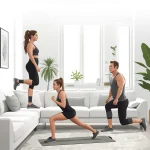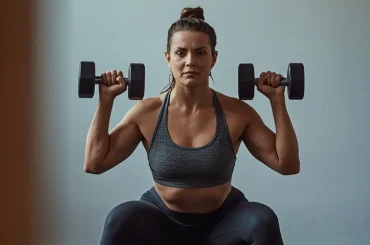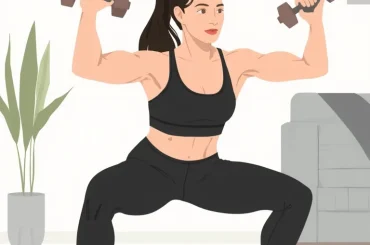
Starting to exercise is rarely a problem of motivation alone. More often it is a problem of clarity: too many conflicting programs, too much gym jargon, and too little guidance on where an absolute beginner should actually begin. This beginner workout plan for women is built to remove that friction. It gives you a realistic weekly structure, a short list of foundational movements, clear rules for progressing, and practical answers to the barriers that stop most people in the first few weeks.
One point is worth stating up front. The fundamentals of strength training are the same for everyone. Muscles respond to progressive resistance, adequate recovery, and consistency regardless of who is lifting. What differs from person to person is not biology so much as starting point: current fitness, injury history, available equipment, schedule, and how comfortable you feel in an exercise setting. That is what this guide addresses, and it is why the plan below can be used by any beginner, with this article written particularly for women who are looking for a clear, confidence-building place to start.
Key Takeaways
- Two to three full-body strength sessions per week is enough to begin making real progress.
- Public health guidelines recommend muscle-strengthening activity on at least two days per week, working all major muscle groups.
- Form, consistency, and gradual progression matter more than heavy weights or long sessions.
- Almost every exercise has an easier and a harder version, so the plan can be scaled to your level.
- Most barriers (time, intimidation, uncertainty, soreness) have simple, practical solutions.
What ‘Beginner’ Really Means
A beginner is anyone who is new to structured strength training or returning after a long break. That covers a wide range of people: someone who has never lifted a weight, someone who was active years ago, and someone who walks daily but has never trained for strength. Before choosing a plan, it helps to take a few minutes to think through the following.
Your current activity level. If you are largely sedentary, begin with two sessions per week and keep the early workouts short. If you already walk, swim, or cycle regularly, you can likely start with three sessions.
Your history and any limitations. Past injuries, joint pain, or conditions that affect movement do not rule out strength training, but they do shape which exercises and ranges of motion suit you best. The modification table later in this guide offers alternatives for common problem areas.
Your goals. General strength, more energy, better posture, easier everyday movement, bone and joint health, and confidence are all reasonable and well-supported reasons to train. A clear goal makes it easier to judge progress by something other than the scale.
Your schedule. The best plan is the one that fits your actual week. Three 35-minute sessions you complete will always outperform five 60-minute sessions you abandon after ten days.
When to Speak With a Healthcare Professional First
Most healthy adults can begin light strength training without special preparation. It is sensible to check with a doctor or another qualified clinician first if you have a known heart, lung, kidney, or metabolic condition, experience chest pain, dizziness, or unusual shortness of breath with exertion, have had recent surgery or a significant injury, or are pregnant or postpartum. Strength training is generally considered safe and beneficial during an uncomplicated pregnancy and in the postpartum period, and the American College of Obstetricians and Gynecologists encourages regular physical activity in both, but the right exercise selection and intensity depend on your individual circumstances. Your provider can advise you, and pelvic floor or physical therapy specialists can help with specific concerns.
What the Guidelines Recommend
The Physical Activity Guidelines for Americans, along with the CDC’s summary of them, recommend that adults get at least 150 minutes of moderate-intensity aerobic activity each week and do muscle-strengthening activities on two or more days per week that work all the major muscle groups: legs, hips, back, abdomen, chest, shoulders, and arms. National survey data have consistently shown that fewer adults meet the muscle-strengthening target than the aerobic one, and that women are less likely than men to meet it. In other words, many women are not avoiding strength training because it is unnecessary. They are avoiding it because it can feel unfamiliar or unclear.
A simple full-body plan performed two or three times per week meets the strengthening guideline directly, and the aerobic target can be met with brisk walking, cycling, or any activity that raises your heart rate and that you enjoy.
The benefits are broad. Regular resistance training is associated with improved muscle strength, better bone density, healthier blood sugar regulation, improved mobility and balance, and better long-term functional independence. Many people also report better mood, sleep, and day-to-day energy.
Building Exercise Confidence
For many beginners, the real obstacle is not physical ability. It is the feeling of not knowing what to do, or of being watched while doing it. Confidence in exercise is a skill, and like any skill it grows with repetition.
Start where it feels safe. Training at home removes the audience and the unfamiliar equipment. Many people build a base at home for four to eight weeks and then move to a gym when the movements feel automatic. If you are new to working out at home, our guide to your first day working out at home walks through how to begin comfortably.
Learn the movements before adding load. Perform each exercise with body weight first. Slow, controlled repetitions teach your body the pattern and make adding weight later safer and more effective.
Use simple cues. Filming a set from the side on your phone is one of the most useful tools a beginner has. You can compare your position to a reputable instructional video and make small corrections.
Track something other than appearance. Record what you did: exercises, weights, reps, and how the set felt. A written log turns vague progress into evidence, and it is highly motivating to see a goblet squat go from a 4 kg dumbbell to an 8 kg one over two months.
Set process goals. Goals such as ‘complete three sessions this week’ are fully within your control, unlike outcome goals that depend on many variables.
Address the ‘bulky’ concern directly. Many people hesitate to lift because they worry about becoming bulky. In reality, building substantial muscle size takes years of dedicated, progressive training, usually combined with eating above maintenance calories. For a beginner, the visible changes are typically better definition, improved posture, and a feeling of being stronger and more capable. Heavier or lighter, the goal is simply to challenge the muscles within a range you can control.
Expect awkwardness. Everyone feels uncoordinated in their first few sessions. That feeling fades faster than almost any beginner expects.
Equipment: What You Actually Need
You do not need a fully equipped gym to follow this plan. Here is a sensible progression from no equipment to a modest home setup.
| Level | Equipment | What it allows |
|---|---|---|
| Starting out | Your body weight, a mat, a sturdy chair or bench | Squats, glute bridges, incline push-ups, planks, bird dogs |
| Low-cost upgrade | A set of resistance bands (light, medium, heavy) | Rows, presses, banded glute work, assisted variations |
| Core home setup | Two pairs of dumbbells (one lighter, one heavier), or adjustable dumbbells | Goblet squats, Romanian deadlifts, rows, overhead presses |
| Optional extras | Bench or step, backpack with books, kettlebell | More exercise variety and easier load increases |
When buying dumbbells, choose weights you can use with good control for 10 to 12 repetitions of a lower-body exercise, and a lighter pair for pressing movements. Upper-body exercises such as shoulder presses generally need lighter loads than lower-body exercises such as squats, so having two weights is more useful than one. Adjustable dumbbells or a set of resistance bands cover a wide range of needs in a small space. If you are deciding between types, see our guide to resistance bands for beginners.
Wearing supportive, flat-soled or cushioned athletic shoes, and clothing that lets you move freely, is all the other equipment you need.
The Beginner Workout Plan for Women: A Simple Full-Body Routine
This plan uses two full-body workouts, A and B, that you alternate. Full-body sessions are ideal for beginners because every muscle group is trained several times per week, which accelerates skill learning, and because missing a day does not derail the whole program.
Weekly Structure
| Day | Activity |
|---|---|
| Day 1 | Workout A |
| Day 2 | Rest or a 20 to 30 minute walk |
| Day 3 | Workout B |
| Day 4 | Rest |
| Day 5 | Workout A or B (alternate each week) |
| Days 6 and 7 | Rest, walking, stretching, or gentle yoga |
If three sessions feel like too much in the first two weeks, do two and add the third when you feel ready. Allow at least one day of rest between strength sessions so your muscles can recover. If you want help balancing training and recovery, see our guide on how often beginners should work out at home, and if you are short on time, our 20-minute full body workout for women is a quick alternative.
Warm-Up (5 minutes, every session)
- Marching in place or an easy brisk walk: 1 to 2 minutes
- Arm circles: 30 seconds in each direction
- Hip circles: 30 seconds in each direction
- Bodyweight squats: 8 to 10 slow reps
- Cat-cow or gentle trunk rotations: 30 to 60 seconds
The goal is to raise your body temperature and rehearse the movements you are about to perform, not to tire yourself out.
Workout A: Legs, Back, and Core Emphasis
| Exercise | Sets | Reps | Notes |
|---|---|---|---|
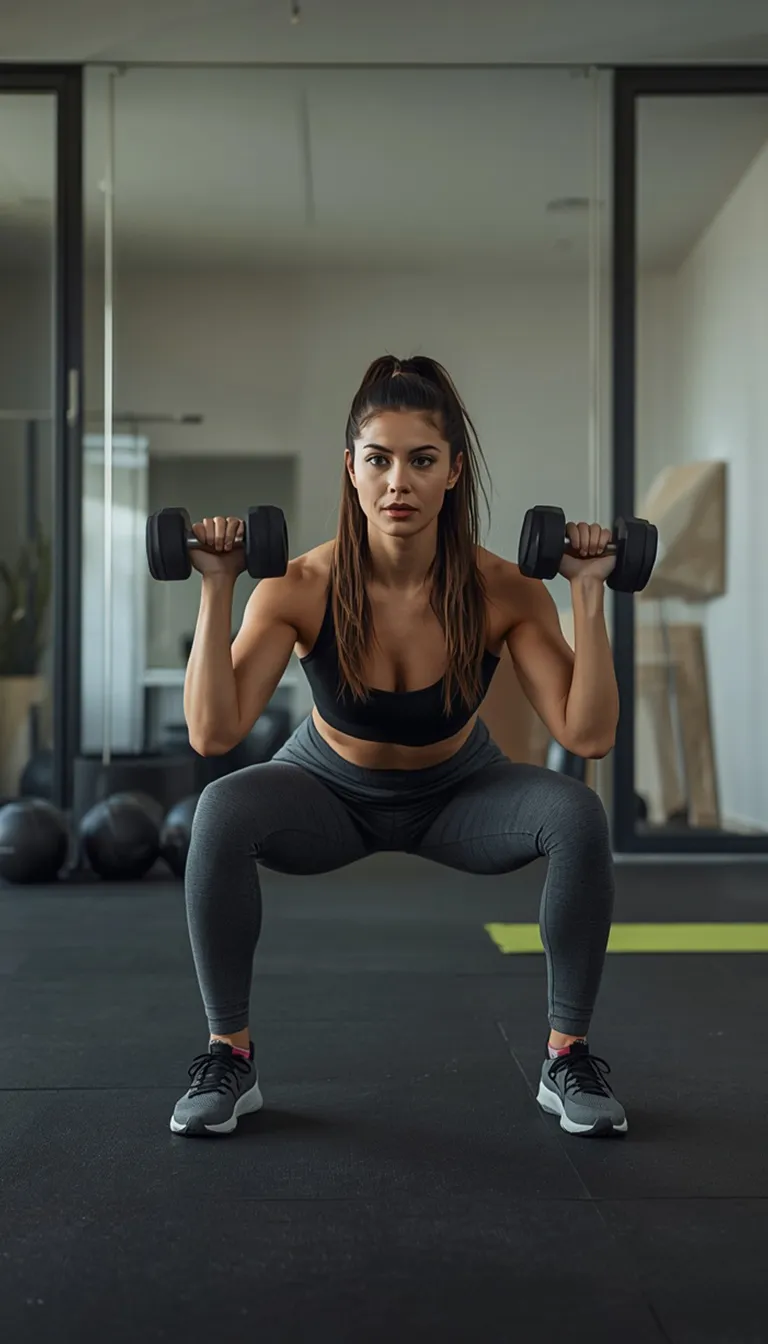
| Goblet squat (or bodyweight squat to a chair) | 2 to 3 | 8 to 12 | Keep chest tall, knees tracking over toes |
| Dumbbell Romanian deadlift (or hip hinge with no weight) | 2 to 3 | 8 to 12 | Push hips back, keep a long spine |
| One-arm dumbbell row (or band row) | 2 to 3 | 8 to 12 each side | Pull elbow toward hip, avoid shrugging |
| Incline push-up (hands on a counter or bench) | 2 to 3 | 6 to 10 | Body in one straight line |
| Dead bug | 2 | 6 to 8 each side | Keep lower back gently pressed toward the floor |
Workout B: Glutes, Shoulders, and Stability Emphasis
| Exercise | Sets | Reps | Notes |
|---|---|---|---|
| Reverse lunge or supported split squat | 2 to 3 | 6 to 10 each leg | Use a wall or chair for balance if needed |
| Glute bridge | 2 to 3 | 10 to 15 | Pause for one second at the top |
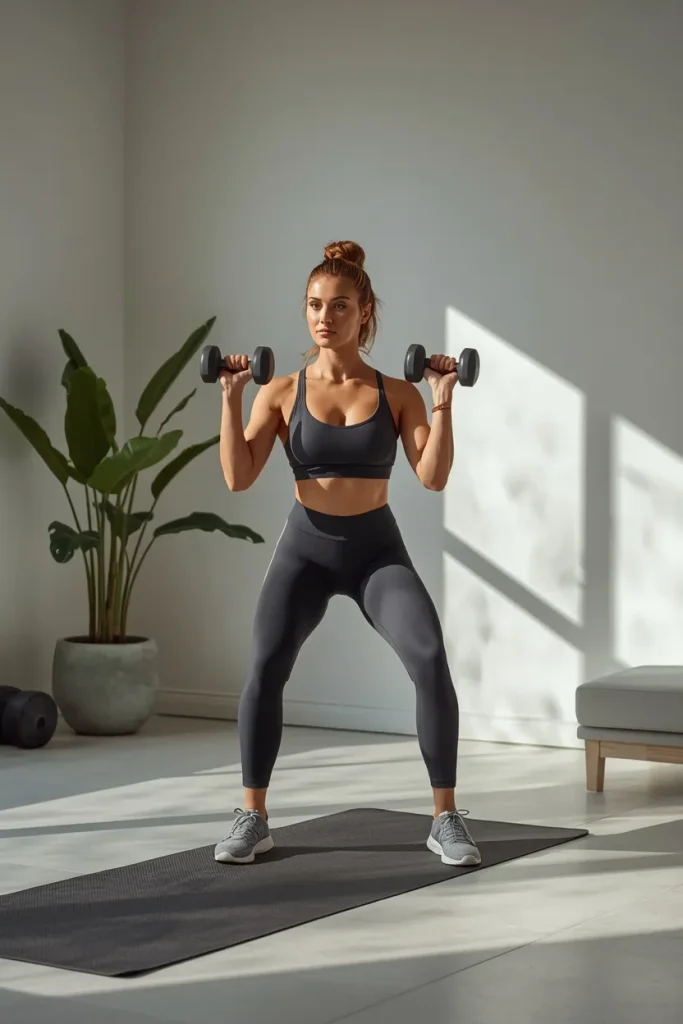
| Dumbbell shoulder press (seated or standing) | 2 to 3 | 8 to 12 | Ribs down, avoid arching the lower back |
| Band pull-apart or reverse fly | 2 to 3 | 10 to 15 | Squeeze shoulder blades gently together |
| Plank (on knees or toes) or bird dog | 2 | 20 to 30 seconds, or 6 to 8 each side | Stop before form breaks down |
Cool-Down (3 to 5 minutes, every session)
- Standing quad stretch: 20 to 30 seconds each leg
- Hamstring stretch: 20 to 30 seconds each leg
- Chest and shoulder stretch: 20 to 30 seconds
- Slow breathing: 5 to 6 deep breaths
How Hard Should It Feel?
A useful way to select your weight is the ‘reps in reserve’ method. On each working set, finish with about two to three repetitions you could still have performed with good form. If you could have done many more, the weight is too light. If your form breaks down before the last rep, it is too heavy. In your first two weeks, it is entirely appropriate to use very light weights or just body weight while you learn the movements.
Research comparing lighter and heavier loads has found that lighter weights can produce meaningful strength and muscle gains when sets are taken close to fatigue, which is good news for anyone training at home with limited equipment. Rest 60 to 90 seconds between most sets, and up to two minutes after harder movements such as squats and deadlifts. Taking enough rest lets you perform each set well.
Stop any exercise that causes sharp, pinching, or joint pain, as opposed to the muscular effort and burning sensation of a hard set. Modify it or skip it, and consult a professional if the pain persists.
Progression: How to Get Stronger Without Burning Out
Your muscles adapt to demands placed on them. To keep improving, the demands need to increase gradually, a principle known as progressive overload. The American College of Sports Medicine’s position stand on resistance training progression recommends that novices begin with modest volume and intensity and increase gradually as they adapt.
You can progress in several ways, and only one of them involves heavier weights:
- Add repetitions. Work toward the top of the rep range before changing anything else.
- Add weight. Once you can complete all sets at the top of the range with good form, increase the load by the smallest available increment.
- Add a set. Moving from two sets to three raises total work without changing the weight.
- Improve control. Slower lowering phases and pauses make an exercise harder without any equipment.
- Choose a harder variation. Move from a wall push-up to an incline push-up, then to a full push-up, for example.
A widely used rule of thumb is the ‘two-for-two’ rule: if you can complete two more reps than your target on the final set of an exercise for two sessions in a row, it is time to increase the load.
An Eight-Week Progression Example
| Weeks | Focus | Sets per exercise | Load |
|---|---|---|---|
| 1 to 2 | Learn the movements | 2 | Body weight or very light |
| 3 to 4 | Build consistency | 2 to 3 | Light dumbbells or bands; 2 to 3 reps in reserve |
| 5 to 6 | Add volume | 3 | Increase reps within the range, then load |
| 7 to 8 | Add challenge | 3 | Increase load slightly or move to a harder variation |
After eight weeks, reassess. Look at your training log, notice what has become easier, and decide whether to repeat the cycle with heavier loads, add a fourth weekly session, or move on to a more advanced program.
It is normal for progress to be uneven. A stressful week, poor sleep, or illness can make a familiar weight feel heavy. When that happens, repeat the previous week rather than treating it as a failure.
Modifications for Common Needs
No exercise is mandatory. Each movement exists to train a pattern (squatting, hinging, pushing, pulling, bracing), and there are many ways to train each pattern. Use the table below to adapt the plan to what your body needs.
| If this is a challenge | Try this instead |
|---|---|
| Knee discomfort in squats or lunges | Squat to a chair with a shallower range; try glute bridges, step-ups to a low step, or a supported split squat |
| Wrist discomfort in push-ups or planks | Use dumbbell handles or fists, or perform the movement on forearms or on an incline |
| Lower back tension in hinges | Reduce the range, use no weight, or switch to glute bridges and bird dogs |
| Shoulder discomfort in overhead pressing | Try a landmine-style or angled press, a lighter load, or a floor press |
| Balance concerns | Use a wall or chair for support and choose stationary variations of lunges |
| Limited space or noise concerns | Choose resistance bands and slow bodyweight variations |
| Low energy or a short day | Do a single set of each exercise, which still counts and keeps the habit |
| Pregnancy or postpartum | Follow the guidance of your healthcare provider, who can advise on intensity and exercise selection |
Common Barriers and How to Overcome Them
‘I don’t have time.’ Short workouts work. Two or three sessions of 25 to 35 minutes can meet the guideline for strength training. If your day is unpredictable, keep a shorter fallback session of three exercises, one set each. For help choosing session lengths, see our guide on how long a beginner workout should be.
‘I feel intimidated in the gym.’ Begin at home, visit the gym at a quiet time, and go in with a written plan so you are never wandering. Many gyms offer a free orientation session that teaches you how the machines work. Remember that most people in a gym are focused on their own workouts.
‘I don’t know what I’m doing.’ A written plan, a reputable instructional video for each movement, and a simple workout log answer most of this. A certified trainer can also review your form in a session or two, and many offer short beginner consultations.
‘I’m worried about getting hurt.’ Injury risk is lower when you start light, prioritize form, warm up, and increase load gradually. Strength training also improves joint stability and balance, which can reduce injury risk in daily life.
‘I’m too sore to continue.’ Delayed-onset muscle soreness is common when starting, typically peaks one to three days after a new workout, and fades as your body adapts. Light walking, gentle stretching, good sleep, and keeping the first weeks conservative all help. Soreness is not a sign you must train harder, and its absence is not a sign you failed.
‘I started and then fell off.’ This is extremely common. Lower the bar rather than quitting: do the short version of the workout, pick it up the next scheduled day, and avoid trying to ‘make up’ missed sessions by doubling up. Attaching workouts to an existing routine, such as after your morning coffee or before dinner, helps them stick. Our guide to building a healthy routine for busy people offers more ideas.
‘I’m not seeing results fast enough.’ Strength gains show up first, often within the first few weeks, largely through improved coordination and nervous-system adaptation, while visible body changes take longer. Track what you can lift, how you move, how you sleep, and how you feel, not only the scale.
Supporting Your Training: Cardio, Recovery, and Nutrition
Strength training works best as part of a broader routine.
Cardio. Aim to build toward 150 minutes of moderate activity per week alongside your strength sessions. Brisk walking counts, and easy-paced cardio can be built up gradually. If you are curious about steady, low-intensity training, see our Zone 2 cardio guide for beginners.
Sleep and recovery. Muscles adapt between workouts, not during them. Regular sleep of seven or more hours for most adults, along with rest days, supports that process.
Nutrition. You do not need an elaborate diet to begin. Regular meals with adequate protein, plenty of vegetables, fruits, and whole grains, and enough overall food to fuel your training are a solid foundation. If you are curious about how much protein suits you, see our guide on how much protein you need a day. Anyone with a medical condition or a history of disordered eating should seek individualized guidance from a registered dietitian or physician.
Frequently Asked Questions
How many days a week should a beginner strength train? Two to three non-consecutive days is a reasonable starting point and meets the muscle-strengthening guideline.
Do I need to lift heavy to see results? No. Beginners can make meaningful progress with light to moderate loads, provided the sets are challenging, the form is controlled, and the load increases gradually over time.
Can I follow this plan at home? Yes. Every exercise has a bodyweight or band-based version, and a basic pair of dumbbells covers most progressions.
How long until I notice a difference? Many people feel stronger and more confident within three to four weeks. Visible changes usually take longer and vary widely from person to person.
What if I miss a week? Resume where you left off, and if the break was long, drop the weights slightly for the first session.
Final Thoughts
A good beginner workout plan for women, or for anyone, is not about complicated programming or punishing workouts. It is about learning a handful of foundational movements, training consistently two or three days per week, increasing the challenge gradually, and adjusting the plan so it fits your body and your life. Confidence follows competence, and competence follows repetition. Choose your first workout, put it in your calendar, and begin with a weight that feels almost too easy. You can add more as you go.
This article is for general educational purposes and is not a substitute for personalized medical advice. Consult a qualified healthcare professional before starting a new exercise program, particularly if you have a medical condition, are pregnant or postpartum, or have concerns about your health.
Sources and Further Reading
- Centers for Disease Control and Prevention. Adding Physical Activity as an Adult
- Centers for Disease Control and Prevention. Health Benefits of Physical Activity for Adults
- U.S. Department of Health and Human Services. Physical Activity Guidelines for Americans, 2nd Edition
- American College of Obstetricians and Gynecologists. Committee Opinion No. 804: Physical Activity and Exercise During Pregnancy and the Postpartum Period. 2020.