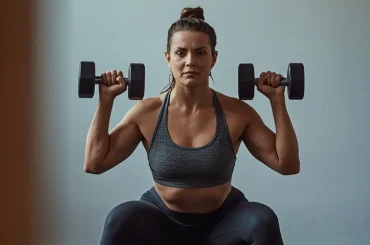
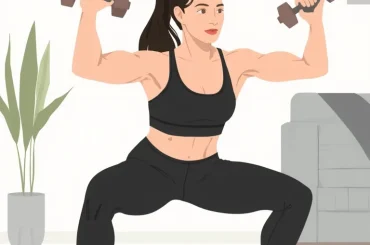
If you’re new to exercise, a vague instruction like “just work out for a while” isn’t much help. You need to know what to do, in what order, for how long, and how hard. This article gives you exactly that: three complete beginner home workouts, one for each time slot. There’s a 10-minute routine for tight days, a 20-minute routine for most days, and a 30-minute routine for days when you have room to do more.
Each of these 3 Beginner Home Workouts has timed intervals, plain-language form cues, an easier option, and a harder option, so you can start at your level and progress without guessing. You don’t need a gym. A chair, a wall, and a mat are enough to begin, and light dumbbells or a resistance band make the 20 and 30-minute routines more effective.
If you’re still deciding how long your sessions should be, read our 10, 20 or 30-minute decision guide first. If you already know your time slot, jump straight to the workout you need.
Before you start: three quick rules
These rules apply to every workout below.
- Work at a moderate effort. You should be able to talk but not sing. If you’re gasping, slow down or rest. Health agencies describe moderate-intensity activity in similar terms, and the CDC’s adult activity guidelines are a good reference for what counts.
- Form beats speed. A slow, controlled rep is worth more than three sloppy ones. When your form breaks down, the set is over, even if the timer isn’t.
- Stop if something feels wrong. Muscle fatigue is normal. Sharp pain, dizziness, or chest discomfort is not. Read our Health & Fitness Disclaimer, and check with a doctor before starting if you have a medical condition or haven’t exercised in a long time.
Which workout should you do?
| Your time | Workout | Equipment | Best for |
|---|---|---|---|
| 10 minutes | The Reset Circuit | None (a wall helps) | Busy days, low energy, restarting |
| 20 minutes | The Steady Builder | Optional dumbbells or a band | Most days, building a routine |
| 30 minutes | The Strength and Stamina Session | Dumbbells and a step or sturdy low platform | Days off, higher energy |
Want more routines in each time slot? Browse the full collections of 10-minute workouts, 20-minute workouts, and 30-minute workouts.
Workout 1: The Reset Circuit (10 minutes)
Who it’s for: anyone with a packed schedule, anyone coming back after a break, and anyone who needs a small win today. Ten minutes won’t replace longer sessions, but it keeps the habit going on the days that would otherwise be skipped.
The structure
- Warm-up (1 minute): march in place, circle your arms, and roll your hips.
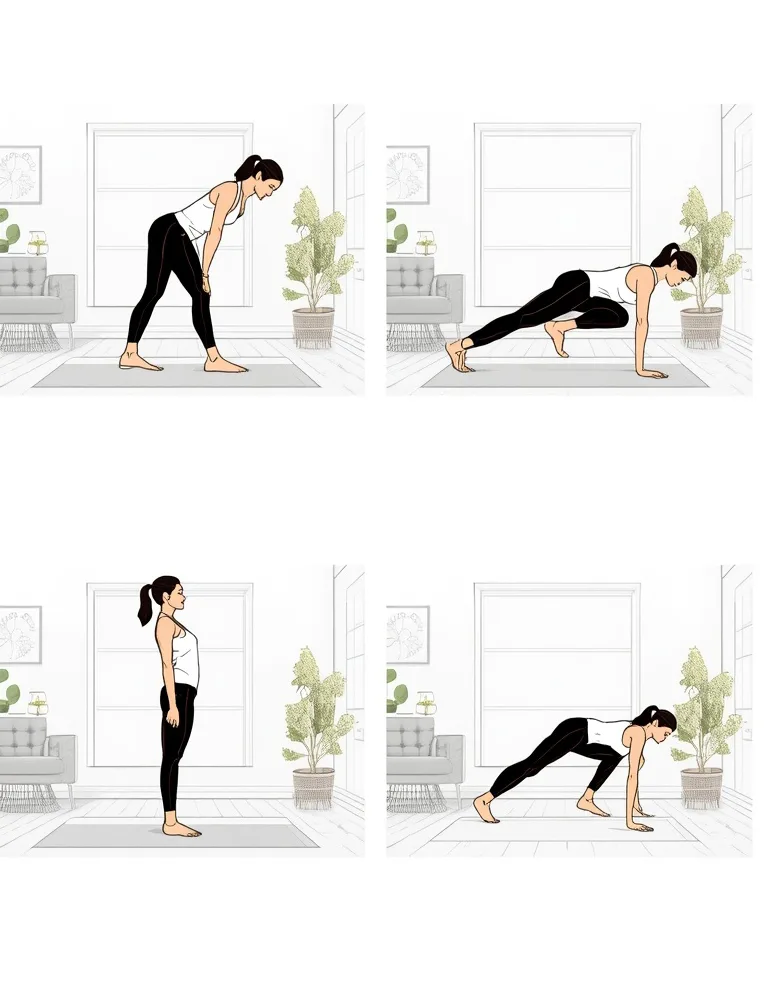
- Circuit (8 minutes): work for 30 seconds, rest for 30 seconds. Complete all four exercises, then repeat the circuit once.
- Hip hinge (good morning)
- Knee push-up or wall push-up
- Standing knee drive
- Bird dog
- Cool-down (1 minute): breathe slowly and stretch your hamstrings and chest.
How to do each move
Hip hinge (good morning): stand with your feet hip-width apart and your hands behind your head or crossed on your chest. Keep a soft bend in your knees, push your hips back, and lean your torso forward with a flat back until you feel a stretch in the back of your thighs. Drive your hips forward to stand tall. This teaches the hinge pattern used in deadlifts later.
Knee or wall push-up: place your hands slightly wider than your shoulders, either on the floor with your knees down or on a wall. Keep a straight line from head to knees (or head to heels on the wall), lower your chest, and press back up.
Standing knee drive: stand tall and lift one knee toward your hip as you swing the opposite arm forward, then switch. Keep it light and rhythmic. This raises your heart rate without jumping.
Bird dog: start on hands and knees with your wrists under your shoulders and your knees under your hips. Extend one arm forward and the opposite leg back, hold for a breath, then switch. Keep your hips level and avoid arching your lower back.
Easier: do one round only, or use 20 seconds of work and 40 seconds of rest. Harder: add a third round or slow each rep to a three-second count.
Workout 2: The Steady Builder (20 minutes)
Who it’s for: most beginners, most days. This is the session to repeat three or four times a week because it’s long enough to feel complete and short enough to fit into a normal day. For another full routine in this time slot, try our 20-Minute Full Body Workout for Women.
The structure
- Warm-up (3 minutes): marching, arm circles, hip circles, and a few slow bodyweight squats.
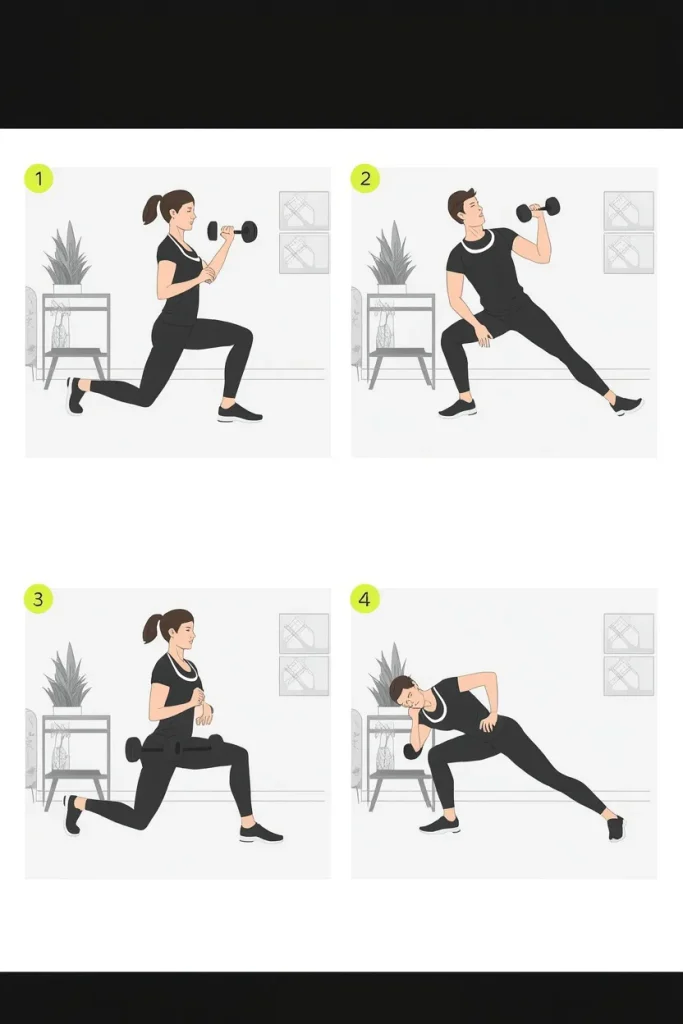
- Strength block (12 minutes): work for 45 seconds, rest for 15 seconds. Complete all four exercises, then repeat for three rounds.
- Reverse lunge (supported or with dumbbells)
- Floor press or push-up
- Bent-over row (band or dumbbell)
- Glute bridge march
- Cardio block (2 minutes): brisk marching or low step-ups at a steady pace.
- Cool-down (3 minutes): stretch your hips, hamstrings, chest, and upper back.
How to do each move
Reverse lunge: hold a wall or chair if you need balance. Step one foot back, lower both knees with control, then push through your front heel to stand. Keep your torso upright and alternate sides each rep. Add dumbbells once the movement feels steady.
Floor press: lie on your back with your knees bent, holding a dumbbell in each hand with your elbows at about 45 degrees from your body. Press the weights up over your chest, then lower until your upper arms lightly touch the floor. If you don’t have dumbbells, use incline push-ups instead.
Bent-over row: hinge forward at the hips with a flat back, holding a dumbbell in each hand or a band under your feet. Pull your elbows back toward your hips and squeeze your shoulder blades together. If you’re new to bands, Resistance Bands for Beginners explains how to choose the right resistance.
Glute bridge march: lie on your back with your knees bent and lift your hips into a bridge. Holding the bridge, lift one foot a few inches off the floor, lower it, then switch. Keep your hips level. If it’s too hard, do regular glute bridges instead.
Easier: use bodyweight only and take the full rest between rounds. Harder: use heavier dumbbells, slow the lowering phase of each rep, or add a fourth round and shorten the cardio block.
Workout 3: The Strength and Stamina Session (30 minutes)
Who it’s for: weekends, days off, and anyone who has been consistent with 20-minute sessions for a few weeks. Thirty minutes allows two strength blocks, more cardio, and extra core work. For more exercise ideas to rotate in, see our 21 Trendy Strength Training Guide.
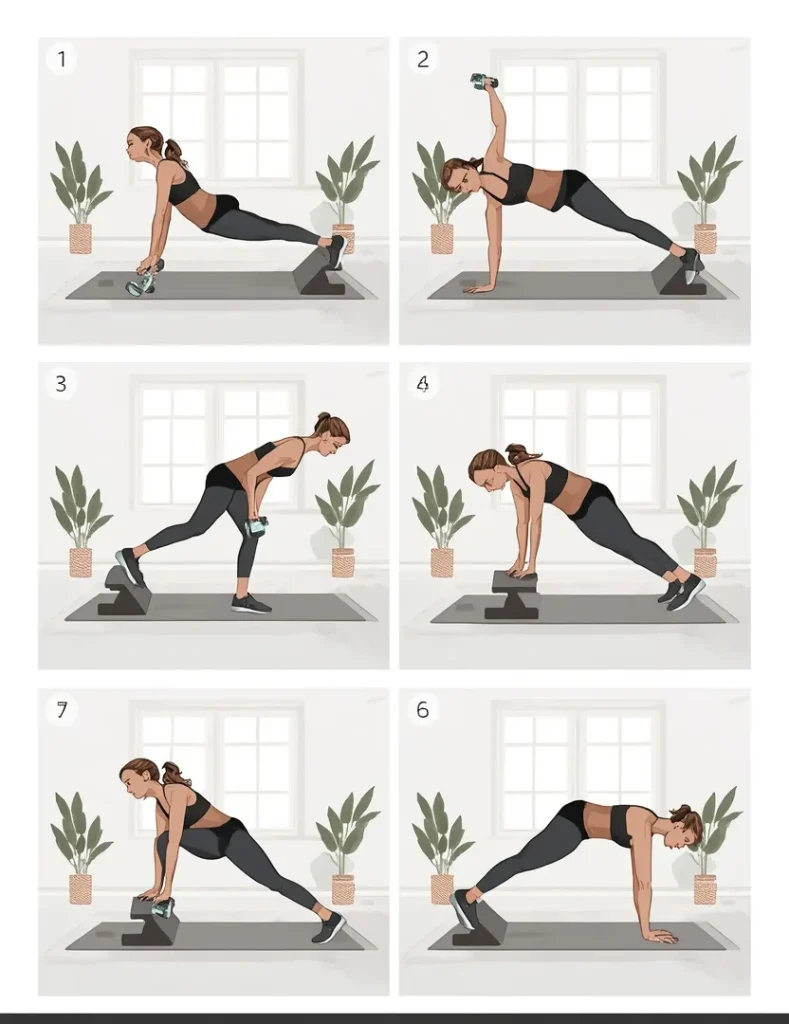
The structure
- Warm-up (5 minutes): an easy march, dynamic stretches, and a few practice reps of squats and hip hinges.
- Block A, strength (12 minutes): work for 45 seconds, rest for 15 seconds. Complete all four exercises, then repeat for three rounds.
- Goblet squat
- Incline push-up
- Single-arm dumbbell row
- Dumbbell Romanian deadlift
- Block B, stamina and core (9 minutes): work for 40 seconds, rest for 20 seconds. Complete all three exercises, then repeat for three rounds.
- Step-ups
- Side plank (20 seconds per side, knees bent if needed)
- Bird dog
- Cool-down (4 minutes): slow breathing and stretches for your legs, hips, chest, and back.
How to do each move
Goblet squat: hold one dumbbell vertically against your chest. Sit your hips back and down, keeping your chest tall and your knees in line with your toes, then stand. If you don’t have a dumbbell, hold a heavy book or a filled water jug.
Incline push-up: place your hands on a bench, sturdy table, or countertop and keep your body in a straight line. Lower your chest toward the surface and press back up. The lower the surface, the harder it gets.
Single-arm dumbbell row: support one hand on a chair or bench with a flat back and pull the dumbbell toward your hip, keeping your elbow close to your body. Complete the reps on one side, or alternate each round.
Dumbbell Romanian deadlift: hold a dumbbell in each hand in front of your thighs, soften your knees, push your hips back, and slide the weights down your legs while keeping your back flat. Squeeze your glutes to stand.
Step-up: use a stable step or low platform. Place one foot fully on it, press through that heel to stand, then step down with control. Alternate leading legs or complete a set on one side before switching. Make sure the platform won’t slide.
Side plank: lie on your side with your forearm under your shoulder and your knees bent. Lift your hips so your body forms a line from shoulder to knee. Hold, then switch sides. Extend your legs once you can hold the position comfortably.
Easier: do two rounds in each block and use bodyweight for the squat and deadlift. Harder: use heavier dumbbells, lower the step height gradually as you get stronger, or reduce rest by five seconds each week.
Easier and harder options at a glance
| Movement | Easier | Harder |
|---|---|---|
| Push-up | Wall or high incline | Knee push-up, then full push-up |
| Lunge or squat | Hold a wall for support | Add dumbbells |
| Row | Light band, slow reps | Heavier band or dumbbell |
| Bridge | Standard glute bridge | Glute bridge march, then single-leg bridge |
| Side plank | Knees bent, shorter hold | Legs extended |
| Cardio | Slow march | Faster step-ups or marching with higher knees |
How to rotate the three workouts across a week
You don’t need to follow one workout every day. Mixing sessions according to your schedule keeps the routine realistic. Guidance from the World Health Organization and the CDC points adults toward roughly 150 minutes of moderate aerobic activity each week, along with muscle-strengthening on at least two days. The CDC also notes that activity can be broken into smaller amounts, so short sessions count.
| Day | Session |
|---|---|
| Monday | Workout 2 (20 minutes) |
| Tuesday | Easy walk or rest |
| Wednesday | Workout 1 (10 minutes) |
| Thursday | Workout 2 (20 minutes) |
| Friday | Easy walk or rest |
| Saturday | Workout 3 (30 minutes) |
| Sunday | Rest or a gentle stretch |
That plan gives you 80 minutes of structured work, and brisk walking on the other days brings you closer to the weekly targets. If you’d like a set order to follow, the Beginner Workout Plan for Women and the 1-Month Beginner Fitness Plan both lay out a structured progression. For easy cardio on your off days, Zone 2 Cardio for Beginners explains how to keep your effort comfortable.
How to know when you’re ready to progress
After two to three weeks of consistent training, review how your sessions feel. You’re probably ready to progress if you finish workouts without feeling drained for the rest of the day, your form stays clean through the last round, you’re sleeping and recovering well, and the routine feels easy rather than just familiar.
When that happens, make one change at a time. Add a round, add a small amount of weight, slow your reps, or move up to the next workout once a week. If you’re sore for several days or dreading sessions, go back a step. Harvard Health’s guide to starting strength training also points out that strength work can be done with bodyweight or simple equipment at home, so you don’t need to rush into buying gear.
Mistakes that slow beginners down
- Skipping the warm-up. Even one minute of marching and mobility prepares your joints and muscles.
- Using weights that are too heavy too soon. Choose a weight that lets you finish every rep with clean form.
- Training hard every day. Rest days are when your body adapts. Walking or stretching on those days is fine.
- Comparing yourself with others. The best workout is the one that matches your current level.
- Quitting after a missed week. Restart with the 10-minute workout. There’s no need to make up lost time.
Equipment and nutrition support
You can complete all three workouts with bodyweight and a chair. When you want to add resistance, our guide to the best home workout equipment for beginners explains what’s worth buying first.
Food supports training too. If your goal includes losing fat while keeping muscle, read How to Lose Fat Without Losing Muscle, and see How Much Protein Do You Need a Day? for a simple starting point.
Frequently asked questions
Can I do these workouts every day?
Most beginners do well with three to four sessions a week, with easy walking or rest on the other days. If you want to move daily, alternate the 10-minute routine with lighter activity instead of repeating harder sessions back to back.
Do I need dumbbells?
No. Every exercise has a bodyweight option. Dumbbells or bands help once the basic version feels easy.
Is the 10-minute workout worth doing?
Yes. It moves your major muscle groups and protects your routine on busy days. Over time, mix it with longer sessions when you can.
Should I repeat the same workout every time?
Repeat each routine for two to three weeks so you can learn the movements and track improvement. After that, swap one or two exercises to keep things fresh.
What should I do if I feel dizzy or have chest pain?
Stop immediately and seek medical advice. These symptoms are not a normal part of beginner training.
Pick your workout and start today
Choose the session that fits your time right now:
- 10 minutes: The Reset Circuit, plus more 10-minute workouts
- 20 minutes: The Steady Builder, plus more 20-minute workouts
- 30 minutes: The Strength and Stamina Session, plus more 30-minute workouts
Start where you are, keep the effort moderate, and let consistency do the work. The best beginner workout is the one you’ll finish.
Sources & further reading
- CDC, Adult Activity: An Overview: weekly aerobic and muscle-strengthening guidelines for adults.
- CDC, Adding Physical Activity as an Adult: practical ways to build activity into your week.
- WHO, Physical Activity fact sheet: recommended weekly activity for adults.
- Harvard Health, What You Need to Get Started With Strength and Power Training: starting strength training with bodyweight or simple equipment.