
If your workouts always leave you breathless, Zone 2 cardio is the opposite approach — and for most beginners, it’s a more sustainable place to build real aerobic fitness. Rather than chasing exhaustion, Zone 2 training asks you to slow down enough that your body can work efficiently for longer periods. It sounds almost too easy to be useful, which is exactly why so many people skip it.
This guide (zone 2 cardio for beginners) explains what Zone 2 cardio actually is, how to estimate roughly where it falls for you, and how to start a beginner-friendly routine without guesswork or expensive equipment.
Quick Takeaway
Zone 2 cardio is light-to-moderate aerobic exercise — a pace you can sustain for a while, breathing noticeably harder than at rest but still able to talk in full sentences. There’s no single heart-rate percentage that applies to everyone: major health organizations define moderate-intensity exercise using slightly different ranges, and your own number depends on age, fitness level, medications, and how your max heart rate is estimated. Rather than fixating on one percentage, use a combination of an estimated heart-rate range, the talk test, and how hard the effort feels (perceived exertion) to find your own Zone 2.
What Is Zone 2 Cardio?
Heart rate training divides exercise intensity into zones based on a percentage of your maximum heart rate. Most popular models use a five-zone scale, where effort and heart rate rise together as the body works harder to meet demand. Zone 2 sits near the low end of that scale — easy enough to sustain for an extended period, but purposeful enough to build your aerobic base over time.
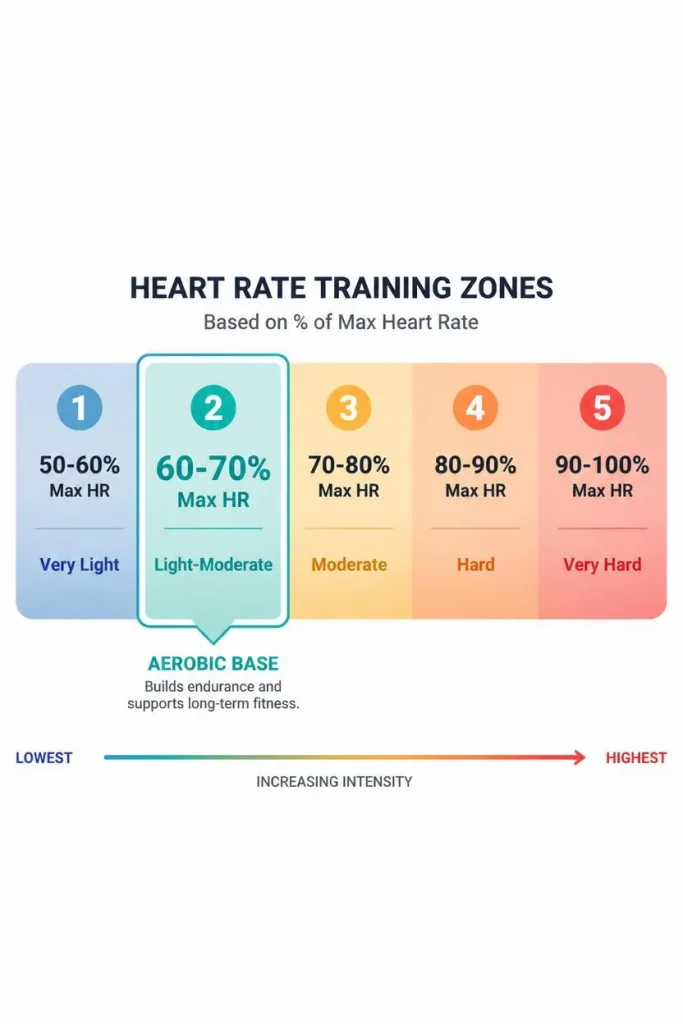
Here’s where things get genuinely confusing for beginners: there isn’t one official, universal definition of “Zone 2.” Different organizations and coaching systems draw the line in different places:
- The American Heart Association classifies moderate-intensity activity as roughly 50–70% of maximum heart rate — a broad range that covers what many popular apps and wearables label “Zone 2.”
- The American College of Sports Medicine classifies moderate intensity closer to 65–75% of estimated maximum heart rate, paired with a perceived-exertion rating of about 3–4 on a 0–10 scale.
- Many endurance coaches and popular Zone 2–specific programs use a narrower 60–70% band, which is where the commonly cited “Zone 2” figure comes from.
None of these is wrong — they’re measuring the same general effort level with different cutoffs and different formulas for estimating max heart rate in the first place. The practical takeaway: treat any single percentage as a rough estimate, not a precise target, and use it alongside how the effort actually feels.
| Zone | Approx. % of Max Heart Rate* | Effort Level | Typical Use |
|---|---|---|---|
| Zone 1 | ~50–60% | Very light | Warm-up, active recovery |
| Zone 2 | ~60–70% (some sources: 50–75%) | Light to moderate | Aerobic base building |
| Zone 3 | ~70–80% | Moderate | Tempo, endurance pace |
| Zone 4 | ~80–90% | Hard | Threshold training |
| Zone 5 | ~90–100% | Very hard | Short, maximal efforts |
*These ranges are commonly used approximations, not a single standardized scale. Treat the boundaries as fuzzy rather than exact.
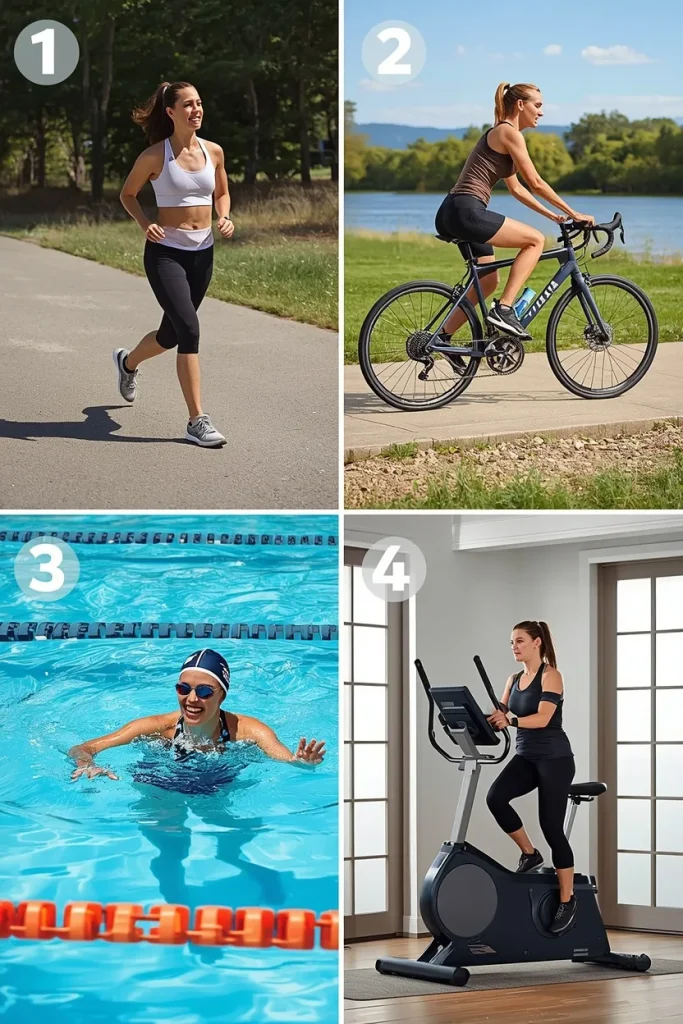
Walking, cycling, rowing, swimming, and easy jogging can all qualify as Zone 2 — what matters is the intensity, not the activity itself.
Why a Single Heart-Rate Percentage Isn’t the Full Picture
Even a well-calculated heart-rate range is still an estimate built on estimates. A few sources of real variability worth knowing about:
- Max heart rate formulas are population averages. The common “220 minus age” formula was derived from group studies and can be off by 10–15 beats per minute or more for any given individual, in either direction.
- Fitness level changes how effort feels at a given heart rate. A beginner and a trained athlete can have the same heart rate during very different relative efforts.
- Medications and health conditions matter. Beta-blockers and other medications that affect heart rate can make percentage-based targets unreliable; the American Heart Association specifically advises people on such medications to check with a healthcare provider before relying on heart-rate zones.
- Day-to-day factors shift your numbers. Heat, hydration, sleep, caffeine, and stress can all push your heart rate higher at the same pace.
This is exactly why pairing a heart-rate estimate with the talk test and perceived exertion — rather than relying on a single percentage — gives a much more reliable read on whether you’re actually in an aerobic, sustainable zone.
Three Ways to Find Your Zone 2 (Use Together, Not Alone)
Rather than picking one method and treating its output as exact, use these together as cross-checks.
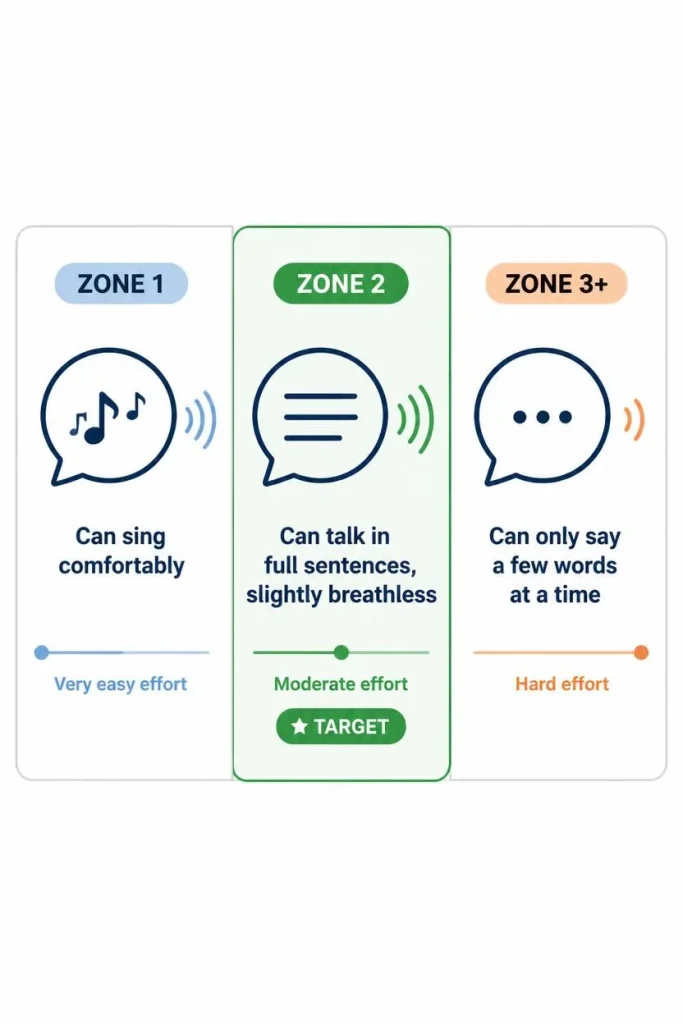
Method 1: The Talk Test
The CDC’s guidance on measuring physical activity intensity describes the talk test plainly: during moderate-intensity activity, “a person can talk, but not sing,” while during vigorous activity, a person “cannot say more than a few words without pausing for a breath.”
Applied to Zone 2: you should be able to hold a conversation in full sentences, with noticeably heavier breathing than at rest. If you can comfortably sing, you’re likely below Zone 2. If you can only get out a few words at a time, you’ve drifted into harder territory.
Method 2: Perceived Exertion (RPE)
Perceived exertion is simply how hard an effort feels, rated on a scale. The CDC uses a 0–10 scale where 0 is sitting still and 10 is maximal effort, and places moderate-intensity activity at about 5–6 on that scale. The ACSM’s exercise-intensity guidance, using a similarly structured 0–10 scale, places moderate intensity closer to 3–4.
These numbers don’t perfectly agree — which reinforces the point that there’s no single magic number. What matters is the general zone: an effort that feels “light to somewhat hard,” not an effort you’re straining to maintain.
Method 3: Estimated Heart-Rate Range (Treat as Approximate)
If you want a heart-rate number to work from, the standard starting point is:
- Estimate your maximum heart rate: 220 − your age (a population-average formula, not a personal measurement)
- Calculate a range using either the AHA’s moderate-intensity band (50–70%) or the narrower 60–70% band commonly used in Zone 2–specific programs
Example: A 40-year-old would estimate a max heart rate of about 180 bpm (220 − 40). Using the 60–70% band, that’s roughly 108–126 bpm. Using the AHA’s broader 50–70% moderate-intensity band, that’s roughly 90–126 bpm.
Approximate Heart-Rate Ranges by Age
| Age | Estimated Max HR (220 − age) | ~60–70% Band | AHA’s Broader 50–70% Band |
|---|---|---|---|
| 25 | 195 | 117–137 bpm | 98–137 bpm |
| 30 | 190 | 114–133 bpm | 95–133 bpm |
| 35 | 185 | 111–130 bpm | 93–130 bpm |
| 40 | 180 | 108–126 bpm | 90–126 bpm |
| 45 | 175 | 105–122 bpm | 88–122 bpm |
| 50 | 170 | 102–119 bpm | 85–119 bpm |
| 55 | 165 | 99–115 bpm | 83–115 bpm |
| 60 | 160 | 96–112 bpm | 80–112 bpm |
| 65 | 155 | 93–108 bpm | 78–108 bpm |
These are rough estimates from a population-average formula, not personalized measurements. Individual max heart rate can vary by 10–15 bpm or more, and the “right” band depends on which organization’s definition you’re using — so hold these numbers loosely and let the talk test and perceived exertion confirm or override them.
For a more individualized estimate, the Karvonen method factors in your resting heart rate alongside your estimated max:
Target HR = ((Max HR − Resting HR) × intensity %) + Resting HR
Example: For a 40-year-old with an estimated max HR of 180 and a resting HR of 65, using a 60–70% intensity range: heart rate reserve = 180 − 65 = 115; low end = (115 × 0.60) + 65 = 134 bpm; high end = (115 × 0.70) + 65 = 146 bpm. Notice this comes out higher than the simple age-based estimate above — another reminder that these formulas can disagree, and none of them is a precise personal measurement.
Why Zone 2 Training Matters
Zone 2 isn’t about working less for its own sake — it’s about building a specific kind of fitness that higher-intensity workouts don’t develop as efficiently.
- Builds your aerobic base. Sustained, lower-intensity training is widely used as the foundation of endurance programs, supporting better performance in harder workouts later on.
- Supports cardiorespiratory adaptation. Regular aerobic activity at a sustainable intensity is associated with improved heart and lung efficiency over time, consistent with the general benefits of meeting aerobic activity guidelines described by the CDC.
- Lower injury and burnout risk. Because the pace is manageable, these sessions are easier to recover from and repeat consistently — which matters more for long-term results than any single hard workout.
- A realistic entry point for beginners. Unlike interval training or high-intensity classes, Zone 2–style training doesn’t require a high fitness baseline to start safely.
One caution: Zone 2 is sometimes marketed as a dedicated “fat-burning zone.” While the body does draw more heavily on fat as a fuel source at lower intensities, meaningful fat loss over time depends on overall calorie balance, not which heart-rate zone you trained in during a single session.
How to Start Zone 2 Cardio as a Beginner
New exercisers often find it genuinely difficult to stay in a light-to-moderate range at first, because an unconditioned body tends to push the heart rate higher than expected at a given pace. That’s normal — it typically gets easier to hold an easy pace as your aerobic fitness improves over the following weeks.
- Pick a low-impact activity you can sustain. Brisk walking, easy cycling, swimming, or using an elliptical are all beginner-friendly options that make it easier to stay in range.
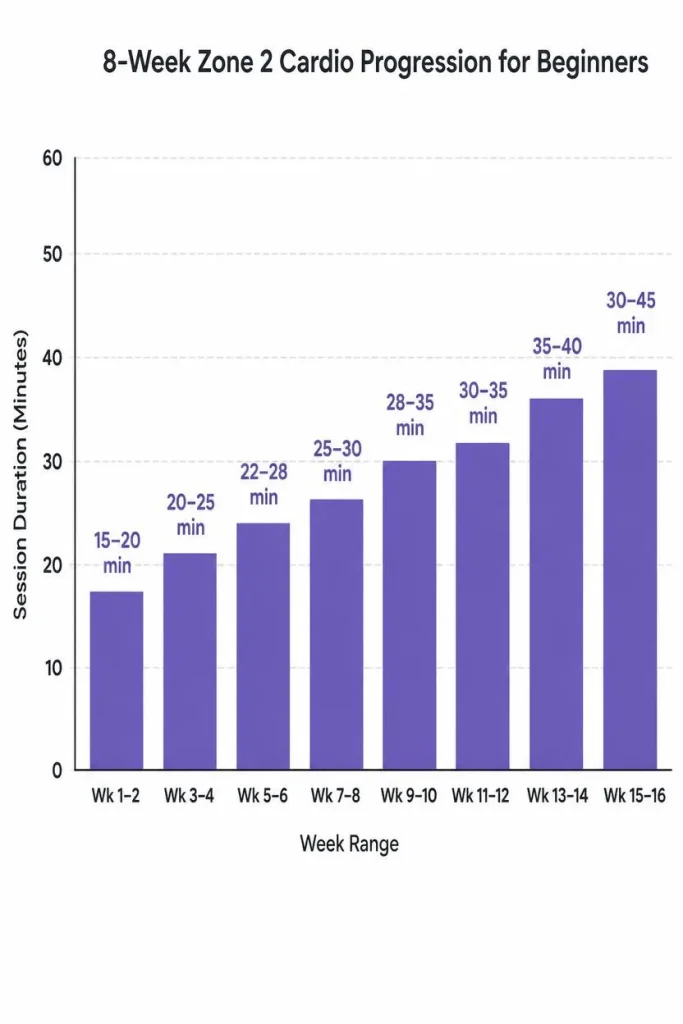
- Start with shorter sessions. Begin with 15–20 minutes rather than jumping straight to the 45–60-minute sessions more advanced exercisers use.
- Use the talk test as your primary check. It’s more reliable moment-to-moment than hunting for an exact heart-rate number, especially while you’re still learning your own pace.
- Cross-check with a heart-rate estimate if you have one. Treat it as a loose guide, not a precise target — if the talk test and the number disagree, trust the talk test and how you feel.
- Expect to go slower than you think. For a true beginner, this pace may be closer to a brisk walk than a jog — that’s expected, not a sign you’re doing it wrong.
- Build duration gradually. Add 5–10 minutes per session every week or two rather than increasing intensity.
- Prioritize consistency over precision. A few short, genuinely easy sessions each week will do more for your aerobic base than chasing an exact number once.
Sample Beginner Schedule
This is a general starting structure — adjust frequency and duration based on your current fitness level and how your body responds.
| Week | Sessions per Week | Duration | Focus |
|---|---|---|---|
| 1–2 | 2–3 | 15–20 min | Learning your pace using the talk test |
| 3–4 | 3 | 20–30 min | Building consistency |
| 5–6 | 3–4 | 25–35 min | Extending duration gradually |
| 7–8 | 3–4 | 30–45 min | Establishing a sustainable aerobic base |
This progression is intentionally gradual. The CDC’s Physical Activity Guidelines point adults toward 150–300 minutes of moderate-intensity aerobic activity per week, and a structure like this helps beginners build toward that target without overloading the body early on.
Zone 2 vs. Other Training Zones
| Zone | How It Feels | Good For | Not Ideal For |
|---|---|---|---|
| Zone 2 | Light-moderate, conversational | Aerobic base, recovery, daily consistency | Building top-end speed or power |
| Zone 3–4 | Moderately hard to hard, harder to talk | Tempo pace, threshold training | Daily use — recovery takes longer |
| Zone 5 | Maximal effort, can’t talk | Short sprints, peak performance | Beginners or daily training |
Do You Need a Heart Rate Monitor?
A chest strap or wrist-based monitor can make it easier to stay consistent once you know roughly which numbers to expect, especially during longer sessions where it’s easy to drift faster without noticing. That said, it isn’t required to get started. The talk test is a reliable, equipment-free alternative, and many beginners find that after a few weeks of consistent training, they can recognize an easy aerobic pace without checking a device every few minutes.
If you do use a monitor, keep two things in mind: readings vary between devices, and wrist-based sensors are generally less accurate during activities with a lot of wrist movement, such as cycling on rough terrain. Treat the number as one input, not the final word — the talk test and perceived exertion are there to catch cases where the device reading doesn’t match how you actually feel.
Common Mistakes
| Common Mistake | Why It Happens | Better Approach |
|---|---|---|
| Treating 60–70% as a universal rule | Popular apps and articles often present one percentage as fact | Recognize that different health organizations define moderate intensity slightly differently, and use the talk test alongside any number |
| Going too fast | An easy pace can feel “too slow,” so beginners speed up out of habit | Trust the pace even if it feels slower than expected |
| Skipping the warm-up | Jumping straight into pace without easing in | Spend 3–5 minutes at a very easy effort before settling into your target range |
| Relying only on the age-based formula | “220 minus age” is a population average, not a personal measurement | Cross-check with the talk test, perceived exertion, or the Karvonen method |
| Doing too much too soon | Enthusiasm leads to adding too many long sessions at once | Increase duration gradually, by 5–10 minutes per week |
| Ignoring recovery needs | Assuming “easy” cardio needs no recovery planning | Treat consistency as the goal — rest when needed, especially early on |
A Note on Safety
Zone 2–style cardio is generally considered a low-risk, beginner-friendly form of exercise because of its moderate intensity. That said, if you’re new to exercise, returning after a long break, pregnant, or managing a heart condition, diabetes, or another chronic health condition, it’s worth checking with a doctor before starting a new cardio routine. The American Heart Association also notes that certain medications can affect heart rate, which makes percentage-based targets less reliable for some people — another reason to check with a healthcare provider if you’re on heart-rate-altering medication. Stop exercising and seek medical attention if you experience chest pain, unusual shortness of breath, dizziness, or lightheadedness during activity.
Frequently Asked Questions
Is Zone 2 really 60–70% of max heart rate? That’s one commonly cited range, but it’s not universal. The American Heart Association defines moderate-intensity activity more broadly, at roughly 50–70% of max heart rate, while the American College of Sports Medicine’s intensity guidance runs closer to 65–75%. Rather than treating any single percentage as exact, use it as a rough starting point alongside the talk test and how the effort feels.
How long does a session need to be to count? Many beginner programs start with 15–20 minutes and build from there. Longer sessions (30–45+ minutes) are typical once a base level of fitness is established, but shorter sessions still contribute to consistency and weekly totals.
Can I do this kind of cardio every day? Because the intensity is low, many people can train at an easy aerobic pace most days of the week without excessive fatigue. Beginners should still build up gradually and pay attention to how their body responds, especially in the first few weeks.
Is walking considered Zone 2 cardio? Yes, as long as the effort falls in a light-to-moderate range for you — confirmed by the talk test rather than a specific number. For many beginners, brisk walking is enough to reach that range, especially on an incline.
Does this kind of cardio burn fat? At lower intensities, the body draws more heavily on fat as a fuel source, but meaningful fat loss over time depends on your overall calorie balance — not which zone you trained in during one session.
What if my heart-rate monitor and the talk test disagree? Trust the talk test and how you feel over the device reading. Monitors can be thrown off by movement, fit, or skin contact, and heart rate itself is affected by heat, sleep, caffeine, and stress — none of which the device accounts for.
Should beginners start with Zone 2 or interval training? For most beginners, an easy, sustainable aerobic pace is the safer starting point. It builds aerobic capacity with lower injury risk and is easier to recover from, which supports more consistent training overall.
Final Thoughts
Zone 2 cardio works because it’s sustainable — not because it hits one exact heart-rate percentage. Different health and sports-medicine organizations draw the line in slightly different places, and your own number depends on factors a formula can’t fully capture. Use an estimated range as a loose guide, confirm it with the talk test and how the effort feels, and let consistency — not precision — drive your results.
If you’re building a broader weekly routine, pairing this kind of cardio with beginner strength training and 5 High-Protein Meal Prep Ideas for Busy Weekdays can round out a sustainable, beginner-friendly fitness foundation.
Sources & Further Reading
- American Heart Association — Target Heart Rates
- Centers for Disease Control and Prevention — Measuring Physical Activity Intensity
- American College of Sports Medicine — Exercise Intensity Infographic