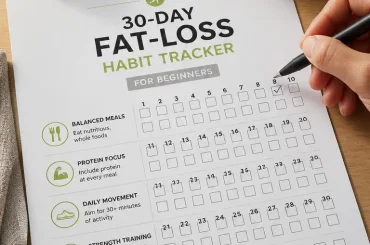
Losing weight and losing fat are not the same goal. A hard enough calorie cut will move the number on the scale regardless of where that weight comes from — and without the right inputs, a meaningful share of it comes from muscle, not just fat. This guide is specifically about the mechanics of protecting muscle during a fat-loss phase: how large a deficit to run, how much protein actually matters, why resistance training can’t be skipped, how to judge progress beyond the scale, and what goes wrong when calories drop too far.
This is not a general introduction to weight loss or sustainable eating habits — that ground is covered in FitVibe’s guide to losing weight without extreme dieting. This article picks up from there and goes deeper into the specific problem of preserving muscle and strength while body fat comes down.
This article is for general educational purposes for “How to Lose Fat Without Losing Muscle” and isn’t a substitute for personalized medical or nutrition advice. If you have an existing health condition, a history of disordered eating, or are pregnant or breastfeeding, talk to a doctor or registered dietitian before starting a fat-loss program.
Quick Takeaway
Muscle is preserved during fat loss through four things working together: a moderate rather than aggressive calorie deficit, protein intake well above the minimum needed to avoid deficiency, continued resistance training at or near your usual intensity, and adequate recovery. Cut too hard on calories, protein, training, or sleep, and the body has every reason to let muscle go along with fat. None of these four levers compensates fully for neglecting the others.
Why a Deficit Threatens Muscle in the First Place
When you eat less than you burn, your body doesn’t selectively break down fat tissue — it responds to an overall energy shortfall, and skeletal muscle is metabolically active tissue your body can break down for fuel if it decides muscle isn’t worth maintaining. Three signals tell your body muscle is still needed: adequate protein intake, mechanical tension from resistance training, and a deficit that isn’t severe enough to trigger a more aggressive survival response. Remove any of those signals and more of your weight loss will come from lean tissue rather than fat.
This is also why “diet” and “body recomposition” aren’t interchangeable. A fat-loss phase aimed at body recomposition is explicitly trying to shift the ratio of what’s lost — maximizing fat loss, minimizing muscle loss — rather than simply making the scale go down by any means available.
Pillar 1: A Moderate Deficit, Not an Aggressive One
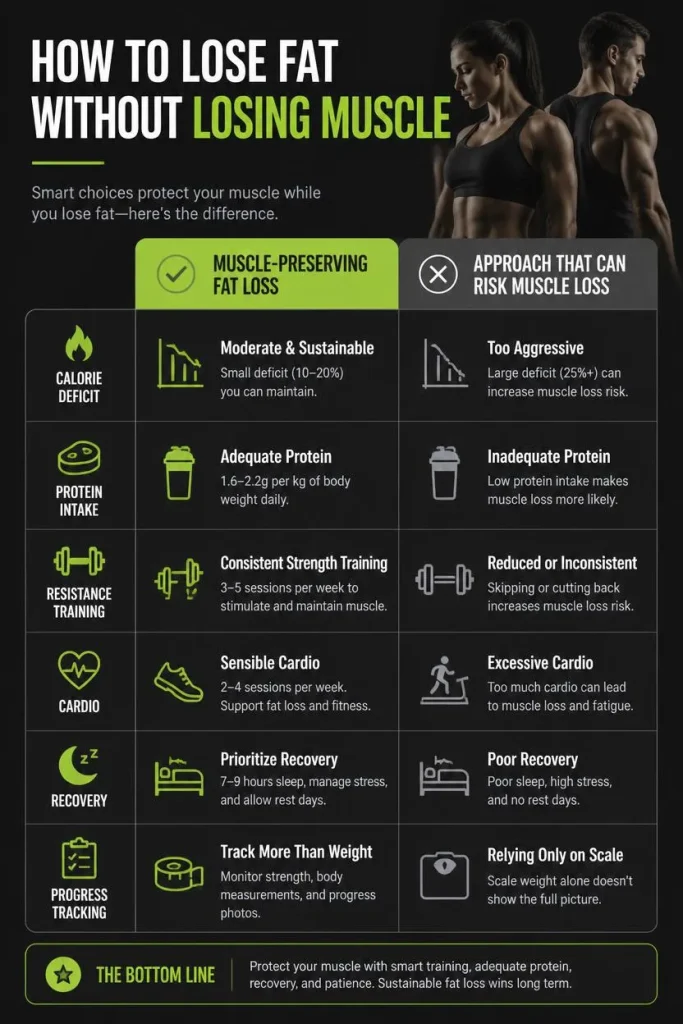
A larger deficit does create faster weight loss, but a disproportionate share of that extra “speed” tends to come out of muscle rather than fat, especially past a certain point. The research-backed guidance here is fairly consistent:
- The CDC recommends a gradual pace of about 1–2 pounds (roughly 0.45–0.9 kg) per week for general weight loss, noting that people who lose weight at this pace are more likely to keep it off.
- For people specifically trying to preserve muscle and strength, sports nutrition researchers generally recommend aiming toward the slower end of that range — often framed as roughly 0.5–1% of body weight per week — with leaner, more highly trained individuals erring toward the slower end, since they have comparatively less fat to lose and a higher relative risk of muscle loss at any given deficit size.
In practical terms, a moderate deficit usually means cutting daily calories by somewhere in the range of 300–500 calories relative to maintenance, rather than drastically slashing intake. This isn’t a magic number — individual maintenance calories vary — but it illustrates the scale of a moderate approach versus a crash-diet-sized one.
Why this matters for muscle specifically: a smaller deficit gives your body less reason to break down muscle tissue for energy, and it’s easier to sustain the protein intake and training intensity below that actually protect muscle. A very large deficit makes all of that harder to hold up at the same time.
Pillar 2: Protein Above the Minimum
Protein needs during a fat-loss phase are meaningfully higher than general dietary guidelines for a sedentary person, because protein is the primary signal telling your body to retain muscle tissue even while total calories are reduced.
- The International Society of Sports Nutrition’s position stand on protein and exercise supports daily protein intakes in the range of roughly 1.4–2.0 g/kg of body weight for physically active individuals generally.
- For resistance-trained individuals specifically in a caloric deficit, a frequently cited review by Helms et al., published in the Journal of the International Society of Sports Nutrition, recommends protein intakes toward the higher end of that range and beyond — approximately 2.3–3.1 g/kg of fat-free mass per day — specifically because higher protein intake becomes more protective of muscle as the calorie deficit gets larger or as someone gets leaner.
In practice: a 75 kg (165 lb) person might reasonably target somewhere between 140–185 grams of protein per day during a dedicated fat-loss phase, depending on body composition and how aggressive the deficit is. Spreading that intake across 3–4 meals, rather than concentrating it into one, is a commonly recommended practice for supporting muscle protein synthesis throughout the day — though the total daily amount appears to matter more than the exact distribution.
Good protein sources for this kind of intake include chicken, fish, eggs, Greek yogurt, cottage cheese, lean beef, tofu, and legumes. If you’re building meals around hitting a higher protein target, a high-protein breakfast is a practical way to front-load part of the day’s total before it becomes a scramble by dinner.

Pillar 3: Resistance Training Stays, Even in a Deficit
Dropping or significantly reducing resistance training during a fat-loss phase removes one of the clearest signals telling your body to hold onto muscle. The guidance here is straightforward: keep training with the same major compound movements and a similar intensity (how heavy, relative to your capacity) as before the deficit started.
What typically does flex during a fat-loss phase is training volume — slightly fewer total sets, or slightly longer rest periods — because recovery capacity tends to decrease somewhat on reduced calories. What shouldn’t flex is intensity on your main lifts; the heaviness of the weight relative to your strength is what primarily drives the “keep this muscle” signal, more than the total volume of work.
A few practical guardrails:
- Keep your primary lifts (squat, deadlift, bench press, row, overhead press, or your program’s equivalents) in your training most weeks of the deficit.
- If you need to cut training volume to manage fatigue, trim accessory work before you trim your main lifts.
- Expect performance to feel harder on a deficit — this is normal and doesn’t necessarily mean you’re losing strength, just that recovery is more taxed.
Cardio has a role here too, but a supporting one. CDC guidance on physical activity recommends roughly 150 minutes of moderate-intensity aerobic activity weekly for general health, alongside muscle-strengthening activity on two or more days. Cardio can help create or support a deficit without needing additional calorie restriction, but it isn’t a substitute for the resistance training that specifically protects muscle — the two serve different purposes in a fat-loss plan.
Pillar 4: Recovery Is Not Optional
A deficit is already a physical stressor; skimping on sleep and recovery on top of that compounds the problem in ways that specifically work against muscle retention. Inadequate sleep is associated with reduced training performance, impaired recovery, and appetite dysregulation that can make adherence to a moderate deficit harder to sustain. None of the other three pillars function as intended if recovery is consistently neglected — poor sleep blunts the benefit of adequate protein and hard training alike.
Practical recovery priorities during a fat-loss phase:
- Protect sleep duration and consistency as a non-negotiable, not an afterthought.
- Expect — and plan for — somewhat reduced training capacity compared to a maintenance or surplus phase; this is a normal consequence of reduced energy availability, not a sign something is going wrong.
- Manage general life stress where possible; chronic stress and chronic under-recovery tend to compound each other.
What Happens When Calories Go Too Low
There’s a point past which cutting calories further stops being “faster progress” and starts actively working against the goal of preserving muscle. Signs that a deficit has become too aggressive include:
- Noticeable strength loss in the gym, beyond the normal mild performance dip expected on a moderate deficit
- Persistent fatigue that doesn’t improve with a normal night’s sleep
- Disrupted sleep itself, which can occur with very low-calorie or very low-fat intakes
- Constant, intrusive hunger that makes consistent adherence to the plan difficult
- Loss of menstrual regularity in women, which is a signal of inadequate energy availability that shouldn’t be ignored
- Mood changes, irritability, or loss of interest in training that go beyond ordinary diet fatigue
- A rate of weight loss well beyond the 0.5–1% of body weight per week guidance, particularly if it’s accompanied by any of the above
Chronically low energy intake, especially when combined with high training volume, is associated with a cluster of problems sports medicine researchers describe as Relative Energy Deficiency in Sport (RED-S) — covering impaired hormone function, bone health, immune function, and performance. This is a legitimate medical concern, not just a motivational issue, and it’s a reason to treat “the deficit isn’t working, so cut harder” as the wrong response to a stalled result. The more useful response is usually the opposite: moderate the deficit, reassess, and address recovery.
If you notice several of the signs above, the appropriate response is to ease the deficit — not deepen it — and if symptoms persist, to speak with a doctor or registered dietitian rather than pushing through.
Tracking Progress Beyond the Scale
Scale weight reflects water, glycogen, food volume, and hormonal fluctuations in addition to actual fat or muscle changes, which makes a single weigh-in a poor way to judge whether muscle is being preserved. A body-recomposition-focused approach tracks several things together:
| Metric | What It Tells You | How Often to Check |
|---|---|---|
| Body weight trend (not single readings) | Overall direction, once averaged over days | Daily weigh-ins, weekly trend review |
| Waist circumference | A reasonable proxy for fat loss specifically, less affected by water fluctuation | Weekly, same time of day |
| Strength on main lifts | Whether muscle-protecting signals are working | Every session, informally; formally every few weeks |
| Progress photos | Visual changes scale and tape measures miss | Every 2–4 weeks, consistent lighting/pose |
| Clothing fit | A practical, low-effort proxy for body composition change | As noticed |
Strength tracking specifically deserves more attention than it usually gets in general weight-loss content. If your working weights on main lifts are holding steady or declining only slightly through a moderate deficit, that’s a reasonably good sign muscle is being preserved. A sharp, consistent drop in strength over several sessions — beyond ordinary day-to-day variation — is one of the more direct signals that the deficit, protein intake, or recovery needs adjusting before the scale trend does.
Sample Weekly Structure
This illustrates how the four pillars fit together across a week — not a rigid prescription, but a realistic shape for a fat-loss phase built around muscle preservation.
| Day | Focus | Notes |
|---|---|---|
| Monday | Resistance training (main lifts) | Keep working weights consistent with pre-deficit performance where possible |
| Tuesday | Light cardio or active recovery | 20–30 minutes, low-to-moderate intensity |
| Wednesday | Resistance training (main lifts) | Same priority on intensity over volume |
| Thursday | Rest or light activity | Recovery day; prioritize sleep |
| Friday | Resistance training (main lifts) | Trim accessory volume here first if fatigue is building |
| Saturday | Moderate cardio | Supports the deficit without replacing resistance work |
| Sunday | Rest, planning, and weekly check-in | Review the trend metrics from the table above |
Common Mistakes
| Mistake | Why It Undermines Muscle Retention | Better Approach |
|---|---|---|
| Cutting calories aggressively for faster results | A larger deficit disproportionately pulls from muscle, not just fat | Target roughly 0.5–1% of body weight per week |
| Dropping resistance training to “save energy” for cardio | Removes the main signal that tells the body to keep muscle | Keep training intensity on main lifts; trim volume instead if needed |
| Treating protein as flexible when calories are tight | Protein is the nutrient most directly tied to muscle retention | Prioritize protein first when deciding where to cut calories |
| Judging progress only by the scale | Scale weight doesn’t distinguish fat loss from muscle loss | Track strength, waist measurement, and photos alongside weight |
| Pushing through a stalled deficit by cutting harder | Often a sign of inadequate recovery or an already-too-aggressive deficit | Reassess recovery and deficit size before cutting calories further |
| Ignoring declining strength as “just part of dieting” | A real, ongoing strength drop usually signals muscle loss in progress | Treat a clear downward strength trend as a signal to adjust, not a given |
Frequently Asked Questions
Is it realistic to lose fat and gain muscle at the same time? It’s most achievable for beginners, people returning to training after time off, or those at a higher body fat percentage — these groups often see simultaneous fat loss and muscle gain, sometimes called “body recomposition.” For leaner, more experienced lifters, the more realistic and well-supported goal during a deficit is minimizing muscle loss rather than actively building new muscle, since the physiological conditions for meaningful muscle growth (a calorie surplus or at least maintenance, generally) work against a deficit.
Can I lose fat without resistance training at all? You can lose weight without it, but a larger share of that weight loss is likely to come from muscle rather than fat, compared to the same deficit paired with resistance training. If preserving muscle specifically is the goal, resistance training isn’t optional.
How much protein do I actually need? Research in resistance-trained individuals during a deficit generally supports roughly 2.3–3.1 g/kg of fat-free mass per day, though general sports nutrition guidance for active individuals starts around 1.4–2.0 g/kg of body weight. If you’re unsure of your fat-free mass, body weight is a reasonable practical substitute for estimating a target.
Does cardio cause muscle loss? Moderate amounts of cardio, layered on top of continued resistance training and adequate protein, aren’t typically a major driver of muscle loss. Very high volumes of cardio combined with inadequate protein and an aggressive deficit are more likely to contribute to muscle loss — context and the other pillars matter more than cardio alone.
How do I know if my deficit is too aggressive? Watch for the warning signs covered above: a consistent, meaningful strength decline, persistent fatigue, disrupted sleep, constant hunger, or (in women) menstrual irregularity. Any of these warrants easing the deficit rather than tightening it further.
How long should a fat-loss phase last? There’s no universal number, but many coaches and sports nutrition resources suggest planning fat-loss phases in blocks of roughly 8–16 weeks, followed by a period at maintenance calories, partly because sustained deficits become harder to maintain both physically and psychologically the longer they run.
Final Thoughts
Losing fat while protecting muscle isn’t about finding one trick — it’s about not letting any of four pillars slip at once: a deficit that’s moderate rather than aggressive, protein intake well above sedentary recommendations, resistance training that holds its intensity even as volume flexes, and recovery that’s treated as part of the plan rather than an afterthought. Track strength and measurements alongside the scale, and treat warning signs of too-low energy intake as a reason to ease up rather than push harder. Done this way, the muscle you have going into a fat-loss phase is far more likely to still be there — and working just as well — when you come out of it.
Sources & Further Reading
- Centers for Disease Control and Prevention — Losing Weight
- Jäger et al., International Society of Sports Nutrition Position Stand: Protein and Exercise, Journal of the International Society of Sports Nutrition — full text
- Helms, Aragon & Fitschen, Evidence-based Recommendations for Natural Bodybuilding Contest Preparation: Nutrition and Supplementation, Journal of the International Society of Sports Nutrition — full text
- Centers for Disease Control and Prevention — Measuring Physical Activity Intensity