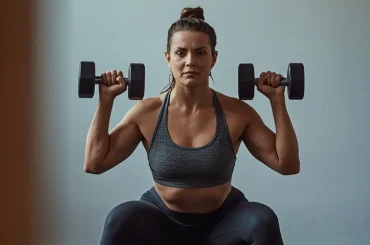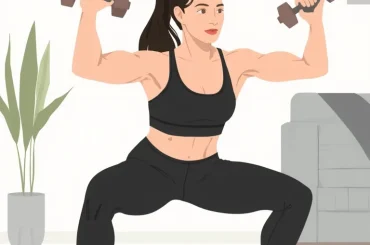
Strength training is one of the most practical ways to build muscle, improve everyday strength, and develop a consistent fitness routine. You do not need an expensive gym membership or a room full of equipment to get started. With a few basic exercises, a manageable schedule, and a plan for gradually increasing difficulty, you can begin building strength in the comfort of your own home.
If you are new to lifting weights, knowing which exercises to choose, how many repetitions to perform, and how often to train can feel confusing. Online workout advice often includes complicated routines that are difficult to follow when you are still learning the basics.
This guide that beginner strength training for women makes the process simpler.
You will learn how to follow a beginner-friendly, three-day strength training plan for women, including exercises, sets, repetitions, rest periods, equipment options, alternatives for different fitness levels, and practical form cues. You will also learn how to progress over time without rushing into heavier weights or unnecessarily demanding workouts.
The goal is not to complete the hardest workout possible. It is to build a routine that you can perform consistently, safely, and confidently.
Quick Answer: How Should Beginners Start Strength Training?
Beginners can start with two or three full-body strength sessions per week, allowing recovery time between sessions. A three-day plan can work well if the workouts use manageable resistance, cover the major muscle groups, and leave enough time for recovery.
For this beginner home workout plan:
- Training schedule: Monday, Wednesday, and Friday, or any three nonconsecutive days.
- Workout duration: Approximately 25–40 minutes, depending on rest periods.
- Equipment: A sturdy chair or bench, a mat, and optional dumbbells or resistance bands.
- Sets: Begin with one or two sets per exercise, progressing to two or three as appropriate.
- Repetitions: Generally 8–12 controlled repetitions for weighted exercises, with suitable adjustments for bodyweight movements.
- Rest: Approximately 60–120 seconds between sets, or longer when needed to maintain good technique.
- Progression: Improve your technique first, then gradually increase repetitions, resistance, or sets.
You do not need to start with all three weekly sessions if you are completely new to exercise. Begin with two manageable sessions if necessary and increase gradually as your confidence and recovery improve.
The U.S. Office on Women’s Health explains that strength training can use free weights, resistance bands, machines, or your own body weight. This means you can begin with the equipment you already have.
Why Strength Training Is Worth Including in Your Routine
Strength training involves working your muscles against resistance. That resistance may come from dumbbells, resistance bands, weight machines, or bodyweight exercises such as squats and push-ups.
A consistent routine can help improve muscular strength, support bone health, and make everyday activities easier. Carrying groceries, climbing stairs, lifting household items, and getting up from a chair all require some combination of muscular strength and coordination.
The American Heart Association’s guide to strength and resistance training explains the benefits of resistance exercise and provides general recommendations for training major muscle groups.
Strength training is not only for athletes or experienced gym users. Beginners can start with simple movements and gradually develop their abilities.
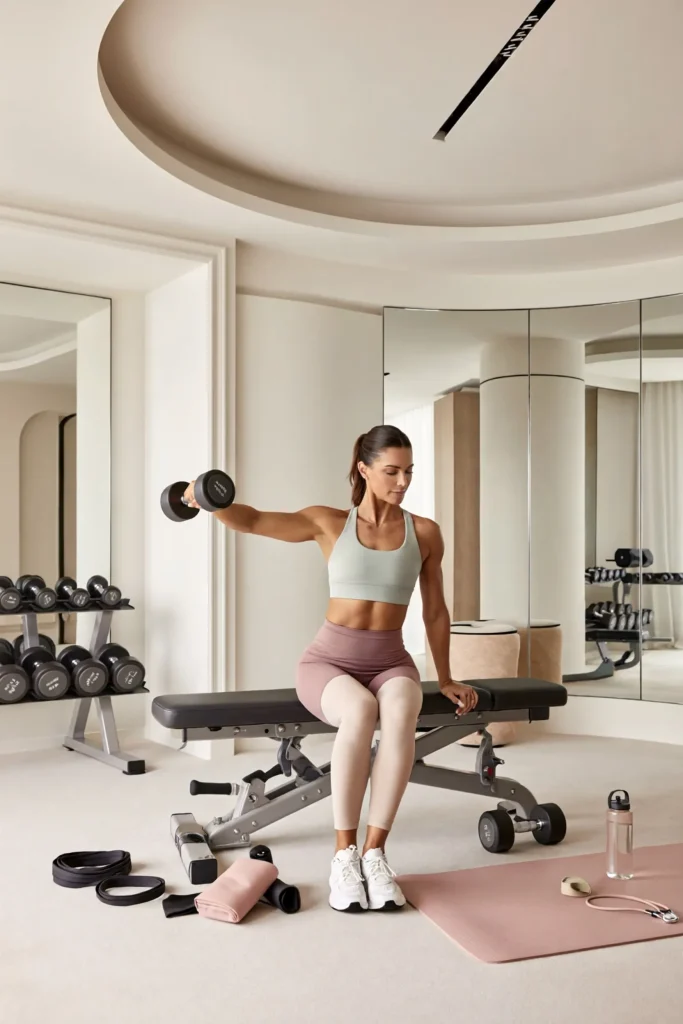
Will lifting weights make women excessively muscular?
Building muscle does not happen overnight. The amount of muscle you develop depends on factors such as training consistency, resistance, nutrition, genetics, and recovery.
You can use strength training to improve your strength without following an advanced bodybuilding routine. Beginners should focus on learning movements, choosing appropriate resistance, and building a sustainable habit rather than worrying about becoming muscular too quickly.
Do you need dumbbells to get started?
No. Bodyweight exercises can provide an effective starting point. Squats to a chair, wall push-ups, glute bridges, and supported rows using suitable equipment can help you learn basic movement patterns.
As exercises become easier, dumbbells or resistance bands provide ways to increase the challenge.
If you are deciding what to purchase, FitVibe’s guide to best home workout equipment for beginners can help you prioritize versatile equipment instead of buying items you may rarely use.
What You Need for a Beginner Home Strength Workout
You can complete this routine with very little equipment. Before beginning, choose a clear, well-lit workout area with a stable floor and enough room to move.
Essential equipment
1. A sturdy chair or bench
A stable chair can help you practice sit-to-stand movements and provide support during beginner exercises. Choose one that will not slide or tip, and place it on a nonslip surface.
2. Optional dumbbells
Light dumbbells are useful for exercises such as rows, shoulder presses, and Romanian deadlifts. Choose weights you can control throughout the entire movement.
You may need different weights for different exercises because your legs and upper body will not necessarily have the same strength.
3. A resistance band
A suitable resistance band can provide additional training options, including rows and other pulling movements. Inspect it for tears or damage and secure it only according to the manufacturer’s instructions.
4. An exercise mat
A mat may make floor exercises such as glute bridges and dead bugs more comfortable. It should remain stable during use.
5. A workout log
A notebook or phone note can help you track exercises, sets, repetitions, and resistance. Recording your sessions makes gradual progress easier to recognize.
You do not need every item before your first workout. Begin with bodyweight movements if that is what you have available.
Your Three-Day Strength Training Schedule
This plan divides the workouts into three full-body sessions. Each day includes lower-body movements, upper-body exercises, and core work.
Day 1 — Foundation and Technique
Squats, pushing, pulling, hip extension, and core stability.
Schedule: Monday
Day 2 — Strength and Control
Lunges or supported alternatives, shoulder strength, back, and glutes.
Schedule: Wednesday
Day 3 — Full-Body Practice
Functional lower-body movements, upper-body pushing and pulling, and core stability.
Schedule: Friday
Tuesday, Thursday, and the weekend can be used for rest, walking, gentle mobility work, or other activities you enjoy.
If three sessions feel too demanding at first, complete Day 1 and Day 2 during your first week. Add the third session when you feel ready.
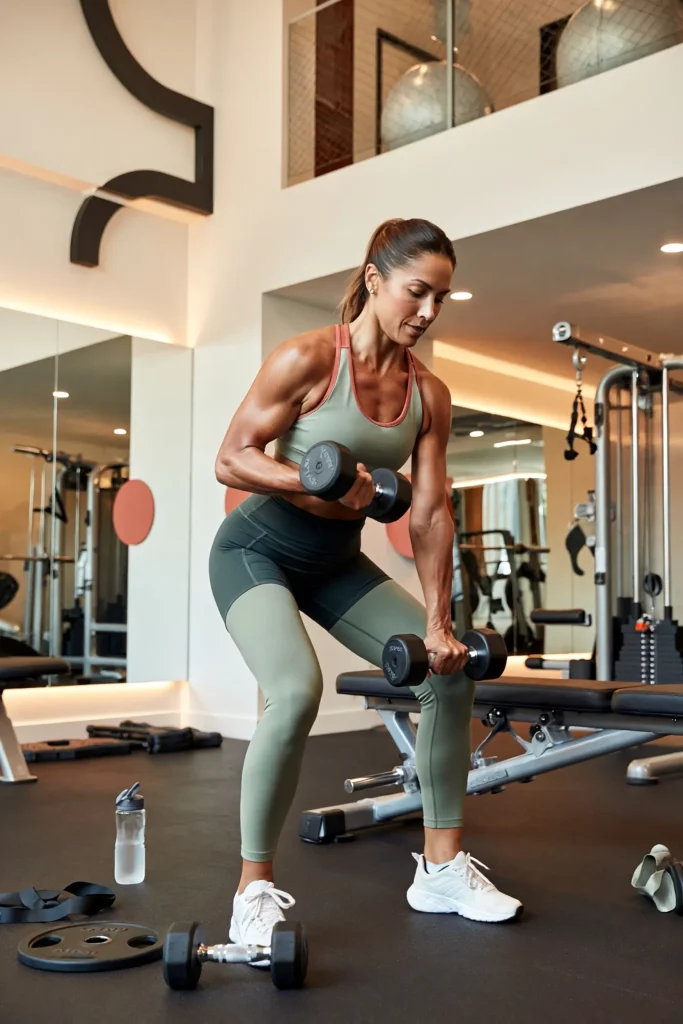
Day 1: Beginner Full-Body Strength Workout
Day 1 introduces several fundamental movements. Focus on comfortable ranges of motion, controlled repetitions, and learning how each exercise should feel.
Start with five to eight minutes of easy movement, such as marching in place, gentle arm circles, and repeated sit-to-stand movements.
| Exercise | Sets | Repetitions |
|---|---|---|
| Chair squat or bodyweight squat | 2 | 8–12 |
| Wall or elevated push-up | 2 | 6–10 |
| Dumbbell or resistance-band row | 2 | 8–12 |
| Glute bridge | 2 | 10–12 |
| Dead bug | 2 | 6–10 per side |
Rest between sets until your breathing settles and you can maintain good technique. Beginners may need more time than expected, and that is perfectly reasonable.
1. Chair squat
Muscles worked: Quadriceps, glutes, and other muscles that support the hips and legs.
How to perform it:
- Stand in front of a sturdy chair with your feet approximately shoulder-width apart.
- Keep your feet flat and your chest comfortably upright.
- Push your hips backward and bend your knees to lower yourself toward the chair.
- Lightly touch the seat or sit down under control.
- Press through your feet to return to standing.
Form cues: Keep your knees moving in the same general direction as your toes. Use the chair for support if needed, and avoid dropping quickly onto the seat.
Beginner alternative: Use a higher, stable seat or a smaller range of motion. If you can perform the movement comfortably without a chair, gradually practice deeper squats within your available mobility.
2. Wall push-up
Muscles worked: Chest, shoulders, and triceps.
How to perform it:
- Stand facing a wall and place your palms against it around chest height.
- Walk your feet slightly backward while keeping your body aligned.
- Bend your elbows to bring your chest toward the wall.
- Push through your hands to return to the starting position.
Form cues: Keep your body in a comfortable straight line and avoid letting your hips sag. Move slowly enough to control both the lowering and pushing phases.
Progression: When wall push-ups become easy, use a stable elevated surface designed to support your body weight. A lower incline generally increases the difficulty. Do not use furniture that might slide or tip.
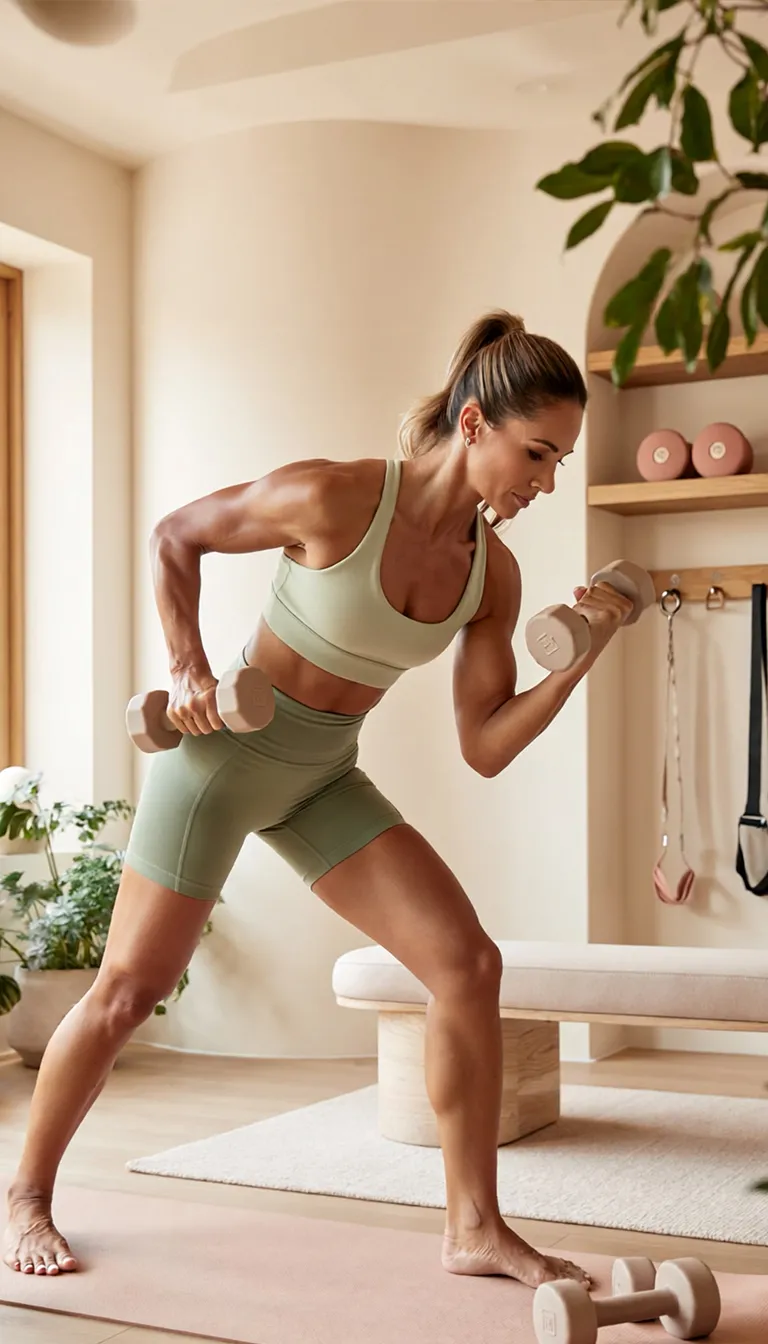
3. Dumbbell row
Muscles worked: Upper back, lats, and muscles that support the shoulder blades.
How to perform it:
- Hold a light dumbbell in one hand.
- Place your other hand on a stable bench or support.
- Hinge forward slightly at your hips while keeping your back in a comfortable neutral position.
- Pull the dumbbell toward your hip without twisting your torso.
- Lower it slowly and complete the repetitions before switching sides.
Form cues: Keep your shoulders relaxed, avoid jerking the weight, and do not rotate your body to lift a heavier dumbbell.
Alternative: Use a resistance band for rows if it can be secured safely according to its instructions. If you have no equipment, prioritize learning the movement with an appropriate, safely supported alternative rather than pulling on unstable household objects.
4. Glute bridge
Muscles worked: Glutes and muscles supporting the hips.
How to perform it:
- Lie on your back with your knees bent and feet flat on the floor.
- Position your feet comfortably, approximately hip-width apart.
- Tighten your abdominal muscles gently.
- Press through your feet to raise your hips.
- Pause briefly, then lower your hips slowly.
Form cues: Lift only as high as you can without arching your lower back excessively. The movement should be controlled rather than driven by momentum.
Alternative: Reduce the lifting height or practice gently tightening your glutes while keeping your hips on the floor.
5. Dead bug
Muscles worked: Abdominal muscles and muscles that help stabilize the trunk.
How to perform it:
- Lie on your back with your arms pointing upward and your knees bent.
- Slowly extend one leg while moving the opposite arm overhead, only as far as you can control.
- Return to the starting position.
- Repeat on the other side.
Form cues: Keep your movements slow and controlled. Avoid allowing your lower back to arch excessively as your limbs move away from your body.
Alternative: Move one heel along the floor at a time without extending the opposite arm.
Day 2: Legs, Shoulders, Back, and Glutes
Day 2 introduces unilateral leg work, a hip-hinge pattern, and additional upper-body training. Use support where needed and choose resistance that allows you to move confidently.
Warm up for five to eight minutes before starting.
| Exercise | Sets | Repetitions |
|---|---|---|
| Supported split squat | 2 | 6–10 per side |
| Dumbbell Romanian deadlift | 2 | 8–12 |
| Seated or standing shoulder press | 2 | 8–10 |
| Resistance-band row | 2 | 8–12 |
| Bird dog | 2 | 6–10 per side |
1. Supported split squat
Muscles worked: Quadriceps, glutes, and other muscles involved in lower-body stability.
How to perform it:
- Stand with one foot forward and the other behind you in a comfortable split stance.
- Hold a sturdy support lightly if you need help balancing.
- Bend both knees slightly to lower your body.
- Press through your feet to return to standing.
- Complete the repetitions on one side before switching.
Form cues: Use a short, comfortable range of motion at first. Keep your front foot firmly planted and avoid forcing your knee into a painful position.
Alternative: Perform chair squats if split squats feel unstable or uncomfortable.
2. Dumbbell Romanian deadlift
Muscles worked: Hamstrings, glutes, and muscles that help stabilize the trunk.
How to perform it:
- Stand with your feet approximately hip-width apart and hold light dumbbells in front of your thighs.
- Keep your knees slightly bent.
- Push your hips backward while lowering the weights close to your legs.
- Stop when you feel a comfortable stretch in the back of your thighs without losing control of your back position.
- Push your hips forward to return to standing.
Form cues: Think about moving your hips backward rather than squatting down. Keep the weights close to your body and avoid rounding your back to reach lower.
Alternative: Practice the hip-hinge movement without weights. You can also use a wall behind you as a target for learning to move your hips backward.
3. Shoulder press
Muscles worked: Shoulders and triceps.
How to perform it:
- Sit or stand with light dumbbells near shoulder height.
- Keep your torso stable and your feet firmly positioned.
- Press the weights upward within a comfortable range.
- Lower them slowly to the starting position.
Form cues: Avoid arching your lower back or shrugging your shoulders excessively. Do not force the weights overhead if you have limited shoulder mobility.
Alternative: Use a lighter resistance band or practice a controlled, pain-free pressing movement without resistance.
4. Resistance-band row
Muscles worked: Upper back and muscles around the shoulder blades.
How to perform it:
- Set up the band according to the manufacturer’s instructions, using a secure anchor designed for that purpose.
- Hold the handles with your arms extended comfortably.
- Pull your elbows backward while keeping your torso stable.
- Return to the starting position slowly.
Form cues: Avoid swinging your body or pulling with a sudden jerk. Keep your shoulders relaxed and move within a comfortable range.
Alternative: If you do not have a suitable anchor, perform a supported dumbbell row instead. Never attach a band to an unverified door handle or unstable object.
5. Bird dog
Muscles worked: Trunk stabilizers, glutes, and muscles that support coordination.
How to perform it:
- Start on your hands and knees with your hands beneath your shoulders.
- Extend one leg behind you while reaching the opposite arm forward.
- Keep your hips facing the floor and your torso steady.
- Return to the starting position and switch sides.
Form cues: Focus on stability rather than lifting your arm and leg as high as possible. Avoid rotating your hips or arching your lower back.
Alternative: Extend one leg at a time, keeping both hands on the floor.
Day 3: Full-Body Strength and Movement Practice
The third session reinforces the main movement patterns while giving you another opportunity to practice good technique.
Warm up with easy movement before starting.
| Exercise | Sets | Repetitions |
|---|---|---|
| Bodyweight squat or chair squat | 2 | 8–12 |
| Elevated push-up | 2 | 6–10 |
| Dumbbell Romanian deadlift | 2 | 8–12 |
| Dumbbell row | 2 | 8–12 per side |
| Glute bridge | 2 | 10–15 |
| Standing calf raise | 2 | 10–15 |
1. Bodyweight squat
Repeat the squat variation you practiced on Day 1.
Focus on making each repetition smooth and consistent. If you can complete the movement comfortably, you may gradually increase the range of motion or introduce light resistance.
2. Elevated push-up
Use a stable surface designed to support your body weight.
Place your hands on the surface, step back into a comfortable position, and lower your chest toward your hands before pushing away.
Keep your torso aligned and your elbows at a comfortable angle. Choose a higher surface if you cannot control the movement.
3. Romanian deadlift
Repeat the hip-hinge movement from Day 2.
Focus on moving your hips backward, keeping the weights close to your legs, and returning to standing without leaning backward at the top.
Use bodyweight practice if you are still learning the movement.
4. Dumbbell row
Perform the same supported row you used earlier in the week.
Keep your torso steady, pull the weight toward your hip, and lower it slowly. Use a lighter weight if you find yourself twisting or jerking to complete the repetitions.
5. Glute bridge
Repeat the glute bridge from Day 1. Use a comfortable range of motion and avoid arching your lower back.
If the exercise has become easy, you can increase the number of controlled repetitions before considering additional resistance.
6. Standing calf raise
Muscles worked: Calf muscles.
How to perform it:
- Stand with your feet approximately hip-width apart near a stable support.
- Rise onto the balls of your feet.
- Pause briefly at the top.
- Lower your heels slowly to the floor.
Form cues: Avoid bouncing or rolling your ankles outward. Use the support for balance rather than pulling yourself upward.
Alternative: Perform the exercise while seated if standing is uncomfortable or balance is a concern.
How to Choose the Right Sets, Repetitions, and Resistance
The numbers in this plan are starting points, not strict requirements. Your current fitness, movement experience, and ability to recover should determine how much work you do.
What is a set?
A set is a group of repetitions performed before you take a break.
For example, completing 10 squats, resting, and then completing another 10 squats means you have performed two sets of 10 repetitions.
What is a repetition?
A repetition, often called a rep, is one complete performance of an exercise. For a squat, one repetition includes lowering into the squat and returning to standing.
How heavy should your weights be?
Choose a resistance that allows you to complete the planned repetitions with controlled technique. The final few repetitions should feel challenging, but you should still be able to maintain your form.
You do not need to lift to complete exhaustion during every set.
If you cannot complete the minimum repetitions without losing control, reduce the resistance or use an easier exercise variation. If you finish every repetition comfortably and consistently, you may be ready to progress.
The American Academy of Orthopaedic Surgeons’ strength-training guidance explains how resistance can be increased gradually as exercises become easier.
How to Progress Over Your First Eight Weeks
Progression means gradually increasing the challenge as your body adapts. It does not mean adding more weight every time you exercise.
A useful approach is to change one variable at a time, such as repetitions, resistance, sets, or exercise difficulty.
| Training phase | Main focus | Practical approach |
|---|---|---|
| Weeks 1–2 | Learn the movements | Start with one or two sets and light or no resistance |
| Weeks 3–4 | Improve consistency | Work toward the prescribed sets and repetitions |
| Weeks 5–6 | Build capacity | Add repetitions within the target range when technique remains good |
| Weeks 7–8 | Introduce gradual progression | Increase resistance slightly or use a harder variation when ready |
This is a flexible framework, not a deadline. You may need longer in any phase, especially if you are learning unfamiliar exercises or returning after a long break.
Use the double-progression method
Suppose you are performing dumbbell rows for two sets of 8–12 repetitions.
During the first few sessions, you might complete eight repetitions per set with good technique. As the exercise becomes easier, you could gradually work toward 12 repetitions per set.
Once you can complete both sets at the upper end of the range with controlled movement, consider using a slightly heavier dumbbell and returning to the lower end of the range.
Repeat the process when appropriate.
This approach allows you to build strength without making large jumps in resistance.
When should you add another set?
You may consider moving from two sets to three when you can complete the existing workout comfortably, recover well, and maintain good technique.
You do not need to add a third set to every exercise immediately. More work is not automatically better if it interferes with recovery or makes the routine difficult to sustain.
What if your progress slows down?
Progress is rarely perfectly linear. Sleep, stress, illness, exercise experience, and daily activity can affect performance.
If you have a difficult session, keep the resistance manageable and focus on technique. If you feel unusually fatigued or sore, reduce the workload or take additional recovery time.
Consistency over many weeks is more useful than trying to improve every single workout.
Form and Breathing Tips for Beginners
Good technique helps you control the exercise and apply resistance in a way that matches your current abilities.
Keep these principles in mind throughout the plan.
Move with control. Lower weights gradually rather than letting gravity pull them down. Avoid swinging or bouncing to complete repetitions.
Maintain a comfortable range of motion. You do not need to force a deep squat, a full overhead press, or a large hip movement if your mobility does not allow it comfortably.
Breathe continuously. As a general starting point, exhale during the more strenuous part of the movement and inhale as you return to the starting position. Avoid deliberately holding your breath during repetitions.
Use stable supports. Chairs, benches, and other supports must be suitable for the movement and remain firmly in place.
Stop when technique deteriorates. If you cannot maintain control, end the set or use an easier variation rather than forcing additional repetitions.
If you are uncertain about a movement, consider guidance from a qualified exercise professional who can assess your technique.
What to Do on Rest Days
Recovery is part of a strength-training program. Your body needs time between challenging sessions to adapt to the work you have performed.
On non-training days, you can take a complete rest day or participate in light activities that feel comfortable.
Examples include:
- Walking at a comfortable pace.
- Gentle mobility exercises.
- Light household activities.
- Easy cycling or another low-intensity activity you enjoy.
Avoid turning every rest day into another demanding workout.
For general health, the World Health Organization recommends that adults aim for 150–300 minutes of moderate-intensity aerobic activity each week, alongside muscle-strengthening activities involving the major muscle groups on at least two days. If you are currently inactive, start with manageable amounts and build gradually. See the WHO physical activity recommendations for details.
You do not have to reach the full recommendation immediately for your efforts to be worthwhile.

Safety Tips Before You Start
Strength training can be adapted to different fitness levels, but choosing appropriate exercises and equipment is important.
Before each session:
- Clear the workout area and check that the floor is stable.
- Spend a few minutes warming up with gentle movements.
- Inspect dumbbells, resistance bands, and other equipment for damage.
- Choose weights that you can control.
- Keep water available and take breaks when necessary.
- Allow recovery between sessions.
Do not exercise through sharp pain or a movement that feels wrong. Stop if you experience chest pain, dizziness, unusual breathlessness, or other concerning symptoms, and seek appropriate medical advice.
If you have a chronic health condition, a recent injury, significant joint pain, or other concerns that could affect exercise, speak with a qualified healthcare professional about suitable modifications before starting.
Pregnancy and the period after childbirth can also require individual adjustments. Consult your healthcare professional about the appropriate intensity and exercise choices for your circumstances.
For additional beginner guidance, Healthdirect’s strength-training guide covers exercise choices, equipment, and getting started safely.
Common Strength Training Mistakes to Avoid
Starting with weights that are too heavy
Heavy resistance can make it difficult to learn a movement properly. Begin with a manageable load and progress when you can maintain control.
Training hard every day
More frequent workouts do not guarantee faster progress. Your muscles need time to recover between challenging sessions. Follow the schedule and adjust it if fatigue accumulates.
Changing exercises too frequently
Trying a different routine every session can make it difficult to learn movements and track progress. Follow a manageable plan long enough to develop consistency before making unnecessary changes.
Ignoring the muscles you cannot easily see
A balanced routine should include lower-body movements, pushing exercises, pulling exercises, and trunk stability. Do not focus exclusively on abdominal exercises, arms, or glutes.
Expecting immediate physical changes
Strength improvements and visible changes happen at different rates for different people. Focus on completing your sessions, learning good technique, and gradually increasing your capabilities rather than expecting a particular appearance by a fixed date.
Treating soreness as proof of success
A workout does not need to leave you extremely sore to be effective. Excessive soreness can make it harder to maintain your routine. Start conservatively and increase your workload gradually.
Frequently Asked Questions
How many days a week should a beginner woman strength train?
Two or three days per week is a practical starting point for many beginners. This plan uses three nonconsecutive sessions, but two sessions can also be useful if you need more time to adapt. The right schedule is one that allows you to train consistently and recover adequately.
Can women build strength at home without a gym?
Yes. Bodyweight exercises, resistance bands, and dumbbells can provide useful resistance for many strength-training movements. You can begin with chair squats, wall push-ups, glute bridges, and other simple exercises, then gradually introduce more challenging variations.
How long should a beginner strength workout take?
Many beginner sessions can be completed in approximately 25–40 minutes, including warm-up and rest periods. Your workout may take longer while you learn unfamiliar exercises. There is no need to rush between sets to finish within an arbitrary time limit.
Should beginners lift weights or use bodyweight exercises first?
Either approach can work. Bodyweight movements are useful for learning basic patterns, while light weights and resistance bands can help you adjust the challenge. Choose the variation that allows you to exercise comfortably with good control.
When should I increase the weight?
Increase resistance when you can consistently complete the prescribed repetitions with controlled technique and the exercise no longer feels sufficiently challenging. Make small increases, then reassess your technique. If your form deteriorates, return to a lighter weight.
Can I do strength training and cardio in the same week?
Yes. Strength training and aerobic activity complement each other. You can walk, cycle, or perform another form of cardio on non-lifting days or after a strength session, depending on your schedule and recovery. Start with an amount you can manage consistently.
Do I need to change my workout every week?
No. Beginners often benefit from repeating the same basic movements while they learn proper technique and build confidence. Change an exercise when it is unsuitable, uncomfortable, no longer fits your goals, or needs a more appropriate progression.
What if I miss one of the three workout days?
Continue with your routine when you can. You can move the missed session to another suitable day or complete two sessions that week and resume your usual schedule afterward. Avoid cramming several demanding sessions together simply to make up for a missed workout.
Can strength training help with weight management?
Strength training can contribute to an overall fitness and weight-management plan by improving strength and helping maintain or develop muscle. Changes in body weight also depend on factors such as nutrition, daily activity, sleep, and individual circumstances. Strength training should not be treated as a guarantee of a particular weight or appearance.
Final Thoughts
Starting strength training does not require an advanced routine, expensive equipment, or perfect technique from day one. What matters most is choosing suitable exercises, learning how to perform them, and giving yourself enough time to improve.
Use this three-day plan as a starting point. Begin with manageable resistance, keep track of your repetitions, and increase the challenge gradually when your technique and recovery allow it.
If three workouts per week feel like too much at first, begin with two. If an exercise is uncomfortable, use an appropriate alternative rather than forcing the movement. Adjust the plan to suit your abilities and circumstances.
With patience and consistency, strength training can become a practical part of your everyday life.