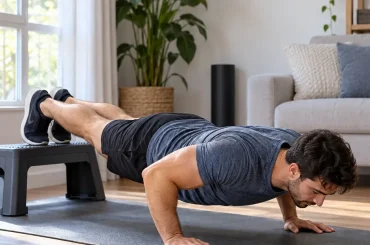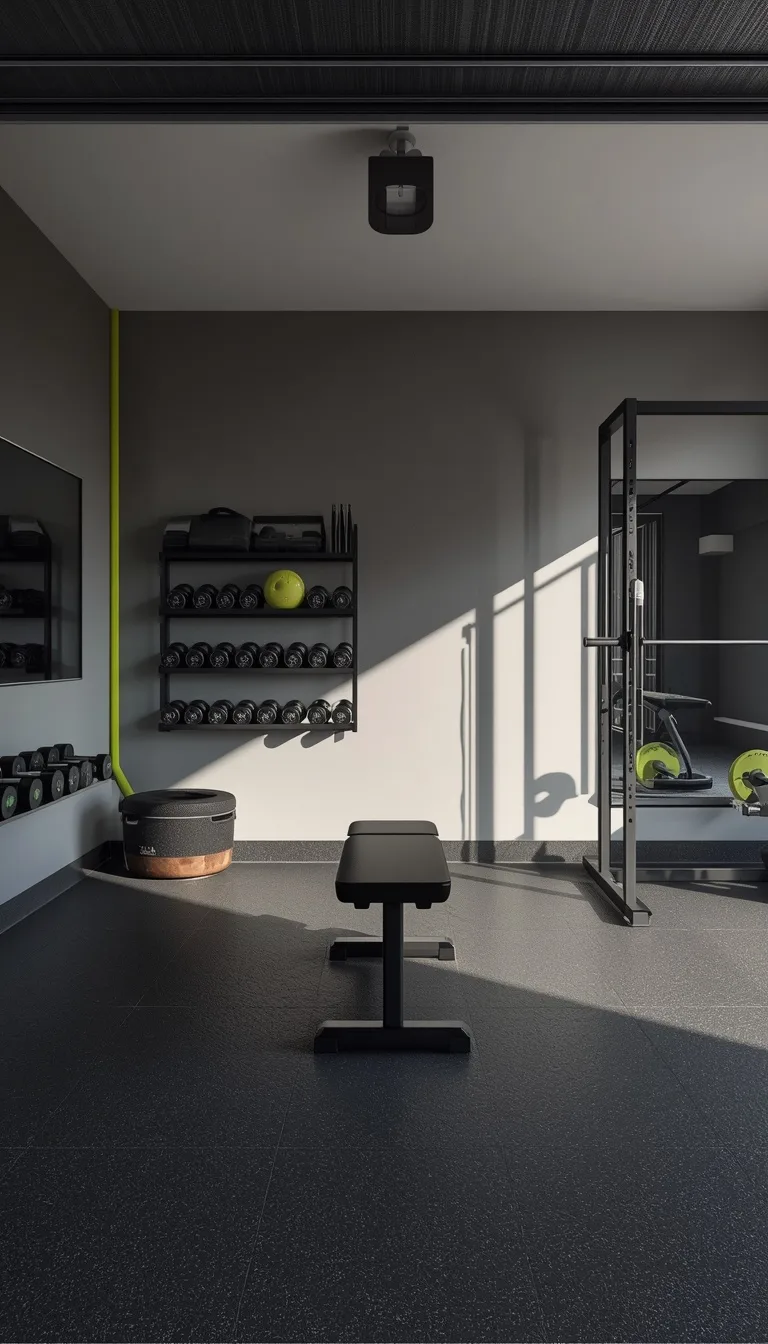
A garage can be a useful place to exercise at home, but turning it into a functional gym requires more than buying a set of dumbbells and laying down rubber flooring. The space needs to support your workouts, protect your equipment, allow comfortable movement, and remain practical for everyday use.
The best garage gym is not necessarily the largest or most expensive. It is the one that fits your available space, training goals, budget, and lifestyle. A well-planned setup can help you exercise consistently without filling the garage with equipment you rarely use.
Before purchasing anything, think about how you intend to train. Do you want a simple space for dumbbell workouts, a strength-training area with a rack and barbell, or a combination of resistance training and cardio? Your answer will influence the layout, flooring, storage, lighting, ventilation, and safety features you need.
This guide explains how to design a practical garage gym step by step, with a focus on making informed decisions rather than following temporary design trends.
Quick Answer: Do You Know How to Design a Practical Garage Gym?
Start by measuring your available floor space and identifying the exercises you plan to perform. Then divide the garage into functional areas, choose appropriate flooring, select essential equipment, and establish safe storage and ventilation arrangements.
A practical garage gym should include:
- A clear workout area with enough room to move safely.
- Flooring suitable for your equipment and exercise style.
- Essential equipment that matches your fitness goals.
- Secure storage for weights, bands, and accessories.
- Adequate lighting and ventilation.
- Safe electrical arrangements and unobstructed exits.
- Enough remaining space for any essential garage activities.
You do not need to complete the entire project at once. Starting with a simple setup and expanding when necessary can help control costs and prevent unnecessary purchases.
1. Assess Your Garage Before Planning the Layout
The first step is to understand the space you actually have. A garage that looks spacious when empty may become crowded once you add a bench, weight rack, cardio machine, and storage.
Measure the length and width of the usable floor area. Also consider ceiling height, door clearance, fixed shelving, electrical outlets, windows, and the path you need to move through the garage.
Identify the space you can realistically use
Draw a basic floor plan on paper or use a simple digital room planner. Mark the areas occupied by permanent fixtures, vehicles, storage cabinets, and doors.
If the garage must still accommodate a car, lawn equipment, bicycles, or household storage, account for those needs before deciding how much room the gym can occupy.
Remember to measure the usable space around equipment, not just the equipment itself. A bench may fit against a wall, for example, but dumbbell presses require additional room to position your body and move the weights safely.
Check the floor and surrounding structure
Look for obvious cracks, loose or damaged surfaces, water intrusion, damp patches, and signs of recurring condensation. Check whether the floor slopes or has uneven areas that could affect the stability of your equipment.
If you plan to install a heavy power rack, suspend equipment from the ceiling, or anchor a pull-up station to a wall, verify that the structure and mounting system are suitable for the intended loads. Seek qualified advice when structural capacity is uncertain.
Do not assume that a garage wall, ceiling joist, or floor can support heavy equipment simply because it appears solid.
Decide how the garage will be used
There are three common approaches:
- Dedicated gym: Most of the available space is reserved for exercise.
- Shared garage: The gym occupies one section while the rest remains available for vehicles or storage.
- Compact training corner: A small area supports bodyweight exercises, resistance bands, and a few weights.
Choosing the right approach first makes every later decision easier.
2. Plan Your Garage Gym Layout Around Movement
An effective layout prioritizes how you will use the space rather than how it looks in photographs.
Arrange equipment so that you can move between exercises without repeatedly shifting heavy items. Keep walking routes clear and position frequently used accessories where you can reach them easily.
Create distinct training zones
Depending on the size of your garage, consider dividing the space into three areas.
Strength-training zone
This area may contain dumbbells, kettlebells, a bench, a weight rack, or a barbell setup. Position larger equipment so it does not obstruct doors or walkways.
Open movement zone
Reserve a clear section for warm-ups, stretching, bodyweight exercises, mobility work, and movements that require more room.
This space is especially valuable if you follow circuits or combine strength training with cardio.
Storage and accessory zone
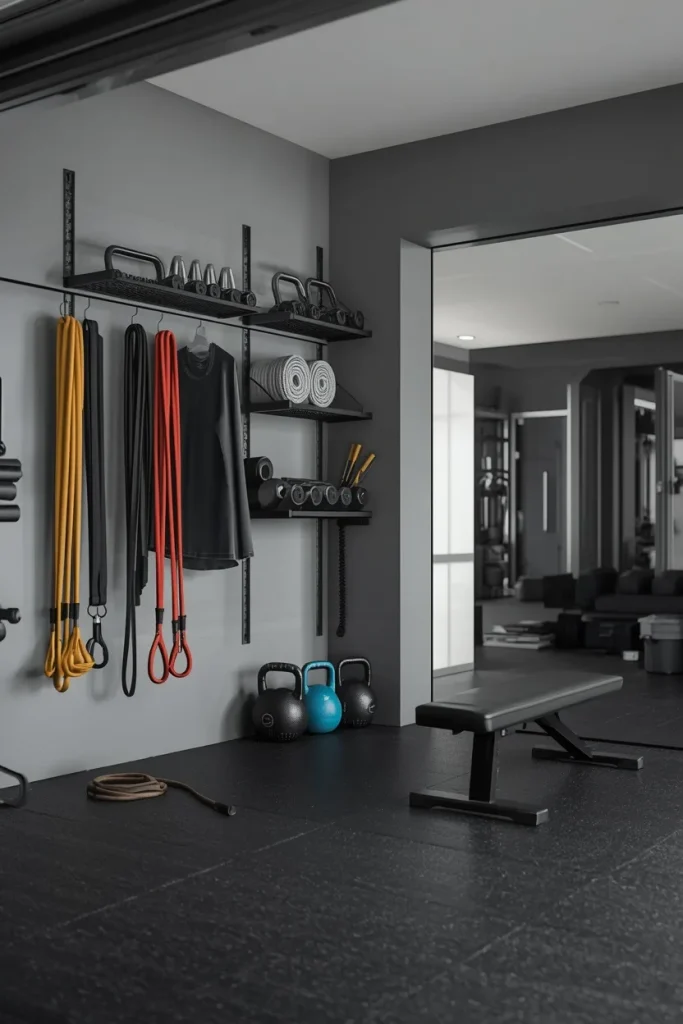
Use shelves, wall-mounted storage systems, or suitable weight racks to organize smaller equipment. Store heavy items securely at an appropriate height and avoid placing objects where they could fall into the workout area.
In a smaller garage, these zones do not need physical dividers. Their purpose is to make the space easier to organize and use.
Allow enough clearance
There is no single layout that works for every garage gym. Required clearance depends on the equipment, the exercise, and the manufacturer’s instructions.
Before buying a rack or machine, check its dimensions and the space required for its full range of movement. Include room for loading weight plates, adjusting the bench, entering and leaving the equipment, and handling weights safely.
For example, a squat rack requires room for the barbell, plates, the lifter’s movement, and any safety equipment. A treadmill needs sufficient clearance around its operating area, particularly where the manufacturer specifies additional space.
Never position equipment so that a normal exercise movement could send a weight into a window, vehicle, storage shelf, or another person.
3. Choose Flooring That Matches Your Training
Garage flooring affects traction, comfort, equipment stability, cleaning, and protection of the underlying surface. The best choice depends on what you plan to do.
A lightweight setup for dumbbell workouts has different requirements from a dedicated weightlifting area.
Rubber flooring for general strength training
Rubber gym flooring is a common option because it can provide a durable, relatively grippy surface and help protect the floor from ordinary equipment contact.
Rubber mats or tiles may work well for dumbbells, kettlebells, benches, and general strength exercises. However, products differ in thickness, density, material, and intended use.
Check the manufacturer’s recommendations before using a product under heavy racks or repeatedly dropped weights.
Interlocking tiles for flexible layouts
Interlocking tiles can be useful when you want to cover only part of the garage or create a modular training area.
They are often convenient to install, but not every tile is designed for heavy lifting. Some softer products may compress under concentrated loads or shift during dynamic movement.
Choose tiles intended for your activity and confirm that they remain stable on the existing floor.
Heavy-duty flooring for loaded equipment
If your training includes substantial barbell loads, investigate flooring systems specifically designed for that purpose. Depending on the setup, this may involve dense rubber flooring or a purpose-built lifting platform.
Do not assume that placing a thin exercise mat under a heavy rack provides sufficient protection.
Avoid dropping weights unless the equipment and flooring are designed for it. Repeated impacts can damage the floor, equipment, or surrounding structure.
Consider moisture and cleaning
Garage floors may be exposed to humidity, rainwater brought in by vehicles, or condensation. A flooring product that performs well in a dry indoor room may not be appropriate for a damp garage.
Before covering the concrete, address moisture problems and follow the flooring manufacturer’s installation guidance. Avoid trapping moisture beneath an unsuitable flooring system.
Choose a surface that can be cleaned regularly and inspect it for curling edges, gaps, loose tiles, or damage that could create a tripping hazard.
4. Select Equipment Based on Your Fitness Goals
Equipment should solve a training need. Buying items because they look impressive can quickly consume your budget and usable floor space.
Begin with the exercises you want to perform, then identify the smallest practical equipment collection that supports them.
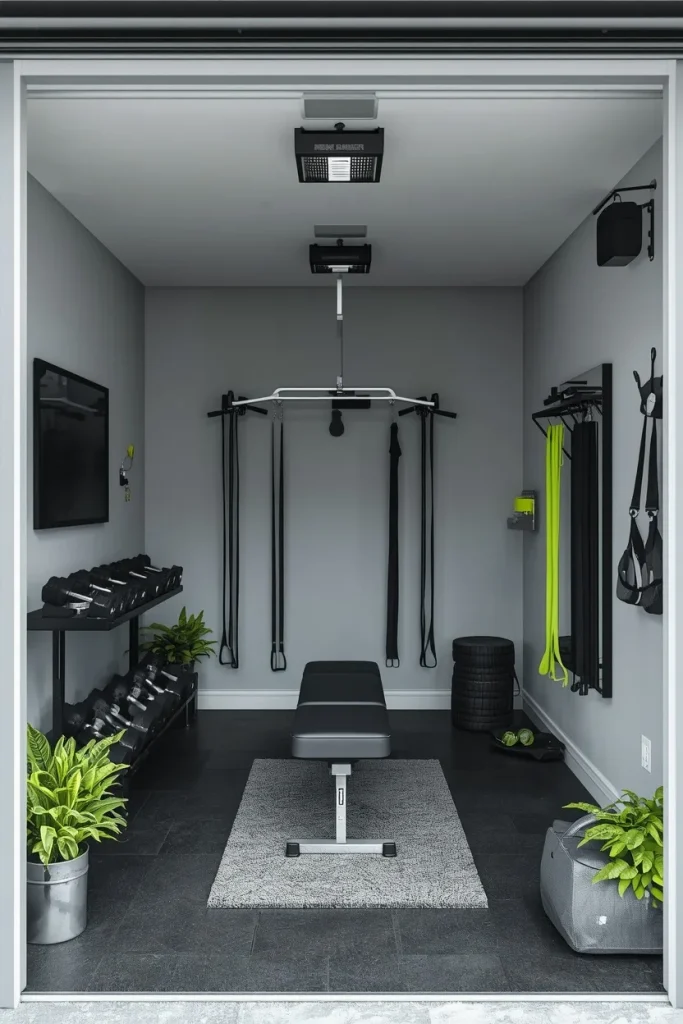
For beginners: Start with versatile basics
A beginner-friendly garage gym might include:
- An exercise mat.
- Resistance bands.
- One or two appropriately selected pairs of dumbbells.
- A stable bench, if needed for your chosen exercises.
- A suitable storage solution.
You can perform a wide range of basic movements with this setup, including squats, rows, presses, hinges, carries, and core exercises.
If you need help prioritizing purchases, read FitVibe’s guide to the best home workout equipment for beginners.
The key is to start with equipment that supports exercises you can perform confidently and progress gradually.
For strength training: Consider a rack and barbell
A barbell and rack can expand your training options, particularly if your goals include progressively loading squats, presses, and other compound movements.
However, this equipment requires more planning than a set of dumbbells.
Check the rack’s dimensions, weight rating, installation requirements, ceiling clearance, and compatibility with your barbell and plates. Confirm that the floor is suitable and that the equipment can be assembled and used according to its instructions.
Use appropriate safety arms or other manufacturer-approved safety features when required. Do not attempt heavy lifts without understanding the equipment and the risks involved.
A rack is a worthwhile investment only if it suits your training, budget, and available space.
For cardio: Choose equipment you will actually use
A treadmill, stationary bike, rowing machine, or elliptical can support aerobic exercise, but each occupies space and may introduce maintenance, electrical, or noise considerations.
Before buying a cardio machine, consider whether walking outdoors, walking in place, or another low-cost activity already meets your needs.
If you enjoy walking, FitVibe’s beginner cardio workout guide offers ideas for building activity without requiring a large machine.
If you choose a machine, check its operating footprint, ventilation needs, noise level, power requirements, and maintenance instructions.
For experienced lifters: Expand only when needed
More advanced users may benefit from adjustable benches, weight plates, cable systems, specialty bars, or additional resistance equipment.
Before adding another item, identify what your current setup cannot do effectively. A new piece of equipment is most valuable when it fills a genuine training gap.
This approach keeps the gym focused and leaves room for safe movement.
5. Make Storage Part of the Original Plan
Poor storage can turn an otherwise useful garage gym into a cluttered and potentially hazardous space.
Weights left on the floor, loose resistance bands, tangled cables, and accessories scattered around a bench can interfere with exercise and increase the chance of trips or falls.
Choose storage that suits each item
Use appropriate racks for dumbbells and weight plates, hooks or dedicated organizers for suitable accessories, and shelves or containers for smaller items.
Keep heavier equipment stable and secure. Follow the manufacturer’s instructions for wall-mounted storage, and do not exceed the stated load capacity.
Avoid stacking heavy weights where they could roll, slide, or fall when another item is removed.
Keep frequently used equipment accessible
Place your most frequently used items within easy reach, while storing occasional accessories elsewhere.
For example, dumbbells used in most sessions can stay on a suitable rack near the strength-training zone. Spare attachments and rarely used accessories can be stored in a designated cabinet.
Keep storage away from the range of movement required for exercises. Equipment should never need to be moved in the middle of a lift just to create enough room.
Leave exits and essential access routes clear
Do not block the garage door, emergency exit, electrical panel, or other essential access points with racks or storage containers.
If you share the garage with a vehicle, preserve a clear route for entering and leaving the car. Consider door swing, vehicle clearance, and the possibility of accidentally contacting gym equipment.
A tidy gym is not just easier to use. It is easier to inspect, clean, and maintain.
6. Plan Ventilation and Temperature Control
Garages can become hot, humid, cold, or poorly ventilated depending on the climate, building design, and surrounding environment.
Exercise increases heat production and breathing rate, so the room should provide comfortable conditions and a reasonable supply of fresh air.
Improve natural airflow where practical
If the garage has windows or other suitable openings, use them when outdoor conditions allow. Keep vents clear and avoid positioning storage in ways that obstruct airflow.
A fan may improve air movement and comfort, but circulating indoor air is not necessarily the same as bringing fresh outdoor air into the space.
For an enclosed garage, consider whether its existing ventilation is adequate for the intended use. A qualified building professional can help assess more complex ventilation requirements.
Be careful with fumes and combustion equipment
Never run a vehicle in an enclosed garage while exercising. Vehicle exhaust can introduce dangerous gases, including carbon monoxide, into the space.
Do not use fuel-burning heaters, generators, or other combustion equipment inappropriately in a garage. Follow the manufacturer’s safety instructions and applicable local requirements.
If the garage shares air with the house, consider how fumes, dust, and other pollutants might travel into occupied areas. The U.S. Consumer Product Safety Commission’s guide to indoor air quality explains how ventilation and pollutant sources can affect indoor air.
Account for heat and humidity
In hot conditions, schedule workouts during cooler periods when possible, use appropriate airflow, take breaks, and drink fluids according to your needs.
In humid garages, monitor equipment for rust and inspect flooring and stored items for signs of moisture damage. Some equipment and flooring materials may require specific temperature or humidity conditions.
If the space becomes excessively hot, stuffy, or uncomfortable, move your workout to a safer environment rather than trying to push through.
7. Get Lighting and Electrical Safety Right
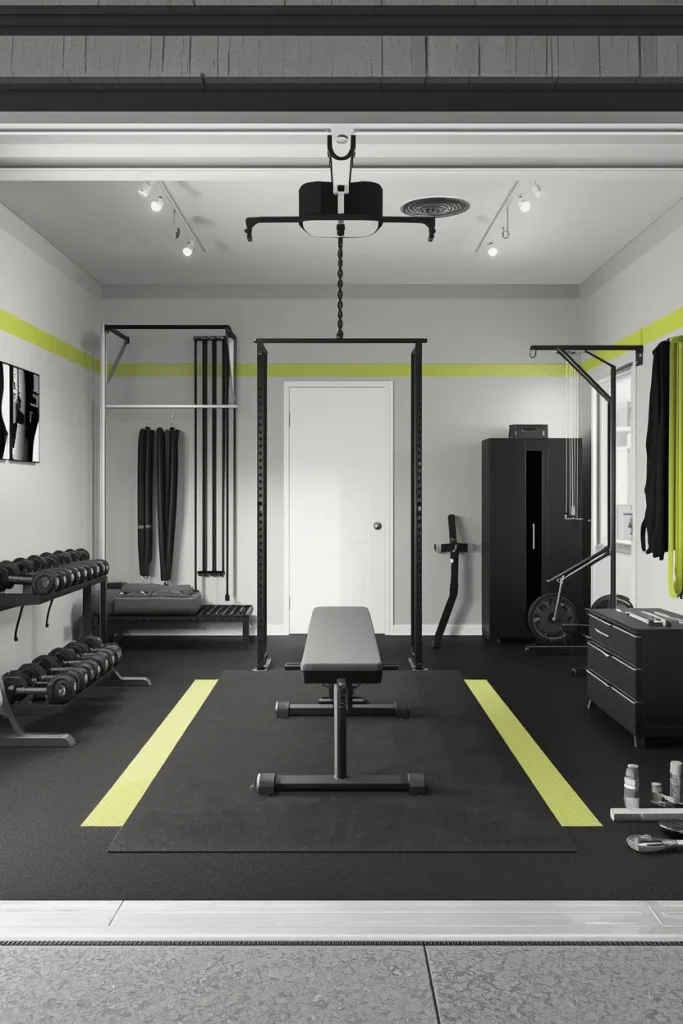
Good lighting helps you see equipment, check your footing, and move around the gym without stumbling over accessories.
A garage that relies on a single dim ceiling light may leave shadows around racks, benches, and storage areas.
Choose practical lighting
Aim for even illumination across the workout area, storage zone, and entry points.
Use fixtures suitable for the garage’s conditions and position them so they do not interfere with overhead equipment or become vulnerable to impact.
If you install new lighting, ceiling fixtures, outlets, or other permanent electrical components, use a qualified electrician when required by local regulations.
Keep cables and outlets out of the way
Treadmills, bikes, fans, and other electrical equipment may need power. Arrange cables so they do not cross walking paths or create tripping hazards.
Follow the equipment manufacturer’s electrical requirements. Avoid overloaded extension leads, damaged cords, and makeshift wiring.
Keep electrical equipment away from water and damp areas, and use suitable protective devices according to local electrical standards.
If you use a fan or cardio machine, confirm that the electrical arrangement is appropriate for the load and environment.
8. Set a Realistic Garage Gym Budget
A practical gym does not need to be completed in one shopping trip. A staged approach lets you evaluate what you use before committing to larger purchases.
The most useful budget depends on the equipment you already own, local prices, the condition of the garage, and whether construction work is needed.
Divide spending into priorities
Stage 1: Prepare the space
Measure the garage, remove unnecessary clutter, check the floor, address moisture problems, and make sure the intended workout area is safe.
Stage 2: Buy essential equipment
Start with a small number of versatile items that match your goals. This might mean resistance bands and dumbbells rather than a complete rack system.
Stage 3: Improve comfort and organization
Add appropriate flooring, storage, lighting, and ventilation improvements based on the actual limitations of the space.
Stage 4: Expand when your training requires it
Consider a rack, barbell, cardio machine, or specialized equipment only when your routine justifies the purchase.
Compare total costs, not just purchase prices
Equipment prices are only part of the project. Include delivery, assembly, flooring, installation, maintenance, and any electrical or building work.
Check the manufacturer’s warranty and replacement-part availability where relevant. Second-hand equipment may offer savings, but inspect it carefully for damaged welds, unstable frames, worn cables, missing safety components, or other defects.
Never compromise essential safety features simply to stay within budget.
9. Avoid Common Garage Gym Design Mistakes
A few preventable mistakes can make a garage gym expensive, inconvenient, or unsafe.
| Common mistake | Why it matters | A more practical approach |
|---|---|---|
| Buying equipment before measuring | Equipment may not fit or allow safe movement | Measure the entire usable area first |
| Choosing flooring for appearance alone | The surface may not support the intended activity | Match flooring to loads and exercise type |
| Filling every available corner | Movement and access become difficult | Preserve open space and clear routes |
| Ignoring moisture | Flooring and equipment may deteriorate | Address water intrusion and condensation |
| Choosing equipment without a training plan | Expensive items may go unused | Identify exercises before purchasing |
| Using unsuitable wall anchors | Mounted equipment may become unstable | Verify the structure and installation requirements |
| Blocking ventilation or exits | Comfort and safety may be compromised | Keep vents and access routes clear |
| Ignoring electrical requirements | Damaged wiring or overloaded circuits can create hazards | Follow equipment instructions and local standards |
| Expanding too quickly | Spending and clutter increase unnecessarily | Build the gym in stages |
The best design decisions are often the ones that prevent future problems rather than add decorative features.
10. Create a Garage Gym You Can Maintain
A good setup should remain practical after months of regular use.
Build a short maintenance routine into your schedule. Inspect equipment for wear, check that racks and benches remain stable, clean the floor, and return accessories to their designated storage areas.
Follow the manufacturer’s inspection and maintenance instructions for moving parts, cables, fasteners, and electrical equipment.
A simple weekly maintenance checklist
- Clear the floor of loose weights and accessories.
- Inspect dumbbells, bands, cables, and handles for damage.
- Check that storage racks and equipment remain stable.
- Clean frequently touched surfaces and the workout floor.
- Look for damp patches, rust, or unusual odors.
- Confirm that exits and walking routes remain unobstructed.
Stop using damaged equipment until it has been appropriately repaired or replaced.
Maintenance does not need to be complicated. Regular checks help you spot problems before they interfere with a workout.
11. Match the Gym to a Realistic Workout Routine
Your layout should support the workouts you intend to do most often.
If you are new to exercise, start with basic movement patterns and manageable sessions rather than buying equipment for advanced training you may not need.
A simple routine might combine squats, pushing movements, pulling movements, hip hinges, and core exercises. Walking or another form of aerobic activity can complement strength training.
For a practical starting point, read FitVibe’s guide to what to do on your first day working out at home. If you prefer a structured session, the 30-minute full-body workout at home provides another option.
The U.S. Centers for Disease Control and Prevention recommends that adults work toward at least 150 minutes of moderate-intensity aerobic activity per week, along with muscle-strengthening activities on at least two days per week. These are general public-health guidelines, not a requirement to complete everything immediately.
Read the CDC’s physical activity recommendations for adults for further information.
If you are starting from a low activity level, build up gradually. Choose exercises that suit your ability, learn how to use equipment correctly, and allow adequate recovery.
Your garage gym should make exercise more convenient, not pressure you into training harder than you can manage.
12. Your Practical Garage Gym Planning Checklist
Before purchasing equipment or starting a renovation, review the following checklist.
Space and layout
- I have measured the usable floor area and ceiling height.
- I know whether the garage must still accommodate a vehicle.
- I have planned enough space for the movements my exercises require.
- Doors, exits, and essential access routes will remain clear.
- Heavy equipment can be positioned on a suitable surface.
Flooring and environment
- The floor is in suitable condition for the intended use.
- Any moisture or drainage problems have been addressed.
- The flooring is appropriate for the equipment and loading.
- Lighting is sufficient for safe movement.
- Ventilation and temperature conditions are suitable for exercise.
Equipment and storage
- I have identified my main training goals.
- I am buying equipment I can use regularly.
- I have checked equipment dimensions and load ratings.
- Storage is stable and suitable for the items being stored.
- Damaged or unsuitable equipment will not be used.
Budget and maintenance
- I have included installation and preparation costs.
- I can expand the gym gradually instead of buying everything at once.
- I understand the basic maintenance requirements.
- I have a plan for keeping the workout area clean and uncluttered.
If several items remain unchecked, address those issues before investing in additional equipment.
Frequently Asked Questions
How much space do you need for a garage gym?
The amount of space depends on your equipment and exercises. A compact training area can support bodyweight workouts, resistance bands, and dumbbells. A rack, barbell, and cardio machine require more room and additional clearance. Measure the usable area and account for the full movement requirements of each item before purchasing it.
Is rubber flooring necessary for a garage gym?
Not always. Rubber flooring can be useful for general strength training and protecting the underlying surface, but the right option depends on the existing floor, equipment weight, impact, and moisture conditions. Heavy lifting may require a purpose-built flooring system. Follow the flooring manufacturer’s guidance.
Can you build a garage gym on a small budget?
Yes. Start by preparing a safe workout area and choosing versatile equipment that supports your main exercises. Resistance bands, a mat, and a suitable pair of dumbbells can provide a useful foundation. Add larger equipment only when it solves a specific training need.
Should a garage gym have a fan or air conditioner?
That depends on the climate, ventilation, and comfort of the space. A fan can improve air movement, while air conditioning may help manage temperature in particularly hot conditions. Neither automatically guarantees adequate fresh-air ventilation. Keep combustion fumes out of the garage and seek professional advice if the space has persistent ventilation problems.
Can a garage gym still be used for parking?
Yes, if the layout allows adequate clearance for the vehicle and the workout area. Compact equipment, secure storage, and a clearly defined training zone can help. Do not allow parked vehicles, equipment, or storage to block exits or interfere with safe exercise.
What is the first piece of gym equipment you should buy?
There is no universal answer. Choose based on the exercises you plan to perform, your current ability, and your budget. Beginners may benefit from resistance bands or dumbbells, while experienced lifters may have more specific requirements. You can also begin with bodyweight exercises and walking while deciding what equipment is genuinely necessary.
Final Thoughts: Design for Function Before Appearance
A practical garage gym starts with clear priorities: enough room to move, appropriate flooring, useful equipment, organized storage, and a comfortable environment.
You do not need to copy a professionally designed gym or purchase every piece of equipment at once. A compact, well-organized setup can be more useful than a crowded garage filled with expensive machines.
Measure your space, identify the workouts you want to perform, and address flooring, ventilation, electrical arrangements, and equipment safety before expanding. Then build your setup gradually as your needs become clearer.
The goal is simple: create a garage gym that fits your home, supports your fitness routine, stays within your budget, and remains safe and practical to use over time.