Losing body fat does not require a perfect diet, punishing workouts, or an all-or-nothing 30-day challenge. For beginners, a better starting point is to build a small group of habits that can be repeated consistently.
This 30-day fat-loss habit tracker is designed around six practical behaviors: balanced meals, protein-focused eating, daily movement, scheduled strength training, adequate hydration, and consistent sleep. The purpose is not to guarantee a particular amount of weight loss. Instead, it gives you a simple way to focus on the behaviors that support a healthier routine.
The CDC recommends approaching weight management through healthy eating patterns, regular physical activity, sufficient sleep, and stress management, while noting that gradual weight loss is generally more sustainable than trying to lose weight rapidly.
Quick Takeaway
For the next 30 days, track what you do rather than demanding a particular number on the scale.
Aim to:
- Build balanced meals most days.
- Include a protein-rich food regularly.
- Move your body every day in a way appropriate for your fitness level.
- Complete strength-training sessions on scheduled days rather than trying to lift every day.
- Drink enough fluids for your individual needs.
- Protect a consistent opportunity for quality sleep.
- Review your progress weekly instead of judging yourself by one difficult day.
A tracker works best when it makes progress visible without turning missed checkboxes into failure.
Why Use a 30-Day Habit Tracker for Fat Loss?
Fat loss is influenced by many factors, including food intake, physical activity, sleep, medications, health conditions, genetics, environment, and other lifestyle factors.
That is why simply writing down a target weight does not tell you what to do today.
A habit tracker changes the focus to controllable actions.
Instead of:
“I need to lose 10 pounds.”
You can work with:
“Today I will prepare a balanced lunch, take a walk, complete my scheduled workout, and get to bed at a reasonable time.“
The second approach gives you something concrete to act on.
NIDDK guidance also recommends setting specific lifestyle goals and monitoring behaviors such as eating, drinking, sleep, and physical activity when working toward weight-management goals.
The 6 Habits to Track
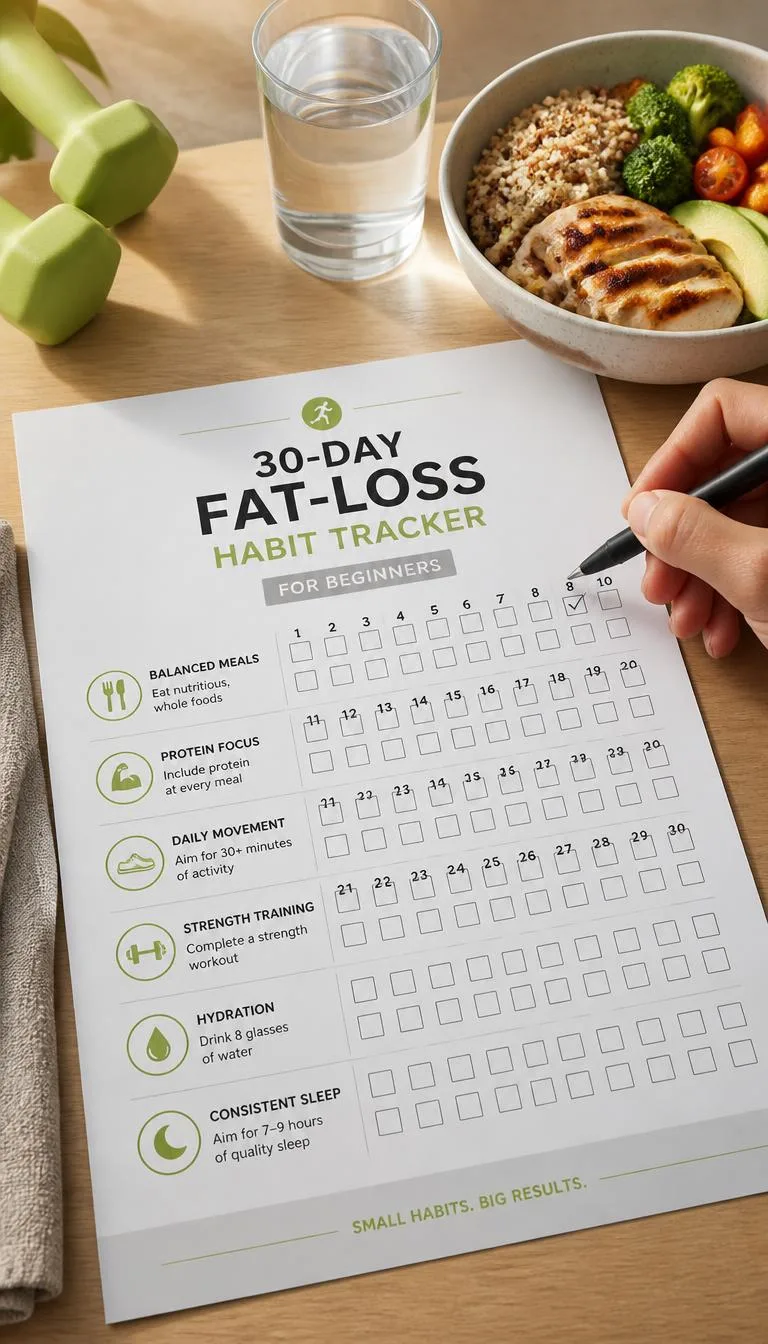
Your tracker can use six daily columns.
| Habit | What to track | Beginner approach |
|---|---|---|
| Balanced meals | Meals built around nutritious foods | Include protein, vegetables/fruit, and a suitable carbohydrate or fat source |
| Protein focus | Protein included regularly | Eggs, fish, chicken, yogurt, beans, lentils, tofu, nuts, or other suitable foods |
| Daily movement | Walking or other activity | Start with an amount you can consistently manage |
| Strength training | Scheduled resistance sessions | Begin with 2+ sessions per week if appropriate |
| Hydration | Your personal fluid goal | Keep water accessible and drink regularly |
| Sleep | Adequate sleep opportunity | Protect a consistent bedtime and wake time where possible |
The important distinction is that not every column represents something you need to maximize every single day.
For example, strength training is normally something you schedule with recovery between sessions. The checkbox can mean “I completed today’s planned strength session” rather than “I lifted weights today.”
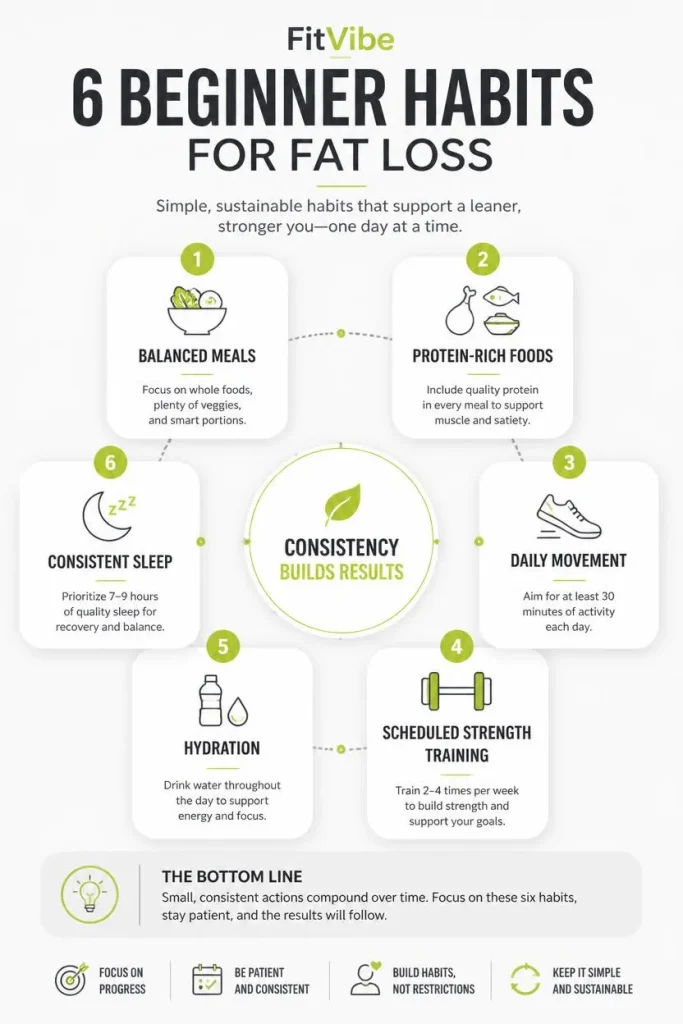
For general adult health, current U.S. guidance recommends at least 150 minutes of moderate-intensity aerobic activity each week plus muscle-strengthening activity on at least two days per week. Beginners can build toward these amounts gradually.
How to Use the 30-Day Tracker
Before Day 1, spend about 10 minutes setting it up.
1. Choose your starting point
Write down:
- Your current weight, if you want to monitor it
- Waist measurement, if useful to you
- How many days you currently exercise
- Your typical sleep schedule
- The biggest obstacle to healthy eating
- The biggest obstacle to exercising
You do not need to measure everything.
The purpose is simply to establish a starting reference.
2. Set process goals
Avoid making your only goal:
“Lose weight.”
Instead, choose behaviors such as:
- Walk after lunch.
- Prepare breakfast the night before.
- Eat a protein-rich breakfast.
- Complete two strength workouts this week.
- Keep convenient healthy foods available.
- Establish a more consistent bedtime.
These are actions you can directly control.
3. Mark the tracker once per day
A simple ✓ is enough.
Do not spend five minutes analyzing whether you were “perfect.”
The tracker is a reminder, not a grading system.
Your 30-Day Fat-Loss Habit Plan
Rather than trying to change everything on Day 1, use the month in four stages.
Days 1–7: Build the Foundation
Focus: consistency rather than intensity.
Your first week is about learning what your normal schedule can realistically accommodate.
Priorities
- Eat mostly balanced meals.
- Add a protein source to your main meals.
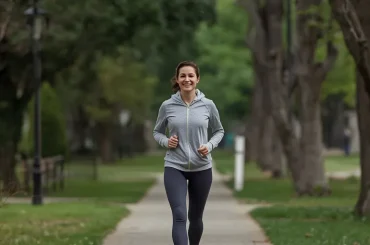
- Take regular walks or perform other manageable movement.
- Complete 2 beginner-friendly strength sessions if appropriate.
- Start paying attention to your sleep schedule.
- Keep water available throughout the day.
Do not attempt to compensate for years of inconsistent habits with an extreme first week.
Week 1 checklist
- ☐ Planned your workouts
- ☐ Bought useful foods for the week
- ☐ Identified convenient protein sources
- ☐ Chosen a realistic bedtime
- ☐ Completed your first strength session
- ☐ Started tracking daily habits
Days 8–14: Make Healthy Choices Easier
Focus: reduce friction.
By the second week, you should start identifying the situations that make your habits difficult.
Maybe breakfast is rushed.
Maybe you get hungry at work and buy whatever is available.
Maybe you intend to exercise after work but regularly feel too tired.
Instead of relying entirely on motivation, change the setup.
Try:
- Preparing breakfast the night before.
- Cooking a protein source in advance.
- Keeping fruit or yogurt available.
- Putting workout clothes somewhere visible.
- Scheduling walks on your calendar.
- Preparing lunch before going to bed.
This is particularly useful for busy adults because the goal is to make the healthier option easier to repeat.
For more ideas, see FitVibe’s healthy routine guide for busy people.
Days 15–21: Build Consistency
Focus: repeat the basics even when motivation changes.
At this point, avoid the temptation to add ten new habits.
Instead, ask:
Which habits from the first two weeks are actually working?
Keep those.
You can also begin gradually progressing your workouts.
For example:
| If your workout is becoming easier | Possible progression |
|---|---|
| Bodyweight squats feel easy | Add repetitions or resistance |
| Incline push-ups feel easy | Use a lower incline |
| Walking feels comfortable | Walk slightly longer or faster |
| A strength session feels easy | Add resistance or another controlled set |
| Your schedule is stable | Add another planned activity |
Progress does not have to mean exercising harder every day.
The goal is to gradually increase your capacity while maintaining good technique and recovery.
A recent FitVibe full-body workout guide provides beginner exercise variations and progression options that can complement this tracker.
Days 22–30: Turn the Tracker Into a Routine
Focus: make the habits repeatable beyond Day 30.
The final nine days are not a “final push” where you need to exercise harder or eat dramatically less.
Instead, review your patterns.
Ask yourself:
- Which habit was easiest?
- Which habit was hardest?
- What time of day worked best for exercise?
- Which meals were easiest to maintain?
- What repeatedly interrupted my routine?
- What could I prepare in advance next month?
- Which habits do I want to continue?
This turns the tracker from a one-month challenge into a planning tool.
A Simple Weekly Structure for Beginners
You can adapt the tracker to a schedule like this:
| Day | Movement | Strength | Main focus |
|---|---|---|---|
| Monday | Walk or normal activity | Full body | Balanced meals |
| Tuesday | Walk/light activity | — | Protein + hydration |
| Wednesday | Walk or normal activity | Full body | Balanced meals |
| Thursday | Light activity | — | Recovery + sleep |
| Friday | Walk or normal activity | Full body if appropriate | Meal preparation |
| Saturday | Walk/recreational activity | Optional | Flexible healthy meals |
| Sunday | Easy movement/rest | — | Review and prepare |
This is only an example. Your schedule, fitness level, recovery, equipment, and preferences should determine your actual routine.
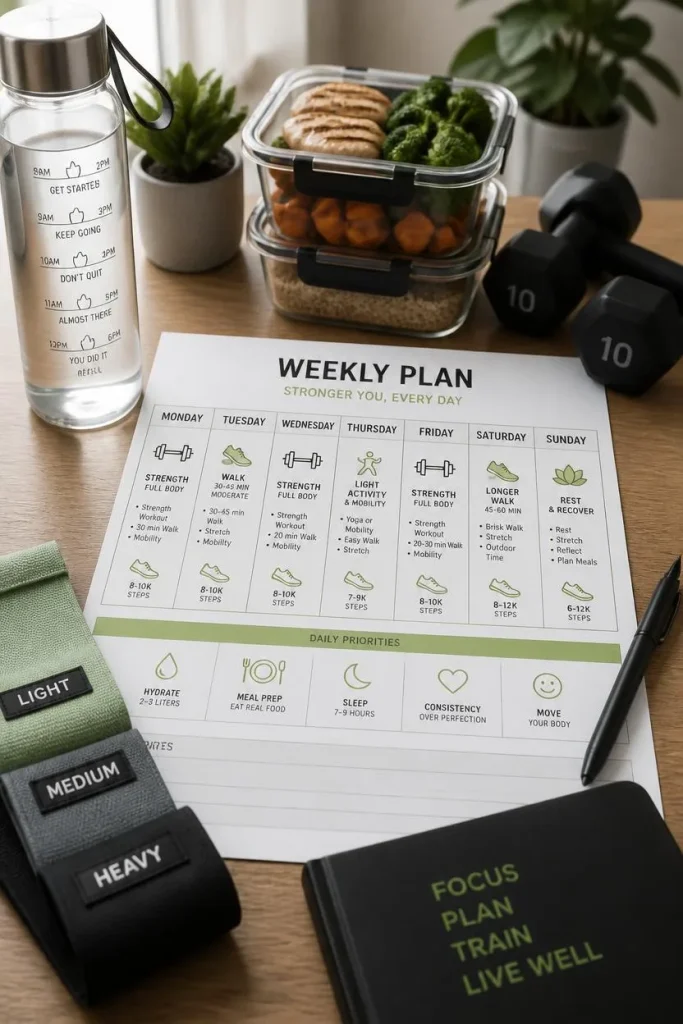
If you’re completely new to exercise, starting with fewer sessions and gradually building up is reasonable. NIDDK specifically recommends starting slowly and increasing activity progressively.
What Counts as a “Balanced Meal”?
You do not need a special fat-loss recipe every time you eat.
A practical starting formula is:
Protein + vegetables or fruit + carbohydrate + appropriate source of fat
For example:
- Eggs + vegetables + whole-grain toast
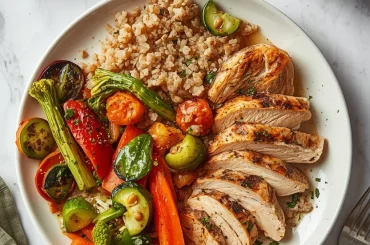
- Chicken + rice + mixed vegetables
- Fish + potatoes + vegetables
- Lentils + rice + vegetables
- Greek yogurt + oats + fruit + nuts
- Beans + whole grains + salad
The exact combination can vary according to your culture, budget, preferences, dietary requirements, and available foods.
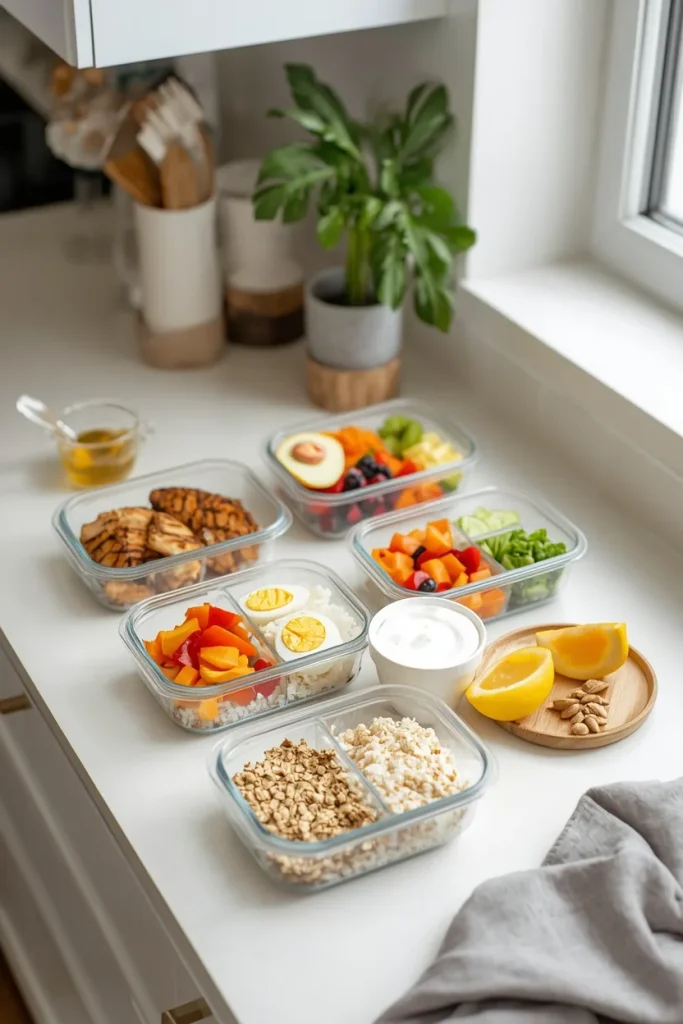
NIDDK recommends an eating pattern that includes foods such as vegetables, fruits, whole grains, protein foods, and appropriate dairy or alternatives rather than relying on a single “fat-burning” food.
For additional meal-preparation ideas, see FitVibe’s Meal Prep for Beginners guide.
Don’t Turn the Protein Checkbox Into a Numbers Game
Protein can be useful when building satisfying meals and supporting muscle during a fat-loss phase, but beginners do not necessarily need to calculate every gram of protein immediately.
Start with the simple question:
“Does this meal contain a meaningful protein source?”
Examples include:
- Eggs
- Chicken
- Fish
- Greek yogurt
- Milk or suitable alternatives
- Lentils
- Beans
- Tofu
- Lean meat
- Nuts and seeds
For people who already track nutrition, more precise protein targets can be considered based on individual circumstances. For everyone else, establishing the habit of including protein regularly can be a simpler starting point.
How Much Water Should You Drink?
Avoid treating a single number of glasses as a universal requirement.
Fluid needs vary with factors such as body size, activity, climate, diet, and other circumstances.
Instead, use the hydration checkbox to remind yourself to drink regularly throughout the day.
Practical strategies include:
- Carrying a reusable bottle.
- Drinking with meals.
- Keeping water visible at your desk.
- Drinking before and after exercise.
- Increasing attention to fluids during hot weather or prolonged activity.
The tracker should encourage consistency rather than create another rigid rule.
Sleep Belongs on a Fat-Loss Habit Tracker
Sleep is easy to overlook when people focus exclusively on calories and exercise.
NIDDK notes that inadequate sleep is associated with weight gain and recommends 7–9 hours of sleep for adults ages 18–64.
That does not mean you can “sleep off” excess calories.
It means sleep is one part of the broader lifestyle picture.
Try:
- Keeping a relatively consistent bedtime.
- Keeping your wake time reasonably consistent.
- Preparing tomorrow’s meals or clothes before bed.
- Reducing unnecessary late-night tasks.
- Protecting enough time for sleep.
If your sleep schedule is currently inconsistent, improve it gradually rather than expecting an overnight transformation.
What to Do When You Miss a Day
This is one of the most important parts of the tracker.
Do not restart the 30 days.
If Day 12 goes badly, Day 13 is simply Day 13.
You can use this reset:
The next-day reset
- Drink some water.
- Eat your next normal balanced meal.
- Take a manageable walk or perform appropriate movement.
- Resume your scheduled workout when appropriate.
- Return to your normal sleep routine.
- Mark the next day’s habits honestly.
NIDDK specifically recognizes setbacks as a normal part of changing health behaviors and recommends getting back on track rather than allowing a setback to end the effort.
Common 30-Day Tracker Mistakes
| Mistake | Why it can be a problem | Better approach |
|---|---|---|
| Trying to change everything immediately | The routine becomes difficult to maintain | Add habits gradually |
| Treating every checkbox as mandatory every day | Creates unnecessary pressure | Use scheduled habits appropriately |
| Exercising intensely every day | Recovery can suffer | Alternate training and recovery |
| Eating extremely little to speed up results | Can make the plan difficult to sustain | Build balanced, manageable meals |
| Obsessing over daily scale changes | Body weight naturally fluctuates | Look at longer-term patterns |
| Giving up after one missed day | One setback becomes a prolonged break | Resume at the next opportunity |
| Using exercise to “earn” food | Can create an unhealthy relationship with eating | Treat food and movement as separate parts of healthy living |
| Tracking without changing anything | A checklist alone does not create habits | Review the tracker weekly and adjust |
Your 30-Day Habit Tracker
Use the following as your simple reference:
| Day | Balanced meals | Protein | Movement | Strength* | Hydration | Sleep |
|---|---|---|---|---|---|---|
| 1 | ☐ | ☐ | ☐ | ☐ | ☐ | ☐ |
| 2 | ☐ | ☐ | ☐ | ☐ | ☐ | ☐ |
| 3 | ☐ | ☐ | ☐ | ☐ | ☐ | ☐ |
| 4 | ☐ | ☐ | ☐ | ☐ | ☐ | ☐ |
| 5 | ☐ | ☐ | ☐ | ☐ | ☐ | ☐ |
| 6 | ☐ | ☐ | ☐ | ☐ | ☐ | ☐ |
| 7 | ☐ | ☐ | ☐ | ☐ | ☐ | ☐ |
| 8 | ☐ | ☐ | ☐ | ☐ | ☐ | ☐ |
| 9 | ☐ | ☐ | ☐ | ☐ | ☐ | ☐ |
| 10 | ☐ | ☐ | ☐ | ☐ | ☐ | ☐ |
| 11 | ☐ | ☐ | ☐ | ☐ | ☐ | ☐ |
| 12 | ☐ | ☐ | ☐ | ☐ | ☐ | ☐ |
| 13 | ☐ | ☐ | ☐ | ☐ | ☐ | ☐ |
| 14 | ☐ | ☐ | ☐ | ☐ | ☐ | ☐ |
| 15 | ☐ | ☐ | ☐ | ☐ | ☐ | ☐ |
| 16 | ☐ | ☐ | ☐ | ☐ | ☐ | ☐ |
| 17 | ☐ | ☐ | ☐ | ☐ | ☐ | ☐ |
| 18 | ☐ | ☐ | ☐ | ☐ | ☐ | ☐ |
| 19 | ☐ | ☐ | ☐ | ☐ | ☐ | ☐ |
| 20 | ☐ | ☐ | ☐ | ☐ | ☐ | ☐ |
| 21 | ☐ | ☐ | ☐ | ☐ | ☐ | ☐ |
| 22 | ☐ | ☐ | ☐ | ☐ | ☐ | ☐ |
| 23 | ☐ | ☐ | ☐ | ☐ | ☐ | ☐ |
| 24 | ☐ | ☐ | ☐ | ☐ | ☐ | ☐ |
| 25 | ☐ | ☐ | ☐ | ☐ | ☐ | ☐ |
| 26 | ☐ | ☐ | ☐ | ☐ | ☐ | ☐ |
| 27 | ☐ | ☐ | ☐ | ☐ | ☐ | ☐ |
| 28 | ☐ | ☐ | ☐ | ☐ | ☐ | ☐ |
| 29 | ☐ | ☐ | ☐ | ☐ | ☐ | ☐ |
| 30 | ☐ | ☐ | ☐ | ☐ | ☐ | ☐ |
* Strength = complete your planned strength-training session. It does not mean strength training is required every day.
Weekly review
At the end of each 7-day period, record:
- What worked: ______________________
- Biggest obstacle: __________________
- Habit to improve: __________________
- One change for next week: __________
- Something I’m proud of: ____________
That final question matters. A habit tracker should help you recognize progress, not simply document what you missed.
How to Know Whether the 30 Days Are Working
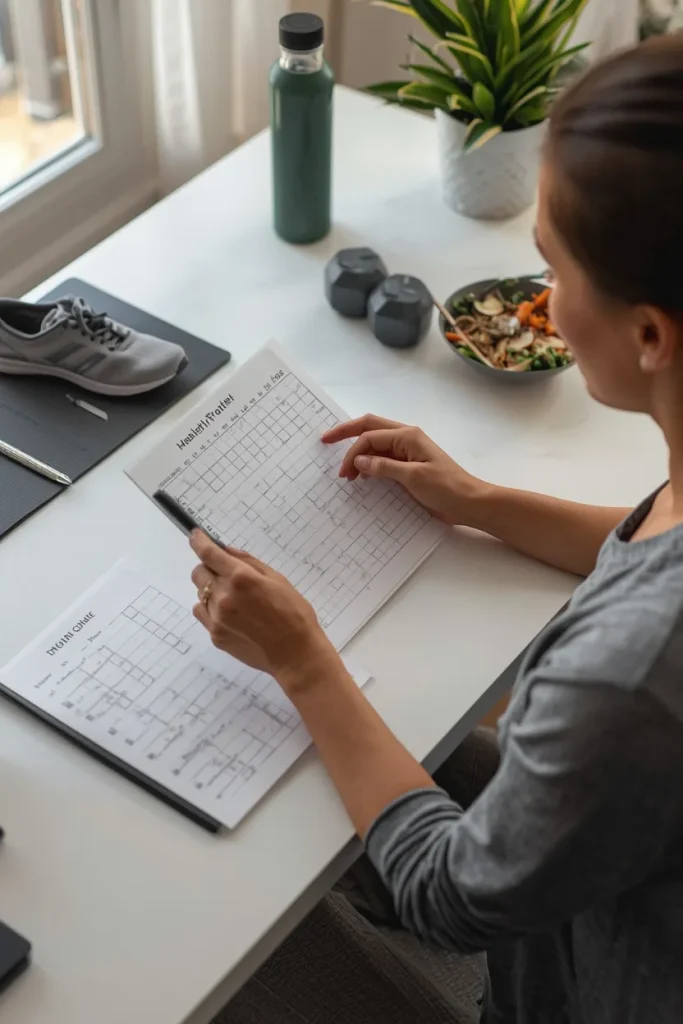
Do not judge the entire month by one weigh-in.
Weight can fluctuate from day to day because of changes in hydration, food intake, digestion, and other factors.
Instead, look at several indicators:
Process indicators
- Are you exercising more consistently?
- Are balanced meals becoming easier?
- Are you preparing food more often?
- Are you sleeping more consistently?
- Are you moving more during the week?
- Are you following your planned strength sessions?
Outcome indicators
Depending on your goal, you might monitor:
- Body weight trends
- Waist measurement
- How clothing fits
- Strength or exercise performance
- Energy and day-to-day functioning
No single measurement tells the whole story.
The CDC notes that weight management is affected by multiple factors, including medical conditions, medications, stress, genetics, age, and environment.
Frequently Asked Questions
Can a 30-day habit tracker help me lose belly fat?
A tracker can help you consistently follow habits that support overall weight management, but it cannot specifically target fat loss from your abdomen. Where the body loses fat first varies between individuals.
The goal should be sustainable overall fat loss rather than trying to force fat loss from one particular body area.
Do I need to count calories during the 30 days?
Not necessarily. Calorie tracking can be useful for some people, but it is not required to begin building healthier habits.
Start with meal quality, portions, protein, food preparation, and consistency if detailed tracking feels overwhelming.
How many days should beginners strength train?
For general adult health, current guidance recommends muscle-strengthening activity on at least two days per week.
Beginners can start with manageable sessions and increase gradually as their technique, recovery, and fitness improve.
Should I weigh myself every day?
You can, but you do not have to.
If daily weighing causes unnecessary stress, use a less frequent schedule and focus on longer-term trends. Consistent conditions are useful when comparing measurements.
What if I cannot complete all six habits?
That’s fine.
The purpose of the tracker is to reveal patterns, not demand perfection. A day with four checkmarks can still be a productive day.
What happens after Day 30?
Do not automatically start another harder challenge.
Review the month and keep the habits that fit your lifestyle. Then choose one or two areas to gradually improve.
The most useful result of the 30 days is not completing a piece of paper. It is having a routine that you can continue.
Safety Considerations
If you have a medical condition, significant injury, are pregnant, take medications that may affect weight or exercise, or have other individual health considerations, discuss an appropriate approach with a qualified healthcare professional.
If exercise causes significant or persistent pain, chest discomfort, fainting, severe dizziness, or unusual shortness of breath, stop and seek appropriate medical attention.
You also do not need to make your diet increasingly restrictive when progress slows. Weight management can be affected by factors beyond food and exercise, and individualized guidance may be appropriate in some circumstances.
The Bottom Line
A 30-day fat-loss habit tracker should make healthy behavior easier to see, repeat, and adjust.
You do not need 30 perfect days.
Instead:
- Build balanced meals.
- Include protein regularly.
- Move consistently.
- Strength train on scheduled days.
- Stay adequately hydrated.
- Protect your sleep.
- Review your progress weekly.
- Get back on track quickly after setbacks.
If you miss a checkbox, leave it blank and continue.
The objective is not to prove that you can follow a perfect plan for 30 days. It is to discover a set of habits that can realistically remain part of your life after the 30 days are over.
Save This Guide
30-day formula:
Eat well → Move regularly → Strength train → Hydrate → Sleep → Track → Review → Repeat
Small, repeatable actions are easier to build into real life than an extreme short-term program.
Sources & Further Reading
- CDC — Adult Activity: An Overview — Current adult physical-activity recommendations, including aerobic and muscle-strengthening activity.
- NIDDK — Eating & Physical Activity to Lose or Maintain Weight — Healthy eating and physical-activity guidance for weight management.
- NIDDK — Factors Affecting Weight & Health — Information on factors including lifestyle, sleep, health conditions, medications, genetics, and environment.